Thailand Island Hopping Guide
Introduction
Few places on earth pack as much island variety into one trip as Thailand. Within a single country, you can swim in turquoise bays beneath limestone cliffs, dive with reef sharks, dance until sunrise on a beach famous around the world, or do nothing at all on a quiet stretch of sand with no one else in sight. That range, combined with cheap flights, frequent ferries, and a tourism industry built around moving travelers between islands, is why Thailand has become the benchmark for island hopping in Southeast Asia.
Thailand's islands sit on two different coastlines, and the side you choose shapes your entire trip. The Andaman Sea, on the west coast, is known for dramatic limestone karsts, clear water, and islands like Phuket, Krabi, and the Phi Phi Islands. The Gulf of Thailand, on the east coast, has a gentler landscape and is home to Koh Samui, Koh Phangan, and Koh Tao. Weather patterns, boat schedules, and even the general atmosphere differ between the two coasts, so understanding this split early on will save you a lot of planning headaches later.
This guide walks through the most popular island hopping routes in Thailand, how to get between islands, what each destination is actually like, how much to budget, and when to go. It covers the Andaman classics (Phuket to Phi Phi, and Krabi's island circuits) and the Gulf of Thailand trio (Koh Samui, Koh Phangan, and Koh Tao), along with sample itineraries for different trip lengths and travel styles.
Whether you're a first-time visitor trying to figure out where to even start, a couple planning a relaxed honeymoon, a backpacker stitching together a budget route, or a family looking for calm water and easy logistics, this guide is built to help you plan a route that actually fits how you want to travel.
Why Island Hopping in Thailand Is Popular
Diverse Islands and Experiences
Part of what makes Thailand special is that its islands don't all feel the same. You can build a trip around almost any mood:
- Party islands – Koh Phangan is the obvious headliner, thanks to the Full Moon Party, but Phuket's Patong area also draws a younger, nightlife-focused crowd.
- Luxury islands – Koh Samui and parts of Phuket have high-end resorts, private pool villas, and spa culture that rivals anywhere in Asia.
- Diving islands – Koh Tao is one of the most affordable places in the world to get PADI certified, while the Phi Phi Islands and Krabi's outer islands offer excellent day-trip diving and snorkeling.
- Family-friendly islands – Krabi and parts of Koh Samui have calmer beaches, shallow water, and a more relaxed pace that suits travelers with kids.
This variety means island hopping in Thailand isn't a one-size-fits-all itinerary. You can genuinely tailor a trip around what you want from your time off.
Easy Transportation Network
Thailand has spent decades building out a transport network specifically designed to move tourists between islands quickly.
- Ferries connect almost every major island and run multiple times a day during high season.
- Speedboats are faster and pricier, useful for day trips or when you're short on time.
- Flights link Bangkok, Phuket, and Koh Samui directly, which is helpful if you're trying to cover both coasts in one trip without long overland transfers.
Because so many companies operate these routes, tickets are generally easy to book, either online in advance or through agents on the ground.
For detailed information about domestic flights, ferries, buses, trains, and getting around Thailand, read our Thailand Transportation Guide.
Who Should Consider Island Hopping
- First-time visitors get a genuine sense of Thailand's range in one trip, rather than committing to a single beach for two weeks.
- Couples can mix a few lively nights with several days of pure relaxation.
- Backpackers can move cheaply between islands, meet other travelers, and build a loose, flexible route.
- Families can choose calmer islands and shorter ferry hops to keep logistics simple.
Find Hotels for Your Island Hopping Trip
Compare hotels and resorts across Phuket, Krabi, Phi Phi, Koh Samui, Koh Phangan, and Koh Tao.
Andaman Sea vs Gulf of Thailand
Andaman Sea Islands
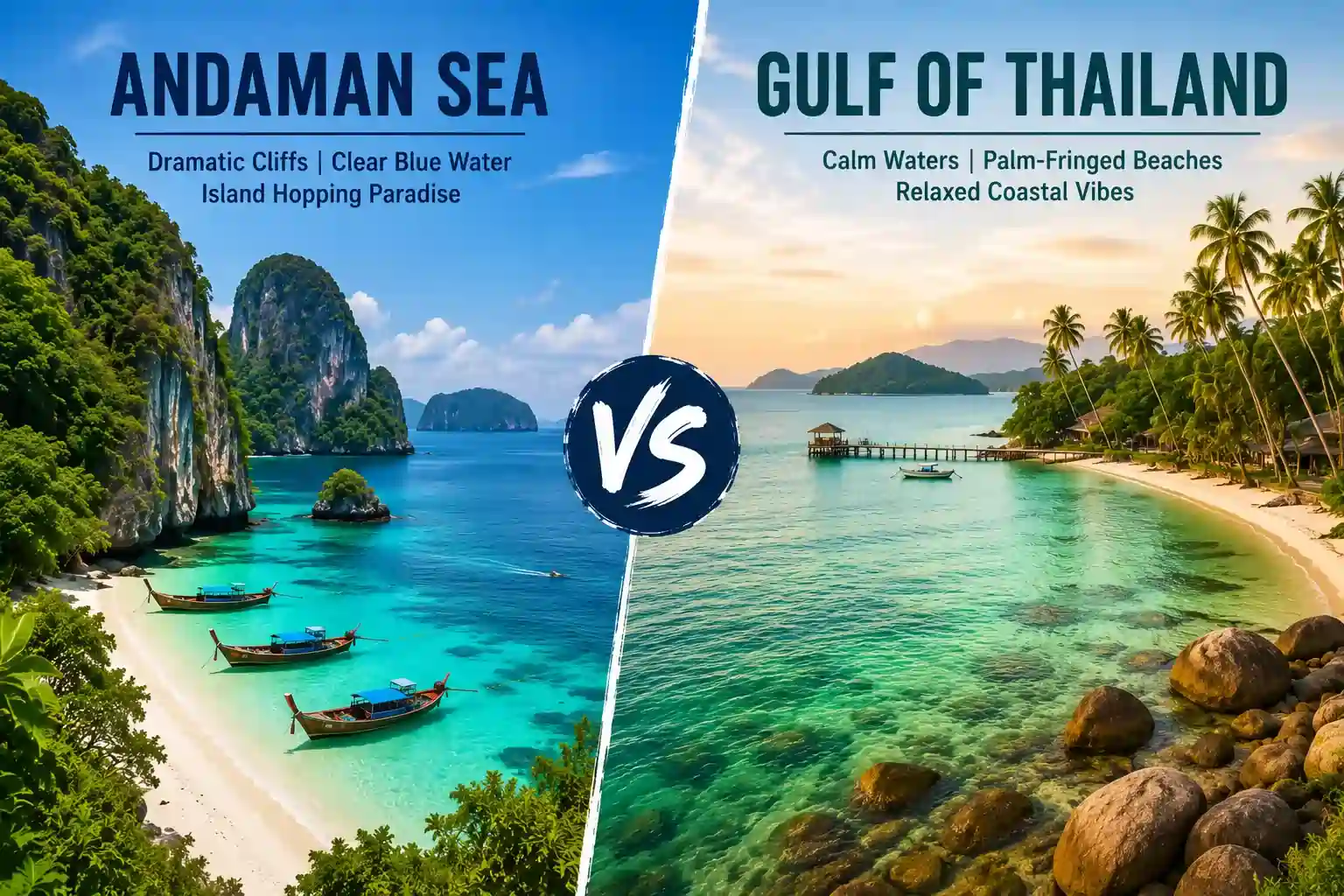
The Andaman coast is where Thailand's postcard scenery lives. Expect towering limestone cliffs, jungle-covered islands, and water that shifts from turquoise to deep blue depending on the light.
- Phuket – Thailand's largest island and the main international gateway to the Andaman coast, with direct flights from many countries.
- Krabi – A mainland base with easy access to a cluster of nearby islands, known for dramatic rock formations.
- Phi Phi Islands – Famous for Maya Bay and some of the most photographed scenery in the country.
Gulf of Thailand Islands
The Gulf coast feels different. The islands here are generally less dramatic in shape but offer their own appeal, from wellness retreats to world-class diving.
- Koh Samui – The most developed of the three, with a wide range of resorts, restaurants, and an international airport.
- Koh Phangan – Home to the Full Moon Party, but also a growing wellness and yoga scene on its quieter sides.
- Koh Tao – A small island built almost entirely around diving and a laid-back backpacker pace.
Major Differences
| Factor | Andaman Sea | Gulf of Thailand |
|---|---|---|
| Scenery | Dramatic limestone cliffs, karst islands | Gentler, rounded islands, fewer cliffs |
| Accessibility | Phuket has a major international airport | Koh Samui has its own airport; Koh Phangan and Koh Tao require ferry connections |
| Weather Patterns | Rainy season generally May to October | Rainy season generally October to December |
| Travel Style | Mix of luxury, diving, and scenic day trips | Mix of party, wellness, and diving culture |
Which Side Is Better?
There isn't a universal answer here, it depends on what you're after. The Andaman Sea suits travelers who want striking scenery, boat tours past limestone islands, and a slightly more polished tourism infrastructure. The Gulf of Thailand suits travelers chasing a specific experience, whether that's the Full Moon Party, a dive certification, or a wellness retreat. If your trip has a clear theme, that theme will usually point you toward one coast.
Phuket to Phi Phi Islands
Why This Route Is Popular
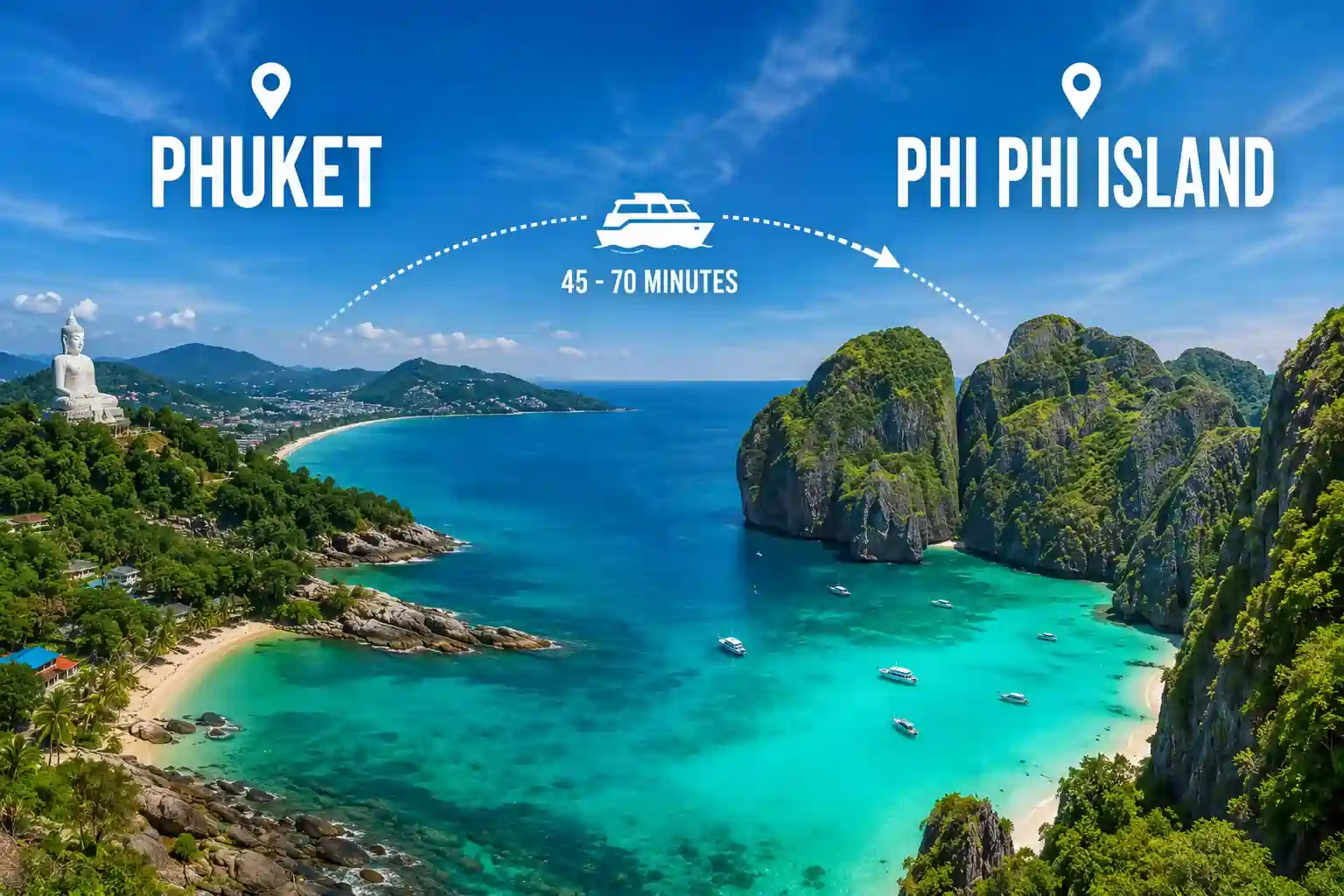
This is arguably the most iconic island hopping route in Thailand. Phuket gives you an international airport and a comfortable base, while the Phi Phi Islands deliver the dramatic scenery most people picture when they imagine Thailand's islands. The short ferry connection between the two makes it an easy add-on rather than a major logistical project.
How to Travel Between Phuket and Phi Phi
Ferries run regularly from Phuket's piers, with the crossing typically taking around 90 minutes to two hours depending on the operator and conditions. Speedboats are faster but cost more and can feel rougher in choppy seas. During peak season, roughly November through April, it's worth booking ferry tickets several days to a week ahead, since popular morning departures can sell out, especially around weekends and holidays. Outside peak season, booking a day or two ahead is usually enough.
Things to Do on Phi Phi Islands
- Maya Bay – The beach made famous by the film The Beach, now managed with visitor limits and timed entry to protect the coral and reduce crowding.
- Snorkeling – The waters around Phi Phi Leh are full of coral reefs and reef fish, with several spots accessible right off longtail boats.
- Viewpoints – Phi Phi Viewpoint above Tonsai Bay gives a sweeping look at the island's two curved bays, well worth the short hike or scooter ride up.
Book Phi Phi Island Tours
Explore Maya Bay, snorkeling spots, viewpoints, and the surrounding islands with a guided boat tour.
How Many Days to Spend
Two to three days on Phi Phi is generally enough to cover the main sights without rushing. Many travelers do it as a day trip from Phuket, but staying overnight lets you catch sunrise and sunset without the crowds that arrive on day-trip boats.
Who This Route Suits
This combination works well for first-time visitors, couples, and anyone who wants a short, scenic introduction to Thailand's islands without committing to a longer, more complex itinerary.
Krabi Island Hopping
Why Krabi Is a Great Base
Krabi sits on the mainland but functions almost like an island hub, with several boat tours departing daily to nearby island clusters. It's slightly less crowded than Phuket, generally a bit cheaper, and puts you within easy reach of some of the Andaman coast's best scenery.
Four Islands Tour
This is Krabi's signature day trip, typically covering:
- Chicken Island – Named for a rock formation that resembles a chicken's head, popular for snorkeling around its edges.
- Poda Island – A classic white-sand beach island, often a lunch stop on tours.
- Phra Nang Cave Beach – Backed by dramatic cliffs and home to a small shrine, this is one of the most photographed beaches in the region.
- Tup Island – Connected to a neighboring sandbar at low tide, creating a striking visual of two islands joined by a thin strip of sand.
Hong Islands Tour
A second popular day trip, the Hong Islands tour focuses on hidden lagoons, limestone cliffs, and calmer water that's well suited to kayaking. It tends to be slightly less crowded than the Four Islands route.
Phi Phi Day Trips from Krabi
Krabi also offers direct day trips to Phi Phi, which can be a useful option if you don't want to relocate your accommodation but still want to see Maya Bay and the surrounding snorkeling spots.
Recommended Duration
Three to four days in Krabi is usually enough to fit in one or two of these day trips along with some downtime, making it a flexible stop on a longer Andaman itinerary.
Book Krabi Island Hopping Tours
Explore the Four Islands, Hong Islands, Phi Phi, and other popular boat trips from Krabi.
Koh Samui, Koh Phangan and Koh Tao Route
Why This Route Works Well
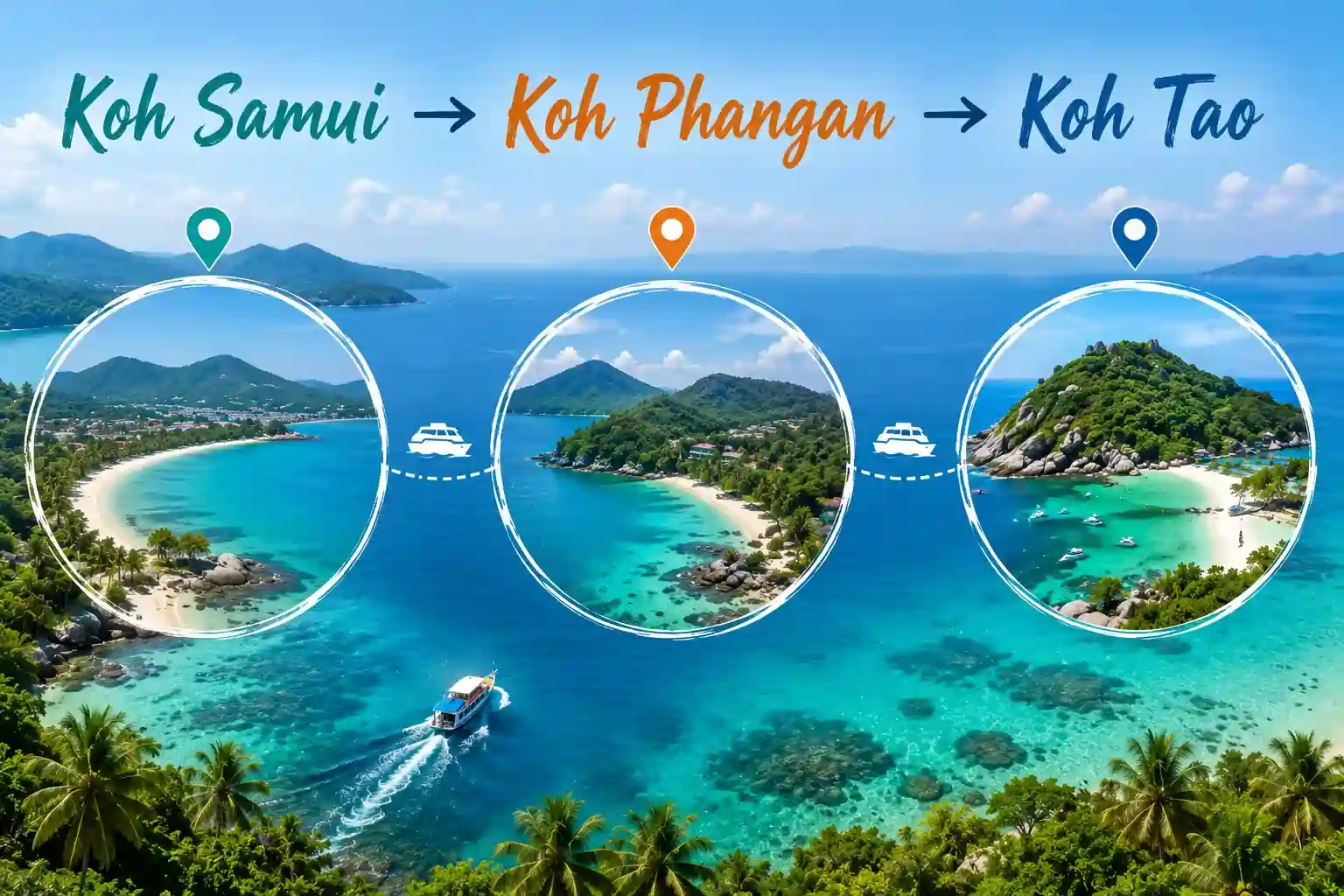
These three islands sit close together in the Gulf of Thailand and are connected by frequent ferries, making it easy to string together a route that touches resort life, nightlife, and diving in a single trip.
Koh Samui
- Beaches – Chaweng and Lamai are the main tourist beaches, with a wide range of resorts and restaurants along the shore.
- Resorts – Samui has some of the Gulf coast's most established luxury properties, along with plenty of mid-range options.
- Nightlife – Chaweng has a lively but more relaxed scene compared to Koh Phangan, with beach bars and clubs rather than an island-wide party atmosphere.
Koh Phangan
- Full Moon Party – Held monthly at Haad Rin Beach on Koh Phangan, this is one of the most recognized party events in the world, drawing large crowds for a night of music and beachside celebration.
- Wellness retreats – Away from Haad Rin, Koh Phangan has a strong yoga and wellness scene, particularly around the northern and western coasts.
- Quiet beaches – Spots like Bottle Beach and Thong Nai Pan offer a much calmer alternative to the island's party reputation.
Koh Tao
- Diving – Koh Tao is one of the cheapest places globally to take a PADI Open Water course, and the island is built around its dive shops.
- Snorkeling – Even non-divers can access excellent reef snorkeling close to shore.
- Relaxed atmosphere – Smaller and quieter than its neighbors, Koh Tao has a slower pace that suits travelers looking to unwind for a few extra days.
How to Travel Between the Islands
Ferries connect all three islands regularly, with Koh Samui generally functioning as the transport hub since it has the only airport among the three. Journey times are short, usually under two hours between any pair of islands, making this one of the easiest multi-island routes to plan in Thailand.
Book Thailand Island Ferries
Compare ferry and speedboat schedules between Thailand's most popular islands.
Ideal Length of Stay
A week across the three islands gives a reasonable balance, roughly two to three days each, though travelers focused on diving often extend their time on Koh Tao for a full certification course.
Explore Gulf Island Tours
Find snorkeling, diving, island hopping, and boat trips around Koh Samui, Koh Phangan, and Koh Tao.
Best Island Hopping Routes
7-Day Route
Phuket (2 days) to Phi Phi Islands (2 days) to Krabi (3 days), or alternatively Koh Samui (2 days) to Koh Phangan (2 days) to Koh Tao (3 days). A week is enough to cover one coast properly without rushing.
10-Day Route
Phuket (2 days) to Phi Phi Islands (3 days) to Krabi (3 days) to Koh Lanta (2 days), or the full Gulf coast trio with a few extra days split between Koh Samui, Koh Phangan, and Koh Tao. Adding Koh Lanta onto the end of the Andaman route gives the extra days somewhere new to go instead of doubling back on a destination you've already covered.
14-Day Route
Combine both coasts: start with Phuket, Phi Phi, and Krabi on the Andaman side, then fly to Koh Samui and continue to Koh Phangan and Koh Tao. Two weeks is generally the minimum needed to comfortably cover both coasts without constant rushing between transfers.
Book Flights Between Thailand's Coasts
Compare flights between Phuket, Bangkok, and Koh Samui to save time when combining both coasts.
Luxury Route
Phuket and Koh Samui, focusing on high-end resorts, private boat charters to nearby islands, and spa time rather than packed itineraries. Fewer islands, more time at each.
Backpacker Route
Krabi to Phi Phi Islands to Koh Phangan to Koh Tao, using budget guesthouses and public ferries, with the Full Moon Party as a natural highlight if the timing lines up.
Best Route for First-Time Visitors
Phuket to Phi Phi Islands to Krabi is the most forgiving introduction, since it covers iconic scenery, has a reliable transport network, and doesn't require flying between coasts.
How Much Does Island Hopping Cost?
Transportation Costs
Ferry tickets between major islands typically range from a few hundred to around a thousand Thai baht per leg, with speedboats costing more than standard ferries. Domestic flights between Bangkok, Phuket, and Koh Samui vary widely depending on how far in advance you book.
Compare Thailand Ferry Prices
Check current ferry and speedboat routes between Thailand's major islands.
Accommodation Costs
Costs depend heavily on the island and season. Krabi and Koh Tao tend to have more budget-friendly options, while Phuket and Koh Samui have a wider range that stretches into luxury territory.
Food and Daily Expenses
Local street food and small restaurants remain inexpensive across most islands, while beachfront restaurants and resort dining cost noticeably more. Tap water generally is not safe to drink without filtration, so bottled or filtered water is an ongoing small expense.
Tour Costs
Day trips like the Four Islands tour from Krabi or snorkeling trips around Phi Phi are usually sold as group tours at a fixed price, with private charters available at a higher cost for more flexibility.
Budget Travelers
Staying in guesthouses, eating local food, and using standard ferries rather than speedboats can keep daily costs quite low, especially on islands like Koh Tao and parts of Krabi.
Mid-Range Travelers
A mix of three-star hotels, occasional speedboat transfers, and a balance of local and restaurant dining is achievable across most of the popular routes without stretching into luxury pricing.
Luxury Travelers
Phuket and Koh Samui offer the widest range of high-end resorts, private boat charters, and fine dining, making them the natural focus for travelers prioritizing comfort over budget.
Money-Saving Tips
- Book ferries online in advance rather than through last-minute agents, where prices can be inflated.
- Travel during shoulder season for lower accommodation rates.
- Join group day trips instead of private charters when budget matters more than flexibility.
- Eat at local restaurants away from the main tourist strips.
Best Time for Island Hopping
November to February
November to February is generally considered the best window for both coasts, with dry weather, calmer seas, and comfortable temperatures. This is also peak tourist season, so prices and crowds are higher.
March to May
Hot and dry, particularly April, which is Thailand's hottest month. Seas are usually calm, making it a good period for boat trips, though the heat can be intense for extended outdoor activity.
June to October
This period brings the southwest monsoon, which affects the Andaman coast more heavily than the Gulf coast. Rain and rougher seas are more common, and some boat trips may be canceled during storms.
Weather Differences Between Coasts
The Andaman Sea's rainy season generally runs from around May to October, while the Gulf of Thailand's rainy season shifts later, typically falling between October and December. This means it's often possible to find good weather on one coast even when the other is experiencing heavier rain.
When to Avoid Certain Islands
Avoid the Andaman coast during peak monsoon months (roughly July through September) if rough seas are a concern, and be aware that the Gulf coast, including Koh Samui and Koh Phangan, can see its heaviest rain around October and November.
Travel Tips
Book Ferry Tickets in Advance
During high season and around the Full Moon Party, ferries can sell out. Booking a day or two ahead, or earlier for peak dates, avoids the stress of scrambling for a last-minute seat.
Travel Light
Frequent transfers between islands are much easier with a single backpack or a small suitcase rather than multiple large bags, especially when boats require carrying luggage on and off without much assistance.
Protect Electronics
Speedboats can get wet, and sudden rain showers are common. A dry bag or simply wrapping electronics in plastic before boarding any boat is a small habit that prevents a lot of regret.
Before leaving for your trip, check our Thailand Packing List for essential clothing, travel documents, waterproof gear, and other island-hopping essentials.
Watch Seasonal Weather Conditions
Check forecasts before booking boat trips during shoulder season months, since rough seas can lead to delays or cancellations with little notice.
Allow Flexibility for Delays
Ferries and speedboats occasionally run late or get rescheduled due to weather. Building a buffer day into your itinerary, especially before a flight home, reduces stress if a transfer doesn't go as planned.
Avoid Overpacking Your Itinerary
Trying to fit too many islands into too few days often means spending more time in transit than actually enjoying each place. It's usually better to see fewer islands properly than to rush through a long list.
Choosing the Right Combination of Islands
Pick islands that match your interests rather than just following a popular route. A diver will get more out of Koh Tao than a quick stop on Koh Samui, while a family might prioritize Krabi's calmer beaches over Koh Phangan's party scene.
Protect Your Island Hopping Trip
Get travel insurance for medical emergencies, travel disruptions, and unexpected problems during your Thailand trip.
FAQ
What is the best island hopping route in Thailand?
The best route depends on your interests, but Phuket to Phi Phi Islands to Krabi is the most popular and beginner-friendly option on the Andaman coast, while Koh Samui to Koh Phangan to Koh Tao is the standard route on the Gulf side.
How many days do I need for island hopping in Thailand?
A week is enough to explore one coast properly. Ten to fourteen days allows for a more relaxed pace or a combination of both the Andaman Sea and the Gulf of Thailand.
Which side of Thailand is better for island hopping?
Neither side is objectively better, they simply offer different experiences. The Andaman Sea has more dramatic scenery, while the Gulf of Thailand is known for its mix of nightlife, wellness culture, and diving.
Can I combine Phuket, Krabi, and Phi Phi Islands?
Yes, this is one of the most common Andaman coast routes, connected by short ferry rides and well suited to a trip of around seven to ten days.
Can I visit Koh Samui, Koh Phangan, and Koh Tao in one trip?
Yes, frequent ferries connect all three islands, making it easy to spend a few days on each as part of a single Gulf coast itinerary.
What is the cheapest way to island hop in Thailand?
Standard ferries are generally cheaper than speedboats, and booking tickets online in advance often costs less than buying through agents on arrival.
Which islands are best for first-time visitors?
Phuket, Phi Phi Islands, and Krabi offer a manageable introduction with reliable transport and a good mix of scenery and activities.
When is the best month for island hopping?
November through February generally offers the most reliable weather on both coasts, though it's also the busiest and most expensive time to travel.
Is island hopping in Thailand suitable for families?
Yes, particularly routes built around Krabi and parts of Koh Samui, which offer calmer beaches and shorter ferry transfers suited to traveling with children.
Do I need to book ferries in advance?
It's recommended, especially during high season or around events like the Full Moon Party, when popular departures can sell out.
Plan Your Thailand Trip
There's no single "correct" way to island hop through Thailand. The right route comes down to how much time you have and what you actually want from the trip, whether that's dramatic limestone scenery on the Andaman coast, the specific pull of the Full Moon Party, or quiet diving days on Koh Tao. What's clear across every route is that Thailand's islands are not interchangeable. Phuket feels nothing like Koh Tao, and Krabi's calm beaches are a world away from Haad Rin on a party night.
The travelers who get the most out of island hopping here tend to be the ones who resist the urge to see everything. Pick a coast, pick a pace, and leave enough room in the schedule for both the planned highlights and the slow afternoons that don't show up in any itinerary. That balance, more than any specific route, is what makes a Thailand island trip feel complete rather than rushed.