

Getting Around Thailand
Overview of Thailand's Transport Network
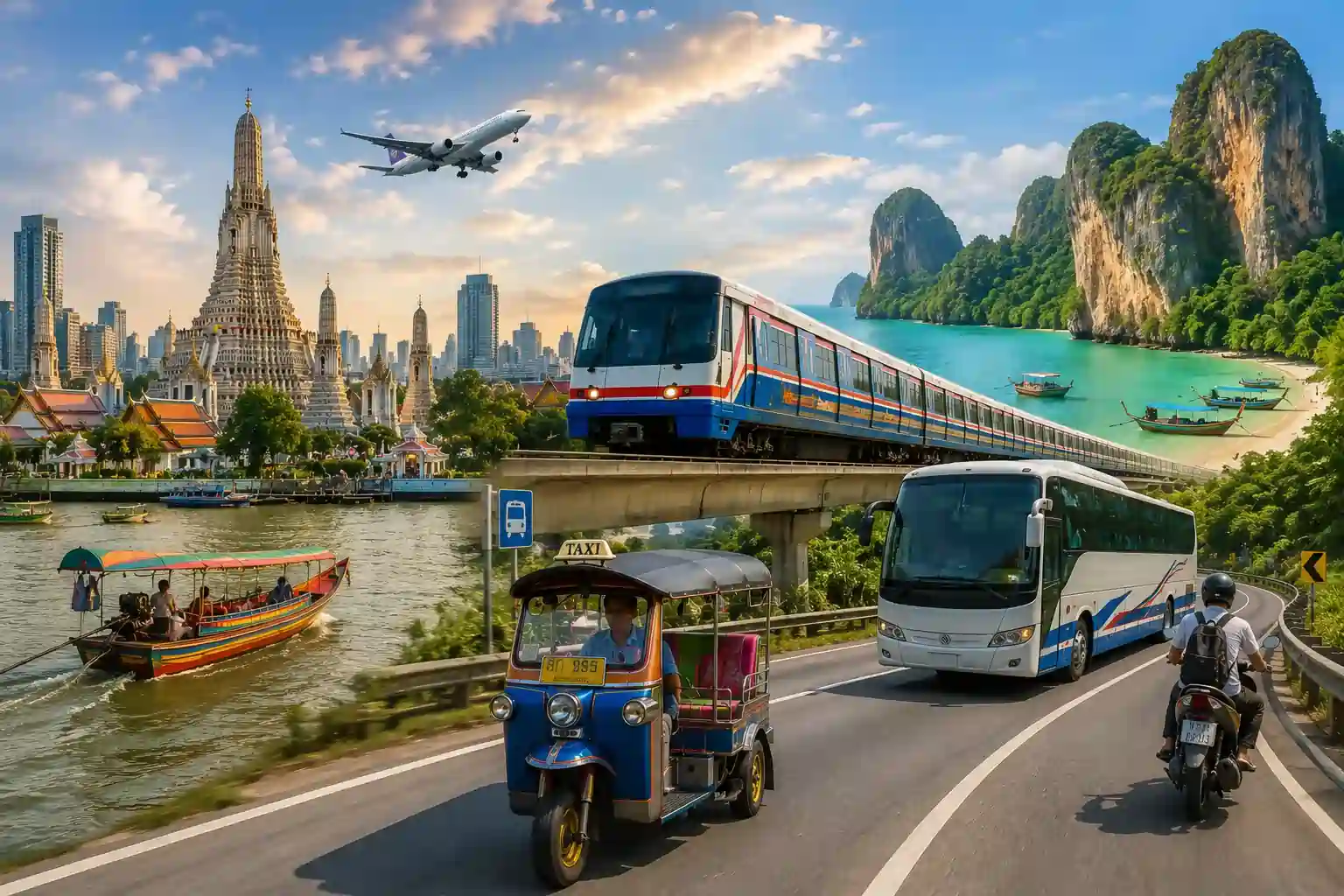
Thailand has one of the easiest transportation systems in Southeast Asia for visitors to navigate. Domestic flights, trains, buses, ferries, and urban transit networks connect the country's major cities, cultural destinations, beaches, and islands. The State Railway of Thailand links Bangkok with northern, central, and southern provinces, while extensive government and private bus services reach almost every destination. Low-cost airlines operate frequent domestic routes, and ferry services provide year-round connections to Thailand's most popular islands.
Major tourist destinations are well connected. Travellers moving between Bangkok, Chiang Mai, Phuket, Krabi, Koh Samui, Koh Phangan, and Koh Tao can usually choose from several transport options depending on their budget, schedule, and comfort preferences. One of the biggest advantages of travelling around Thailand is its affordability. Domestic flights are often inexpensive when booked in advance, overnight sleeper trains combine transportation with accommodation, and long-distance buses remain one of the country's most economical travel options.
Each transport option has its own advantages. Bangkok's BTS Skytrain and MRT provide fast and reliable travel around the capital. Domestic flights are ideal for long-distance journeys, trains offer a comfortable and scenic alternative, buses provide the widest route coverage, and ferries make island hopping straightforward throughout southern Thailand.
Choosing the Right Transport
Choosing the right mode of transport depends on four key factors: distance, budget, available time, and personal comfort. Understanding how these factors affect your journey will help you choose the most efficient option.
Distance is usually the most important consideration. For journeys under three hours by road or rail, flying often offers little advantage once airport transfers, check-in, and security procedures are included. For journeys of six hours or more, domestic flights or overnight sleeper trains are generally the most efficient choices.
Budget also plays an important role. Long-distance buses are typically the most affordable option, while trains provide excellent value, especially on overnight services where your ticket also covers accommodation. Low-cost airlines frequently offer competitive fares, although prices increase during school holidays and the peak travel season.
If your itinerary is short, domestic flights often provide the best balance between speed and convenience, allowing you to spend more time exploring destinations rather than travelling between them.
Comfort preferences vary from traveller to traveller. Some people enjoy the experience of Thailand's overnight sleeper trains, while others prefer the speed of flying. VIP buses provide larger seats and additional amenities, making them a comfortable choice for long-distance journeys.
Best Transport for First-Time Visitors
For a typical first visit that includes Bangkok, Chiang Mai, and southern Thailand, combining domestic flights with local public transport offers the best balance of speed, convenience, and cost. Families planning on traveling with children should prioritize direct flights where possible, use the BTS and MRT for getting around Bangkok, rely on Grab or songthaews for local transport in Chiang Mai, and fly to Phuket or Krabi before continuing to nearby islands by ferry. During the peak travel season, booking flights, trains, ferries, and popular routes at least a week in advance is highly recommended.
Domestic Flights

Why Domestic Flights Are Popular
Domestic flights are one of the fastest and most convenient ways to travel around Thailand, especially when covering long distances. They save significant travel time and are often far more affordable than many first-time visitors expect.When promotional fares fall between 500 and 1,500 THB, flying often becomes the most practical choice, offering substantial time savings for only a small increase in cost compared with buses or trains.
Affordable fares are available throughout the year but are most competitive when booked four to eight weeks in advance. Last-minute bookings, particularly during the Christmas and New Year period, can be several times more expensive.
Long distances between Bangkok and the southern resort areas make flying the default choice for most visitors with limited time. Krabi is over 900 kilometres from Bangkok by road. Chiang Mai is around 700 kilometres north. These are distances where flying changes the character of the trip entirely.
Major Domestic Airports
Bangkok is served by two major airports, each catering to different types of airlines and travellers. Suvarnabhumi (BKK) handles most full-service carriers and some low-cost routes. Don Mueang (DMK) is the main hub for low-cost carriers including AirAsia and Nok Air. If you are connecting from an international flight at Suvarnabhumi to a domestic low-cost flight from Don Mueang, allow at least four hours for the transfer.
Chiang Mai Airport (CNX) serves the north and handles a high volume of domestic traffic. It is small, easy to navigate, and well connected to the city centre.
Phuket International Airport (HKT) is the busiest airport in southern Thailand and handles both domestic and international traffic. Taxi and Grab services are reliable but the airport is about 45 minutes from Patong Beach.
Krabi Airport (KBV) is a smaller airport serving the Krabi and Ao Nang area. It is convenient and less chaotic than Phuket.
Surat Thani Airport (URT) is the gateway for travellers heading to Koh Samui, Koh Phangan, and Koh Tao. Although Koh Samui has its own private airport, many budget-conscious travellers choose Surat Thani because flights are typically much cheaper, even after adding the ferry transfer.
Popular Flight Routes
Bangkok to Chiang Mai is one of the most frequently flown domestic routes in the country. Multiple carriers operate it throughout the day, fares are competitive, and the one-hour flight saves around nine hours compared to the train.
Bangkok to Phuket is one of Thailand's busiest domestic air routes, with dozens of daily departures from both Bangkok airports throughout the year. This is the most popular domestic route by passenger volume during the high season.
Bangkok to Krabi is served by several airlines and is the preferred choice for travellers heading to Railay Beach, Ao Nang, or island-hopping in the Krabi archipelago.
Bangkok to Koh Samui is operated primarily by Bangkok Airways, which owns Samui Airport. Because of this, fares are generally higher than on other domestic routes. Many travellers reduce costs by flying to Surat Thani and continuing by ferry. Many travellers choose to fly to Surat Thani and take the ferry instead.
Airlines Commonly Used
Full-service carriers operating domestic routes include Thai Airways and Bangkok Airways. Both offer generous baggage allowances and in-flight meals on most routes.
Low-cost airlines operate the majority of domestic flights in Thailand. AirAsia, Nok Air, and Thai Lion Air offer extensive networks between major destinations, although checked baggage is usually charged separately on the lowest fares. Baggage is charged separately on most fares, so factor this in when comparing prices.
When Flights Make Sense
Domestic flights are usually the best option when overland travel would take more than six hours, your itinerary is short, or you're travelling between destinations with limited rail connections. They also make sense when the airfare is only slightly higher than the cost of a train or bus.
When Flights Are Not Necessary
Flying is unnecessary for short journeys such as Bangkok to Ayutthaya, which is only about 80 kilometres away and easily reached by train, bus, or car.
Flights are also unnecessary for short island transfers where ferries are quick, affordable, and part of the overall travel experience. For example, ferries between Koh Samui and Koh Phangan take around 30 to 45 minutes and are the preferred way to travel between the islands.
Thailand Trains

Overview of Thailand Rail Travel
Train travel in Thailand is slower than flying, but it offers a completely different travel experience. The scenic northern railway from Bangkok to Chiang Mai passes through rice fields, forested hills, traditional villages, and small rural stations, providing a glimpse of everyday life beyond the country's major tourist destinations. Overnight sleeper trains allow travellers to cover long distances while they sleep, arriving at their destination refreshed and often saving the cost of one night's accommodation.
Affordability is another major advantage. A second-class sleeper from Bangkok to Chiang Mai typically costs between 700 and 1,000 THB, offering excellent value when compared with the combined cost of a budget hotel and daytime transportation. Trains also provide more space to move around than buses, making longer journeys considerably more comfortable.
The State Railway of Thailand offers online ticket booking through its official website. While the booking system is relatively straightforward, many international travellers also use reputable third-party platforms such as 12Go Asia for their English-language interface, multiple payment options, and combined train and ferry bookings.
Popular Train Routes
Bangkok to Chiang Mai is Thailand's most iconic rail journey. Depending on the train service, the trip takes approximately 12 to 15 hours and is best experienced as an overnight journey in a sleeper carriage.
Bangkok to Ayutthaya is one of the country's easiest and most popular day trips. Trains depart regularly from Hua Lamphong and Krung Thep Aphiwat (Bang Sue Grand Station), taking around 90 minutes at a very affordable price.
Bangkok to Surat Thani is a popular overnight route for travellers heading to Koh Samui, Koh Phangan, and Koh Tao. Morning arrivals provide convenient connections to buses and ferries serving Thailand's Gulf islands.
Sleeper Trains
Overnight sleeper trains are considered one of Thailand's classic travel experiences. Although they are not luxurious, they are clean, comfortable, and provide a relaxing alternative to long-distance buses or domestic flights for travellers who enjoy slower journeys.
Booking well in advance is highly recommended, particularly for first and second-class sleeper berths on the popular Bangkok to Chiang Mai route. These often sell out several days or even weeks before departure during the peak travel season. Tickets can be purchased through the State Railway of Thailand or trusted booking platforms.
Accommodation varies by class. First class features private air-conditioned cabins with two berths, making them ideal for couples or travellers seeking additional privacy. Second class offers comfortable upper and lower berths within shared air-conditioned carriages separated by curtains. Third class consists of standard seats and is generally unsuitable for overnight travel.
Pros of Train Travel
- Comfortable seating and more space to move around than most long-distance buses.
- Overnight sleeper services allow you to travel while you sleep and save on accommodation costs.
- Scenic railway routes showcase Thailand's countryside and rural landscapes.
- Dining cars, onboard refreshments, and station vendors make food easily available during longer journeys.
- Rail travel avoids road congestion and provides a more relaxed travel experience.
Cons of Train Travel
- Journey times are considerably longer than domestic flights.
- Train delays can occur, particularly on long-distance routes.
- The railway network does not directly reach destinations such as Krabi or Thailand's islands.
- Older train carriages may have less reliable air conditioning and fewer modern facilities.
Is the Chiang Mai Train Worth It?
For travellers who enjoy scenic journeys and have a flexible itinerary, the overnight train to Chiang Mai is absolutely worth considering. It combines transportation with accommodation, offers beautiful countryside views, and remains one of Thailand's most memorable rail experiences.
If your priority is reaching Chiang Mai as quickly as possible or you have limited time, a domestic flight will usually be the better option.
Long Distance Buses
How Thailand's Bus System Works
Thailand has an extensive long-distance bus network operated by a combination of government and private companies. The government-run Transport Co. operates from major terminals such as Mo Chit (Northern Bus Terminal), Ekkamai (Eastern Bus Terminal), and Sai Tai Mai (Southern Bus Terminal) in Bangkok. Private operators, including Nakhon Chai Air and several regional companies, offer comfortable VIP and express services that can be booked online or at bus terminals.
Most long-distance buses depart from dedicated terminals rather than city centres, so allow enough time to reach the correct station before departure. Popular routes operate throughout the day, while overnight buses are a convenient option for longer journeys across the country.
Popular Bus Routes
Bangkok to Phuket takes approximately 12 to 14 hours and is served by both standard and VIP buses. Most overnight departures leave in the evening and arrive early the following morning.
Bangkok to Krabi usually takes between 11 and 13 hours depending on traffic and the operator. Some services continue directly to Ao Nang, making them convenient for beach travellers.
Bangkok to Chiang Mai takes around nine to ten hours. Several private operators provide comfortable VIP coaches with reclining seats, blankets, air conditioning, and complimentary snacks or refreshments.
VIP vs Standard Buses
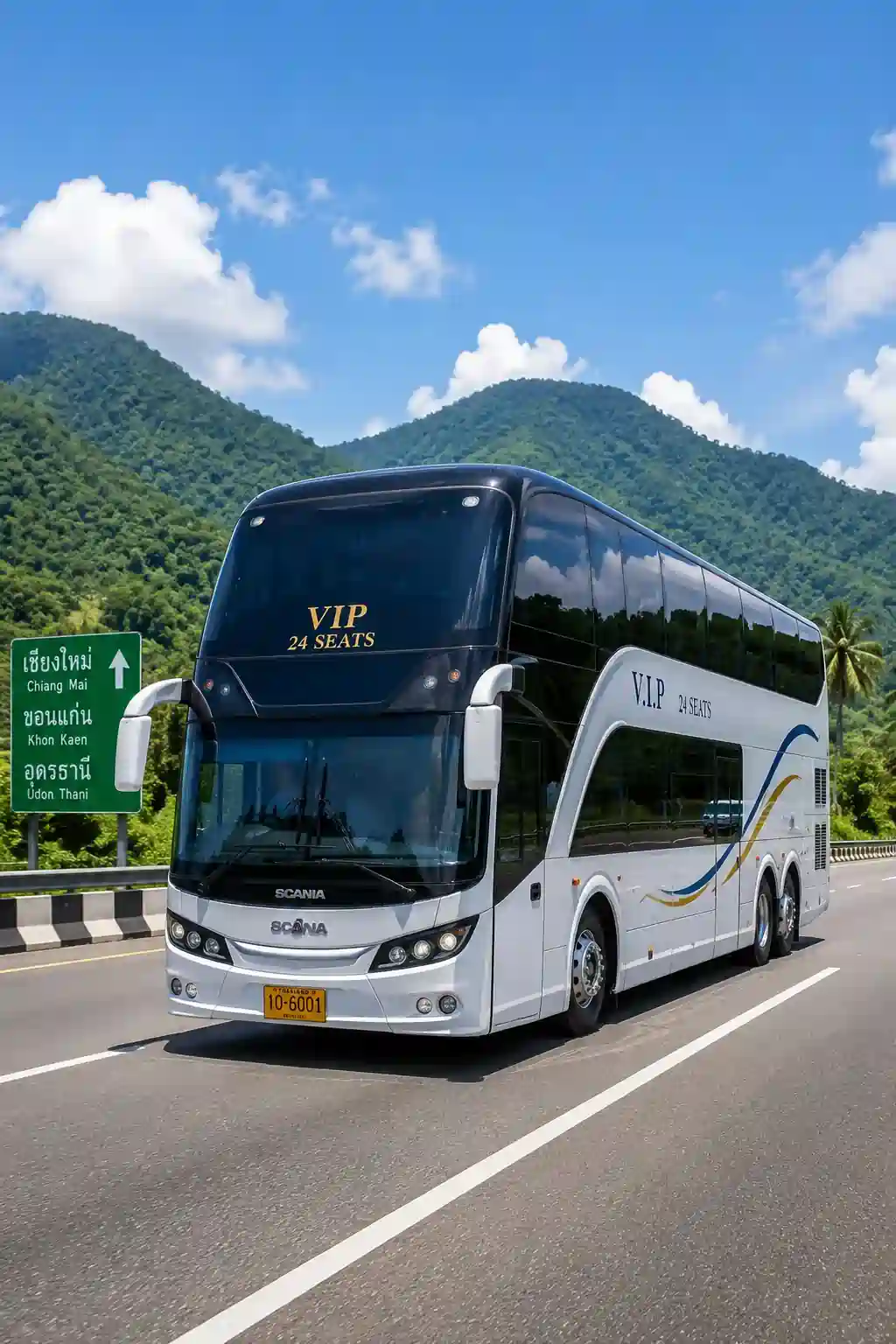
VIP buses generally feature 24 seats arranged in a spacious 2+1 configuration, providing generous legroom, reclining seats, air conditioning, blankets, and, on some services, complimentary meals or snacks. They offer a noticeably more comfortable experience for overnight travel.
Standard buses carry more passengers with narrower seating and fewer onboard amenities. While they are more affordable, they can feel crowded on longer journeys.
For overnight routes or journeys lasting more than eight hours, paying a little extra for a VIP bus is usually worthwhile for the added comfort and better sleep.
Advantages of Bus Travel
- Buses are one of the most affordable ways to travel long distances in Thailand.
- They reach many destinations that are not served by trains or direct domestic flights.
- Frequent departures provide flexibility throughout the day and night.
- There is no airport security or lengthy check-in process, making boarding straightforward.
Disadvantages of Bus Travel
- Long-distance journeys can take significantly longer than domestic flights.
- Traffic congestion, particularly around Bangkok, can cause delays.
- Standard buses may feel crowded and less comfortable during overnight trips.
- Some overnight services include multiple scheduled stops that may interrupt sleep.
When to Choose Buses Instead of Flights
Long-distance buses are a good choice when travelling on a tight budget, visiting destinations without convenient flight connections, or when you prefer overnight travel to save on accommodation costs. They are also useful when flights are fully booked or unusually expensive during holidays and peak travel periods.
For most visitors following a typical one or two-week Thailand itinerary, buses are generally best suited to regional journeys or destinations without rail connections, while domestic flights remain the faster option for travelling between Bangkok and southern Thailand.
Island Ferries and Boats

Why Ferries Matter in Thailand
Many of Thailand's most famous destinations are islands, making ferry travel an essential part of many itineraries. Popular destinations such as Phi Phi Islands, Koh Samui, Koh Phangan, Koh Tao, and the smaller islands around Krabi and Phuket can only be reached by sea. Thailand's well-developed ferry network connects the mainland with these islands through frequent services, making island hopping both convenient and affordable for travellers.
Popular Ferry Routes
Phuket to Phi Phi takes approximately 90 minutes by standard ferry or around 45 minutes by speedboat. Multiple operators run daily departures throughout the high season, making it one of Thailand's busiest ferry routes.
Krabi to Phi Phi takes around 90 minutes and is the preferred departure point for travellers staying in Ao Nang or Krabi Town before continuing to the islands.
Phuket to Koh Yao is a short crossing of roughly 30 minutes, providing easy access to the quieter islands of Koh Yao Yai and Koh Yao Noi.
Surat Thani to Koh Samui usually takes about two hours on Raja Ferry or Seatran services. Combined bus-and-ferry tickets from Bangkok are widely available and remain one of the most economical ways to reach the Gulf islands.
Koh Samui to Koh Phangan takes approximately 30 to 45 minutes, with frequent departures throughout the day operated by several ferry companies.
Speedboats vs Ferries
Speedboats are the fastest way to travel between islands, making them a popular choice for travellers with limited time. However, they are usually more expensive and provide a rougher ride, particularly during windy conditions or rough seas.
Standard ferries travel at a slower pace but offer greater stability, larger seating areas, and more luggage space. They are generally the preferred option for families, older travellers, and anyone prone to seasickness.
For most island journeys lasting under two hours, standard ferries provide the best balance of comfort, reliability, and value unless your schedule requires the faster speedboat service.
Booking Ferry Tickets
During the low season, ferry tickets for most routes can usually be purchased directly at the pier on the day of travel. Availability is generally good outside major holidays.
Between November and February, as well as during Thai public holidays and long weekends, booking ferry tickets in advance is strongly recommended because popular sailings often sell out.
Online booking platforms such as 12Go Asia and Lomprayah make it easy to compare operators, departure times, travel durations, and ticket prices before travelling.
Weather and Seasonal Considerations
Thailand's two main coastal regions experience different weather patterns throughout the year.
The Andaman coast generally experiences its rainy season between May and October, while the Gulf islands follow a different weather pattern. If you're unsure when to travel, see our Best Time to Visit Thailand guide for a detailed month-by-month weather breakdown.
The Andaman coast generally experiences its rainy season between May and October, when rough seas may reduce ferry frequencies or temporarily suspend some routes. During the same period, conditions in the Gulf of Thailand are often calmer, although weather can still vary.
Before travelling during the rainy season or shoulder months, always check weather forecasts and ferry schedules, as departures may change depending on sea conditions.
Common Ferry Mistakes
One of the most common mistakes is arriving at the pier without a ticket during the peak travel season and discovering that the day's departures are already fully booked. Booking in advance helps avoid unnecessary delays and disappointment.
Travellers also occasionally arrive at the wrong departure pier, particularly in Phuket, where different piers serve different ferry operators and island routes.
Always confirm your departure pier, check your boarding time carefully, and arrive at least 30 to 45 minutes before departure to allow sufficient time for check-in and boarding.
Bangkok BTS and MRT

What Are BTS and MRT?
The BTS Skytrain and MRT (Mass Rapid Transit) are Bangkok's two modern urban rail systems. The BTS operates on elevated tracks above many of the city's main roads, connecting popular areas such as Sukhumvit, Silom, Siam, Victory Monument, and the Chatuchak area. The MRT mainly runs underground, linking important commercial districts, residential neighbourhoods, and transport hubs while connecting with the BTS at several interchange stations.
Both systems are air-conditioned, clean, affordable, and highly reliable. For most visitors, they provide the fastest and easiest way to travel around central Bangkok while avoiding the city's heavy road traffic.
Why They Matter for Tourists
Bangkok is well known for its traffic congestion, particularly during weekday rush hours. A taxi journey of only a few kilometres can easily take 45 minutes or longer, while the same trip by BTS or MRT may take only 10 to 15 minutes. Using Bangkok's rail network allows travellers to spend more time exploring the city instead of sitting in traffic.
Many of Bangkok's major shopping malls, hotels, restaurants, business districts, and tourist attractions are located within walking distance of BTS or MRT stations. For visitors staying in central Bangkok, public transport is often the quickest, most convenient, and most economical way to get around.
BTS Routes Most Tourists Use
The Sukhumvit Line is the most useful BTS route for visitors. It connects popular neighbourhoods including Mo Chit, Ari, Victory Monument, Siam, Asok, Nana, Phrom Phong, Thong Lo, Ekkamai, and continues towards the eastern suburbs.
The Silom Line links Siam with the Silom business district before reaching Saphan Taksin Station, where travellers can easily transfer to the Chao Phraya Express Boat for attractions along the river.
MRT Routes Most Tourists Use
The MRT Blue Line connects many important destinations, including Hua Lamphong Railway Station, Chatuchak Weekend Market, Sukhumvit, Silom, and Bangkok's growing commercial districts. It also provides convenient interchange stations with the BTS network, making travel across the city straightforward.
The MRT Yellow Line and Pink Line primarily serve Bangkok's outer suburbs and are less commonly used by short-term visitors, although they may be useful depending on your accommodation or itinerary.
Buying Tickets
Single-journey tickets are available from ticket machines and staffed counters at every BTS and MRT station. The machines provide English-language menus, making them easy for international visitors to use.
Travellers staying in Bangkok for several days may benefit from purchasing a Rabbit Card for the BTS or an MRT Stored Value Card. These rechargeable cards eliminate the need to buy individual tickets and make travelling through the system faster and more convenient.
BTS vs Taxi Comparison
Outside peak traffic periods, taxis can sometimes be more convenient for destinations that are far from BTS or MRT stations, particularly in Bangkok's older neighbourhoods or quieter residential areas.
During weekday rush hours, generally between 7:00 and 9:00 am and 5:00 and 8:00 pm, the BTS and MRT are usually much faster, more predictable, and often more economical than travelling by road.
Using Public Transport During Rush Hour
BTS and MRT trains become extremely busy during the morning and evening commuting periods. Platforms can be crowded, queues may form at ticket gates, and trains often operate at full capacity.
If you need to travel during these times, allow extra time for your journey, avoid carrying large luggage where possible, and expect a busy but well-organised commuting experience. Outside peak hours, both systems are significantly quieter and more comfortable.
Grab and Local Transport
Using Grab in Thailand
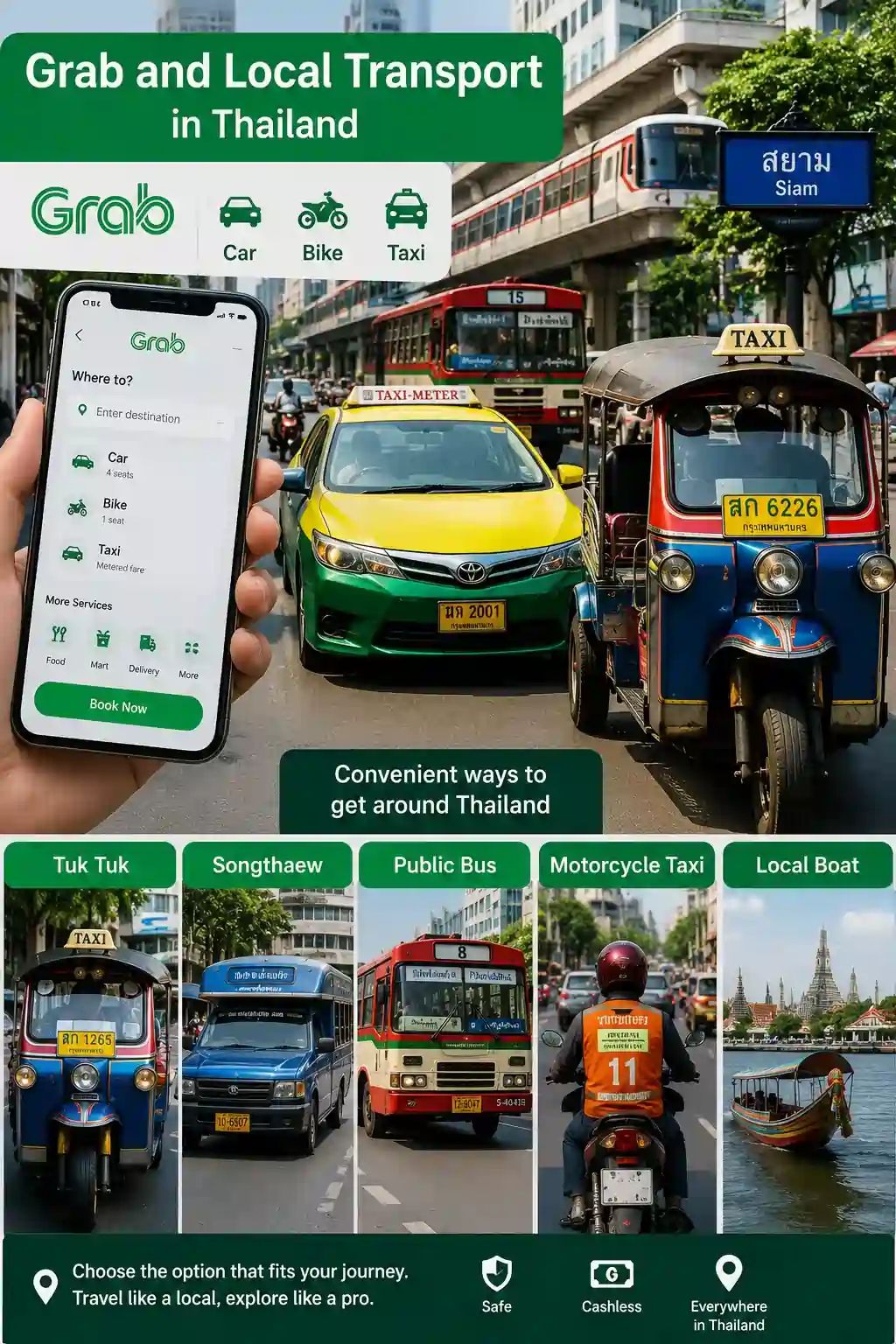
Grab is the leading ride-hailing app in Southeast Asia and is widely available across Thailand. It operates in Bangkok, Chiang Mai, Phuket, Krabi, Pattaya, Hua Hin, and many other popular tourist destinations. Similar to Uber, the app allows you to enter your destination, view the fare before booking, track your driver in real time, and pay using cash, credit card, or other supported payment methods.
Download the Grab app before your trip and complete your registration in advance using a local or international mobile number. Setting up your preferred payment method beforehand makes booking rides faster and more convenient once you arrive in Thailand.
Why Tourists Prefer Grab
Many visitors prefer Grab because it removes the uncertainty that can sometimes come with traditional taxis, particularly in busy tourist areas. The fare is confirmed before your journey begins, the route is tracked through the app, and both the driver and passenger can communicate using built-in messaging and translation features.
For travellers who do not speak Thai, Grab offers a simple, reliable, and stress-free way to get around without worrying about explaining destinations or negotiating fares.
Grab vs Taxis
Metered taxis are legal, widely available, and generally inexpensive for short journeys in Bangkok. However, some drivers near airports, major attractions, and busy hotels may refuse to use the meter and instead quote higher fixed prices.
If you politely request that the driver use the meter, many will agree. Grab removes the need for fare negotiations by displaying the price before you confirm the booking, making it a popular choice for international visitors.
Outside Bangkok, Grab operates in most major tourist destinations, although driver availability may be lower during peak periods or in smaller towns. In these situations, local taxis or tuk-tuks are often good alternatives.
Tuk-Tuks
Tuk-tuks are Thailand's iconic three-wheeled vehicles and remain one of the country's most recognisable transport experiences. They are particularly popular in Bangkok's historic districts and throughout Chiang Mai, offering a fun and memorable way to travel short distances.
Although they are enjoyable to ride, tuk-tuks are rarely the most economical option. Fares are negotiated before departure and are often higher than those charged by metered taxis or Grab for similar journeys.
One of the most common tourist scams involves drivers offering unusually cheap rides before suggesting visits to jewellery stores, tailor shops, or other businesses where they receive commission. Politely decline any unexpected shopping stops if your goal is simply to reach your destination.
When They Are Worth Trying: Short journeys around busy tourist areas, exploring Chiang Mai's Old City, or simply enjoying a classic Thailand travel experience.
Common Tourist Mistakes: Accepting the first quoted fare without negotiating, taking a tuk-tuk for airport transfers, or agreeing to trips that include unnecessary shopping stops.
Songthaews
Songthaews are converted pickup trucks fitted with two bench seats in the rear and operate as shared taxis in Chiang Mai and many other towns across Thailand. They are one of the most affordable ways to travel locally.
In Chiang Mai, the distinctive red songthaews follow flexible routes throughout the city and typically charge between 30 and 50 THB per passenger for standard trips, although fares may vary depending on distance.
Once you become familiar with how they operate, songthaews are an inexpensive, practical, and authentic way to travel alongside local residents.
Chiang Mai Transport
Getting around Chiang Mai is straightforward thanks to its compact layout. Grab is widely available for direct journeys, while red songthaews provide an economical way to travel around the city throughout the day.
Bicycles and scooters are also popular rental options for exploring Chiang Mai and the surrounding countryside. Tuk-tuks operate within the city as well, although they are less common than those found in Bangkok.
Local Transport Tips
Always agree on the fare before boarding any vehicle that does not use a meter. Carrying small-denomination Thai baht is also helpful, as some drivers may not have sufficient change for larger banknotes.
For airport transfers in smaller cities, booking through your hotel or using Grab is often the easiest way to avoid inflated fares and enjoy a smoother arrival experience.
Motorbike Taxis
Motorbike taxis are easily recognised by the bright coloured vests worn by their riders and can be found throughout Bangkok and many other Thai cities. They are particularly useful for navigating narrow sois (side streets) or bypassing heavy traffic during busy periods.
When to Use Them: For short journeys in congested areas, travelling between BTS or MRT stations and nearby destinations, or when you need the quickest way to reach locations that are difficult to access by car.
Safety Considerations: Always wear the helmet provided, hold on securely throughout the journey, and avoid using motorbike taxis during heavy rain or for long-distance travel. If you ever feel uncomfortable with the speed or driving style, ask the rider to slow down or end the trip at a safe location.