

Kanchanaburi Travel Guide
Kanchanaburi is a historic town in western Thailand known for its dramatic landscapes, river scenery, and important World War II history. Located about 130 kilometers from Bangkok, the town is one of the most popular destinations for travelers looking to explore Thailand beyond the capital.
The region is famous for the Bridge over the River Kwai, the historic Death Railway, and the beautiful waterfalls inside Erawan National Park. Visitors come to Kanchanaburi to learn about its wartime history, hike through tropical forests, and relax along the scenic River Kwai. This Kanchanaburi travel guide explains the top attractions, things to do in Kanchanaburi, how to visit from Bangkok, and helpful travel tips for exploring this fascinating destination.
Why Visit Kanchanaburi
Kanchanaburi offers a unique combination of history, nature, and peaceful river landscapes. Unlike the busy atmosphere of Bangkok, the town has a slower pace and a relaxing environment surrounded by mountains and forests.
One of the main reasons travelers visit Kanchanaburi is the famous Bridge over the River Kwai, a historic railway bridge built during World War II. The area also contains several museums and memorials that explain the story of the Thai–Burma Railway.
Nature lovers are drawn to the region for its waterfalls and national parks. Erawan National Park is one of the most beautiful natural areas in Thailand and is known for the stunning seven-tier Erawan Waterfall.
The River Kwai adds another scenic element to the town. Many hotels, restaurants, and cafés sit along the riverbanks, creating a peaceful atmosphere. With its mix of historical landmarks and natural beauty, Kanchanaburi has become one of the most interesting destinations in western Thailand.
Best Places to Visit in Kanchanaburi
Kanchanaburi has several famous landmarks and attractions that attract visitors from around the world.
Bridge over the River Kwai
The Bridge over the River Kwai is the most famous landmark in Kanchanaburi. The bridge forms part of the historic Thai–Burma Railway, which was constructed during World War II using forced labor by prisoners of war.
Today, visitors can walk across the bridge and see trains crossing the river. The surrounding area also has markets, small museums, and scenic viewpoints along the river.
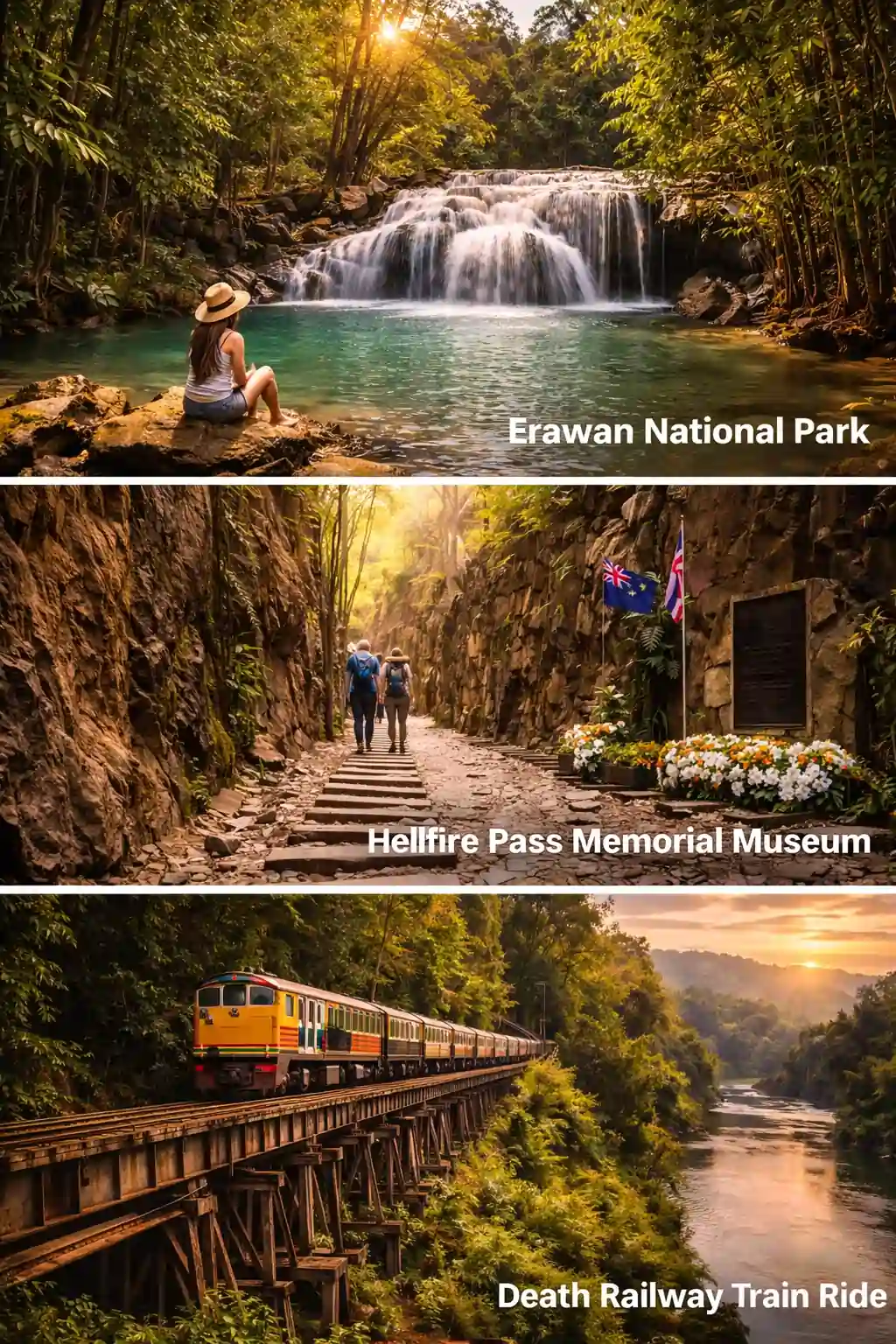
Erawan National Park
Erawan National Park is one of Thailand’s most beautiful national parks. The park is famous for the Erawan Waterfall, a stunning seven-tier waterfall surrounded by dense jungle.
Visitors can hike through the park to reach each level of the waterfall and swim in the natural pools.
Hellfire Pass Memorial Museum
Hellfire Pass is one of the most important historical sites in the region. The Hellfire Pass Memorial Museum tells the story of prisoners of war who were forced to cut through mountains to build the railway.
A walking trail through the pass allows visitors to see the original railway cutting and learn about the history of the area.
JEATH War Museum
The JEATH War Museum is another important site in Kanchanaburi. The museum explains the history of the Thai–Burma Railway and the experiences of prisoners of war during World War II.
Photographs, documents, and exhibits provide insight into one of the most difficult periods in the region’s history.
Death Railway Train Ride
One of the most memorable experiences in Kanchanaburi is the Death Railway train ride. The railway runs along dramatic cliffs and crosses the River Kwai.
The train journey provides scenic views of forests, rivers, and mountains while also connecting visitors to the historical significance of the railway.
Erawan Waterfall
The Erawan Waterfall in Kanchanaburi is considered the most famous natural attraction in the region.
The waterfall consists of seven tiers, each with its own pool and scenic surroundings. The water has a clear turquoise color, which makes it one of the most beautiful waterfalls in Thailand.
Visitors usually start the hike from the base of the waterfall and climb gradually to the upper levels. Each tier offers a different viewpoint, and several levels have natural pools where visitors can swim.
The trail through the forest is well maintained and passes through lush jungle scenery. Because of its beauty and accessibility, Erawan Waterfall is often the highlight of visiting Kanchanaburi.
Things to Do in Kanchanaburi
There are many interesting things to do in Kanchanaburi, combining both historical exploration and outdoor activities.
One of the most popular activities is visiting the historic war sites related to the Thai–Burma Railway. Museums, memorials, and cemeteries around the town help visitors understand the historical significance of the area.
Hiking to Erawan Waterfall is another must-do experience. Many travelers spend a full day exploring the waterfall tiers and swimming in the pools.
The Death Railway train ride offers a unique way to see the landscape while learning about the history of the railway.
Relaxing along the river is also a popular activity. Many cafés and restaurants near the River Kwai offer scenic views where visitors can enjoy meals or drinks.
Local markets around the town provide opportunities to try Thai street food, buy souvenirs, and experience everyday life in Kanchanaburi.
Best Time to Visit Kanchanaburi
Kanchanaburi can be visited throughout the year, but the weather varies depending on the season.
November to February
This is the best time to visit Kanchanaburi. The weather is cooler and more comfortable for sightseeing, hiking, and exploring waterfalls.
March to May
These months are part of Thailand’s hot season. Temperatures can be high during the day, but waterfalls and river areas still provide enjoyable experiences.
June to October
This is the rainy season in Thailand. The surrounding forests and mountains become very green, and waterfalls are at their most powerful. However, occasional rain showers can occur.
How to Reach Kanchanaburi
Kanchanaburi is located about 130 kilometers from Bangkok, making it an easy destination to visit
Travel time from Bangkok usually takes 2 to 3 hours depending on the transport option.
Train from Thonburi Station
One of the most scenic ways to reach Kanchanaburi is by train from Thonburi Railway Station in Bangkok. The train follows the historic railway route and offers beautiful countryside views.
Bus or Minivan
Buses and minivans regularly travel between Bangkok and Kanchanaburi. This is one of the fastest and most affordable ways to reach the town.
Private Taxi
Travelers who prefer comfort can hire a private taxi from Bangkok. This option is more expensive but provides direct transportation to hotels or attractions.
Because of its close distance to the capital, Kanchanaburi is also a popular day trip from Bangkok.
For detailed information about trains, buses, domestic flights, ferries, and getting around the country, read our Thailand Transportation Guide.
Where to Stay in Kanchanaburi
Kanchanaburi offers several accommodation options for different types of travelers.
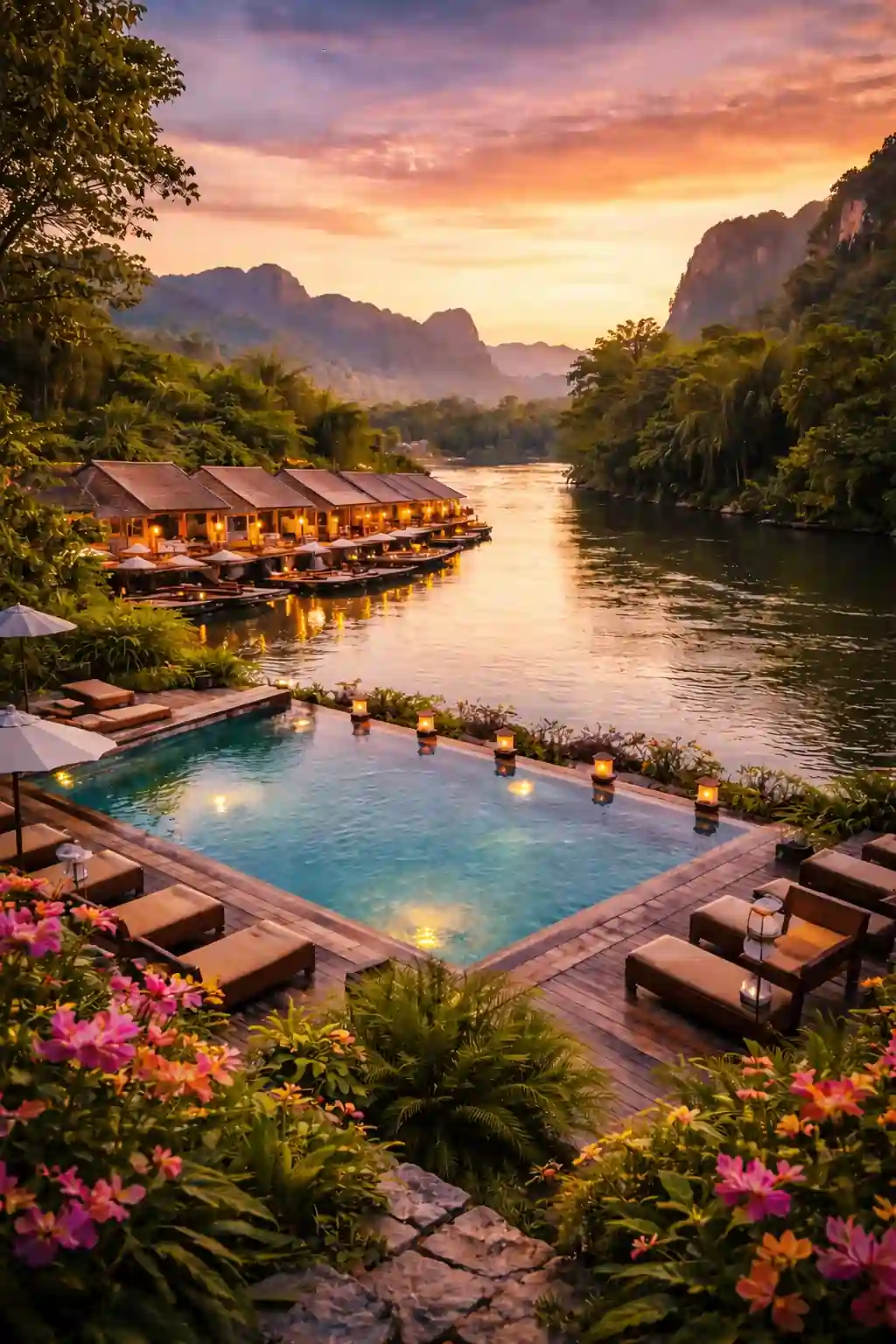
River Kwai Area
Many hotels are located along the River Kwai. These riverside accommodations provide beautiful views and a peaceful atmosphere.
Floating hotels and riverfront resorts are popular choices in this area.
Town Center
The town center offers budget hotels, guesthouses, and restaurants. This area is convenient for travelers who want easy access to markets, transport, and local attractions.
Both areas provide good options depending on whether you prefer scenic views or convenience.
Estimated Cost of Visiting Kanchanaburi
Kanchanaburi is generally an affordable destination in Thailand.
Transportation from Bangkok by train or bus typically costs between ฿100 and 200 per person.
Budget accommodation can start from around 500 to 800 Thai Baht per night, while mid-range hotels may cost between ฿1,200 and 2,500 per night.
Meals at local restaurants usually cost between ฿60 and 150.
Entrance fees for national parks and museums vary, but most attractions are reasonably priced.
Overall, Kanchanaburi offers good value for travelers looking to explore both history and nature.
Kanchanaburi Travel Tips
Here are some helpful tips for visiting Kanchanaburi.
Start your visit to Erawan Waterfall early in the day to avoid crowds and heat.
Carry drinking water and sunscreen when exploring outdoor attractions, especially during the hot season.
When visiting historical memorial sites, maintain respectful behavior as these locations honor the memory of those who suffered during World War II.
Wear comfortable walking shoes for hiking trails, especially in national parks.
If you plan to take the Death Railway train ride, check train schedules in advance.
Kanchanaburi Travel Guide FAQ
Is Kanchanaburi worth visiting?
Yes, Kanchanaburi is definitely worth visiting. The town offers a unique mix of historical landmarks, scenic rivers, and beautiful waterfalls.
How many days should I spend in Kanchanaburi?
Most travelers spend 1 to 2 days in Kanchanaburi. This allows enough time to visit Erawan Waterfall, explore historical sites, and take the railway train ride.
Can you visit Kanchanaburi as a day trip from Bangkok?
Yes, many travelers visit Kanchanaburi as a day trip from Bangkok. However, staying overnight allows more time to explore the waterfalls and national parks.
If you have extra time in the capital, don't miss our guide to the best Things to Do in Bangkok.
What is the best way to travel to Kanchanaburi?
The most common ways to reach Kanchanaburi are by train, bus, minivan, or private taxi from Bangkok. Travel time usually takes around 2 to 3 hours.
Continue Planning Your Thailand Adventure
Kanchanaburi is one of the most rewarding destinations near Bangkok, known for the Bridge over the River Kwai, Erawan National Park, scenic waterfalls, riverside resorts, and rich World War II history. Many travelers include Kanchanaburi as part of a broader Thailand itinerary before continuing to destinations such as Chiang Mai, Phuket, or Krabi.
Use the guides below to build your perfect Thailand itinerary, discover more destinations, estimate your travel budget, and explore everything from vibrant cities and tropical beaches to national parks and cultural landmarks.