

Chiang Dao
Why Visit Chiang Dao
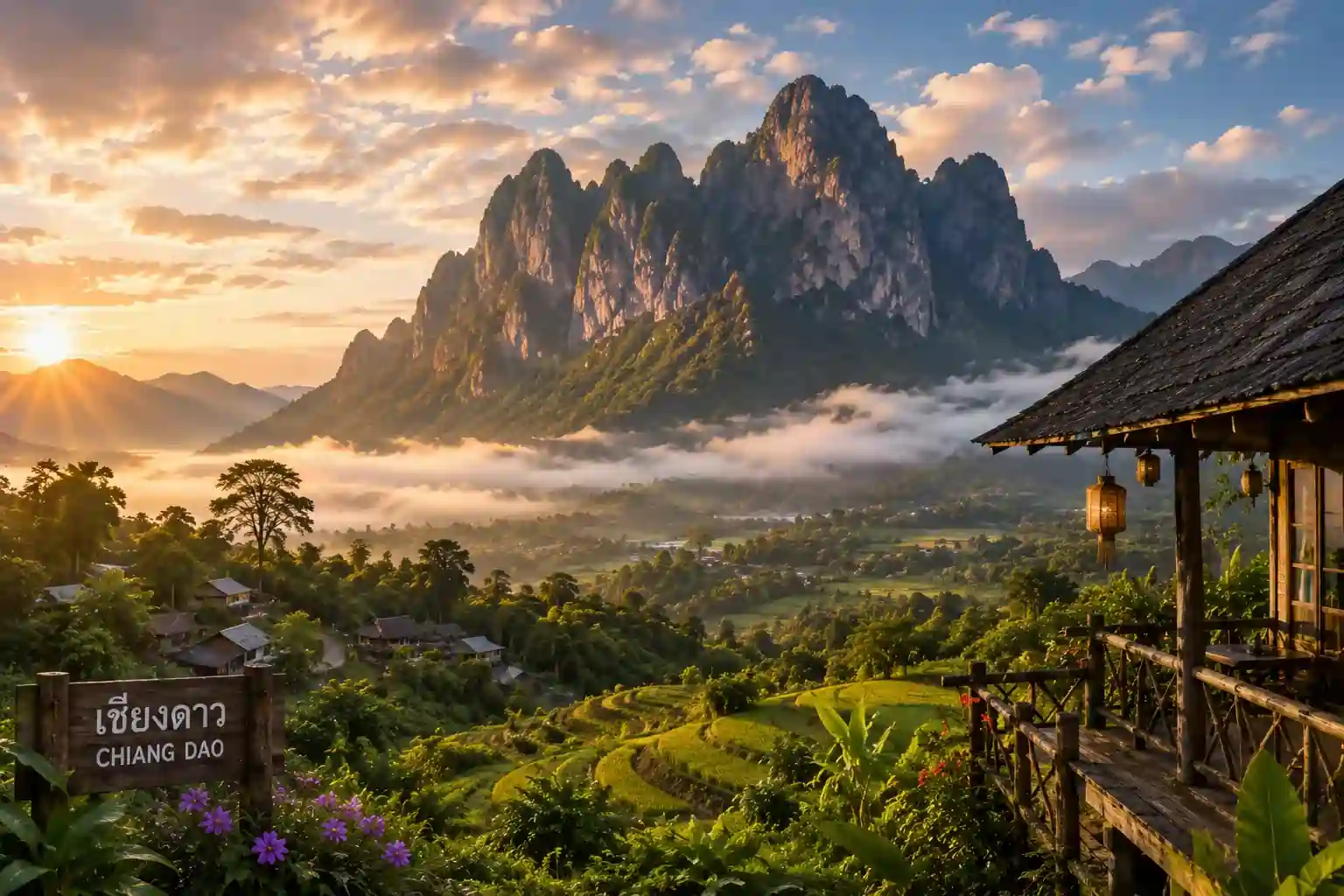
Chiang Dao sits about 70 kilometers north of Chiang Mai, close enough for a day trip but compelling enough to deserve two or three nights. The town is anchored by the Chiang Dao massif, a limestone mountain that rises to around 2,175 meters and creates one of the most striking backdrops in northern Thailand. Unlike the gentler hills around Chiang Mai, this is dramatic terrain, the kind that changes color through the day as light and cloud move across it.
The village itself has developed a small but thoughtful tourism infrastructure over the past decade without losing its relaxed character. There are guesthouses, modest restaurants, and a handful of tour operators who know the area well. What there is not, at least not yet, is the kind of saturation that has reshaped towns like Pai into something closer to a festival permanent installation.
Highlights and Things to Do
Mountain Scenery
The views from Chiang Dao are reason enough to visit. Early mornings bring mist that fills the valley and makes the peak appear to float above the cloud line. The surrounding area includes trails, dirt roads, and viewpoints accessible by motorbike or on foot that most day-trippers from Chiang Mai never reach.
Chiang Dao Cave Complex
The cave system here is one of the most impressive in northern Thailand and significantly less visited than Tham Lod near Pai. There are five caves in total, two of which require a local guide and lantern to navigate. The interiors contain Buddha statues, stalactites, and chambers large enough to feel genuinely cavernous. The experience is more raw than what you find at commercialized cave sites, which is part of its appeal.
Temples
Wat Tham Chiang Dao, built at the mouth of the main cave, is a working temple with monks in residence. The site has a peaceful, unselfconscious quality that distinguishes it from temples in more tourist-heavy areas.
Nature Experiences
The area around Chiang Dao is productive territory for birdwatchers. The Chiang Dao Wildlife Sanctuary contains species that are difficult to spot elsewhere in Thailand, and local guides specialize in early-morning birding walks. The surrounding forest also makes for good hiking, particularly in the cooler months.
Best Time to Visit
November through February is the optimal window. Temperatures are comfortable, the sky is clear, and the misty mornings that give the mountain its character are at their most reliable. March and April bring heat and some haze from agricultural burning. The wet season from May to October sees fewer visitors and lush green landscapes, but trails can become difficult and views are often obscured.
How to Get There
From Chiang Mai, the most straightforward option is renting a motorbike or car and driving north on Route 107. The journey takes around 75 to 90 minutes depending on traffic and stops. Alternatively, songthaews (shared red trucks) depart from Chiang Mai's Chang Phueak bus terminal in the mornings and cost very little. There is no direct train or flight.
Who Will Enjoy Chiang Dao
Chiang Dao is particularly well suited to nature lovers, hikers, and anyone who finds satisfaction in landscapes that feel genuinely wild. Birdwatchers will find it outstanding. Photographers who want mountain light without sharing it with tour groups will be happy here. It is also a good choice for travelers coming off a busy Chiang Mai itinerary who want to decompress without going too far.
Wiang Kaen
Why Visit Wiang Kaen
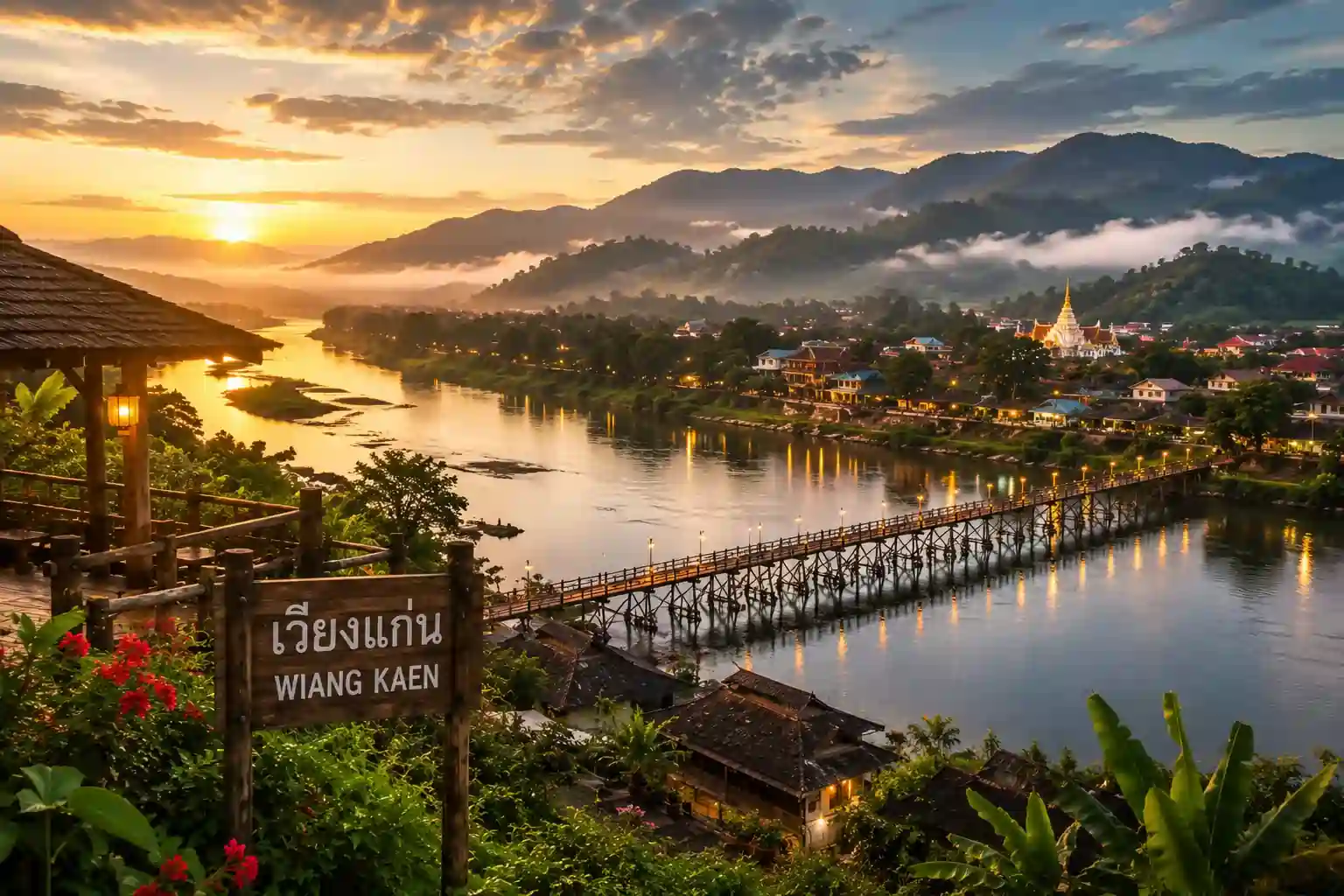
Wiang Kaen is a district in Chiang Rai Province that runs along the Mekong River near the point where Thailand, Laos, and Myanmar converge. This is the far north of Thailand, a region with its own distinct geography, culture, and pace of life that feels substantively different from anywhere further south.
The area receives very few international tourists, which means the experience here is genuinely unmediated. You are not following a well-marked trail of guesthouses and Instagram coordinates. You are in a place that exists on its own terms, where the main economic activities are fishing, farming, and a modest amount of cross-border trade rather than hospitality.
Highlights and Things to Do
Mekong River Scenery
The Mekong here is wide, powerful, and visually compelling, particularly at sunrise and in the late afternoon when the light turns the water a deep gold. Sitting at the river's edge is one of those experiences that sounds unremarkable in description but lands differently in person. Watching boat traffic, the Laotian hills across the water, and the pace of activity along the banks gives a sense of a border that is both real and porous.
Mountain Viewpoints
The terrain inland from the river rises into forested hills with viewpoints that look out over the valley and, on clear days, deep into Laos and Myanmar. Some of these can be reached by motorbike on unpaved roads; others require a short hike.
Border Region Atmosphere
Wiang Kaen has the particular atmosphere of a place that has been shaped by proximity to multiple countries and their cultural crosscurrents. You encounter Akha, Lahu, and other highland minority communities here whose dress, language, and traditions differ from lowland Thai culture. The local markets reflect this diversity in what is sold, how it is prepared, and who is buying.
Best Time to Visit
The cool season from November to February offers the most comfortable travel conditions and the clearest views. The Mekong is lower in the dry season, which changes the character of the riverbanks but makes them more accessible. The wet season (June to October) brings fuller rivers and dense greenery but makes some rural roads difficult to navigate without a capable vehicle.
How to Get There
Chiang Rai is the base for reaching Wiang Kaen. From Chiang Rai city, the district is roughly 90 to 120 minutes by road, depending on your specific destination within it. Renting a motorbike or car in Chiang Rai gives the most flexibility. Public songthaews exist but run infrequently and require patience. There are no flights or trains into the area.
Who Will Enjoy Wiang Kaen
Travelers interested in border cultures, highland minority communities, and landscapes with a genuinely remote quality will find Wiang Kaen rewarding. It is also a strong choice for photographers drawn to river light, mountain mist, and the visual texture of a working border town. It is not a destination for travelers who want structured activities or reliable tourist infrastructure.
Ban Rak Thai
Why Visit Ban Rak Thai
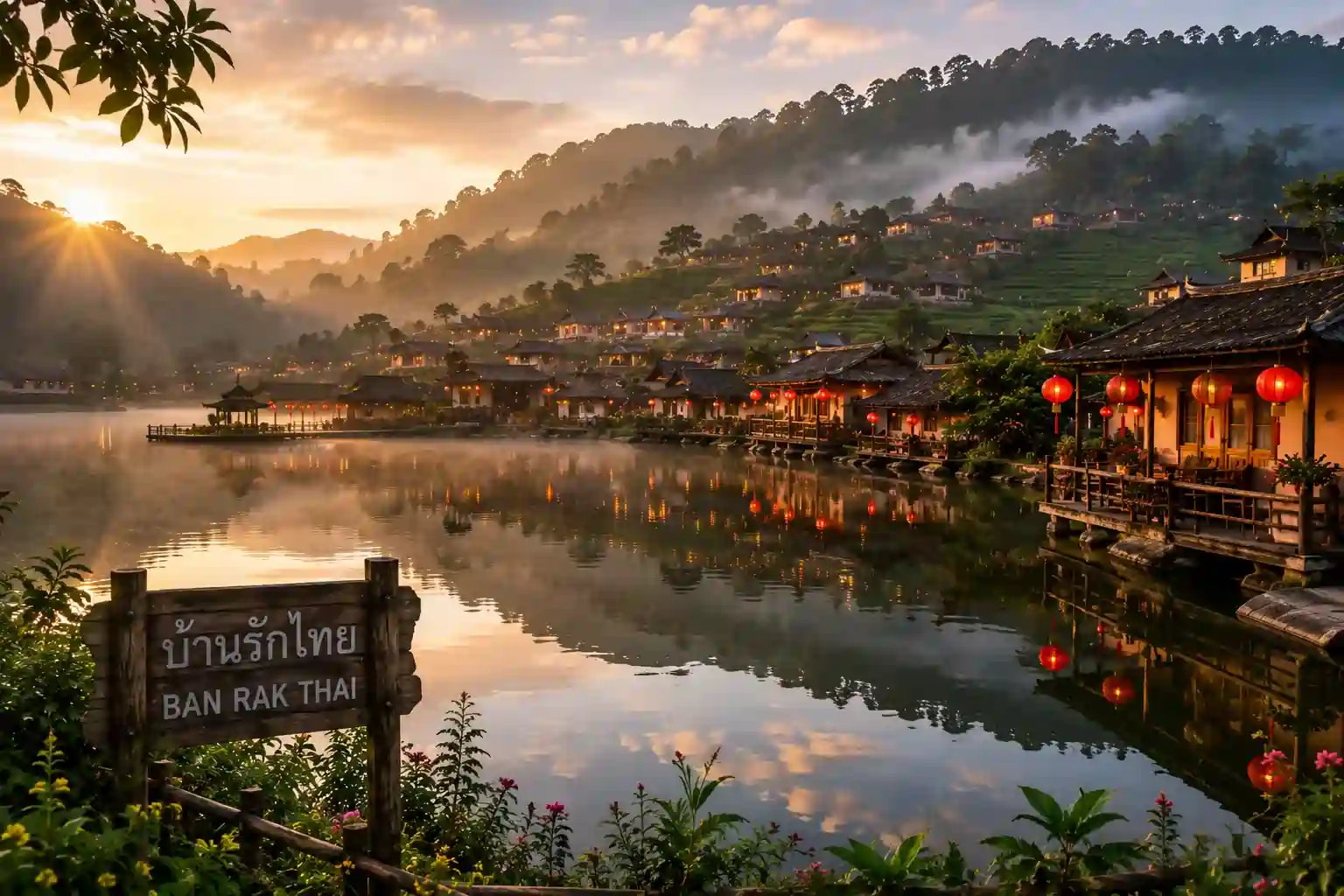
Ban Rak Thai, whose name translates loosely as "village that loves Thailand," was founded by Yunnanese Chinese who fled the aftermath of the Chinese Civil War in the late 1940s and 1950s. The community settled in the mountains of Mae Hong Son Province and brought with them their language, food, architectural traditions, and the knowledge of tea cultivation that defines life here today.
The result is a village that looks and feels unlike anything else in Thailand. The architecture references Yunnan more than Thai tradition. Mandarin is spoken alongside Thai. The tea produced on the surrounding hillsides is of genuine quality and consumed in the Chinese manner. This is living cultural history in a form that is rare and fragile.
Highlights and Things to Do
Yunnanese Heritage
Walking through Ban Rak Thai is the primary attraction. The village is small enough to cover on foot, and the buildings, shrines, community spaces, and daily routines you observe tell a coherent story about a community that has preserved its identity over generations while building a life in a very different country.
Tea Plantations
The hills around the village are covered in tea bushes, and several family-run operations welcome visitors for tastings and explanations of their cultivation and processing methods. This is not a commercialized experience with souvenir packaging; it is a conversation with producers about work they take seriously.
Lakeside Scenery
The village sits beside a reservoir lake that creates a tranquil, photogenic backdrop, particularly in the early morning when mist hangs over the water and the surrounding hills are still in shadow.
Best Time to Visit
November through February is strongly preferred. The elevation makes temperatures genuinely cool by Thai standards, sometimes cold enough to require a jacket in the evenings. This also happens to be the most atmospherically compelling time of year, with mist, clear skies, and the tea harvest providing visual and sensory richness. Avoid the rainy season if possible, as the mountain roads can become challenging.
How to Get There
Ban Rak Thai is approximately 45 kilometers north of Mae Hong Son town, accessible via a mountain road that is narrow, winding, and spectacular. The drive takes around 90 minutes from Mae Hong Son. Mae Hong Son itself is reached by domestic flight from Chiang Mai (around 40 minutes) or by a long but scenic drive. Having your own vehicle for the final stretch to Ban Rak Thai is essentially necessary; public transport options are minimal.
Who Will Enjoy Ban Rak Thai
This is a destination for travelers who find the intersection of culture and landscape compelling. Food-focused travelers who care about tea and regional Chinese cuisine will find it particularly rewarding. Photographers will be drawn to the morning light on the lake, the tea plantations, and the architectural details of the village. Anyone with an interest in diaspora communities and how cultures adapt and persist across borders will find Ban Rak Thai genuinely moving.
Bang Pa-In
Why Visit Bang Pa-In
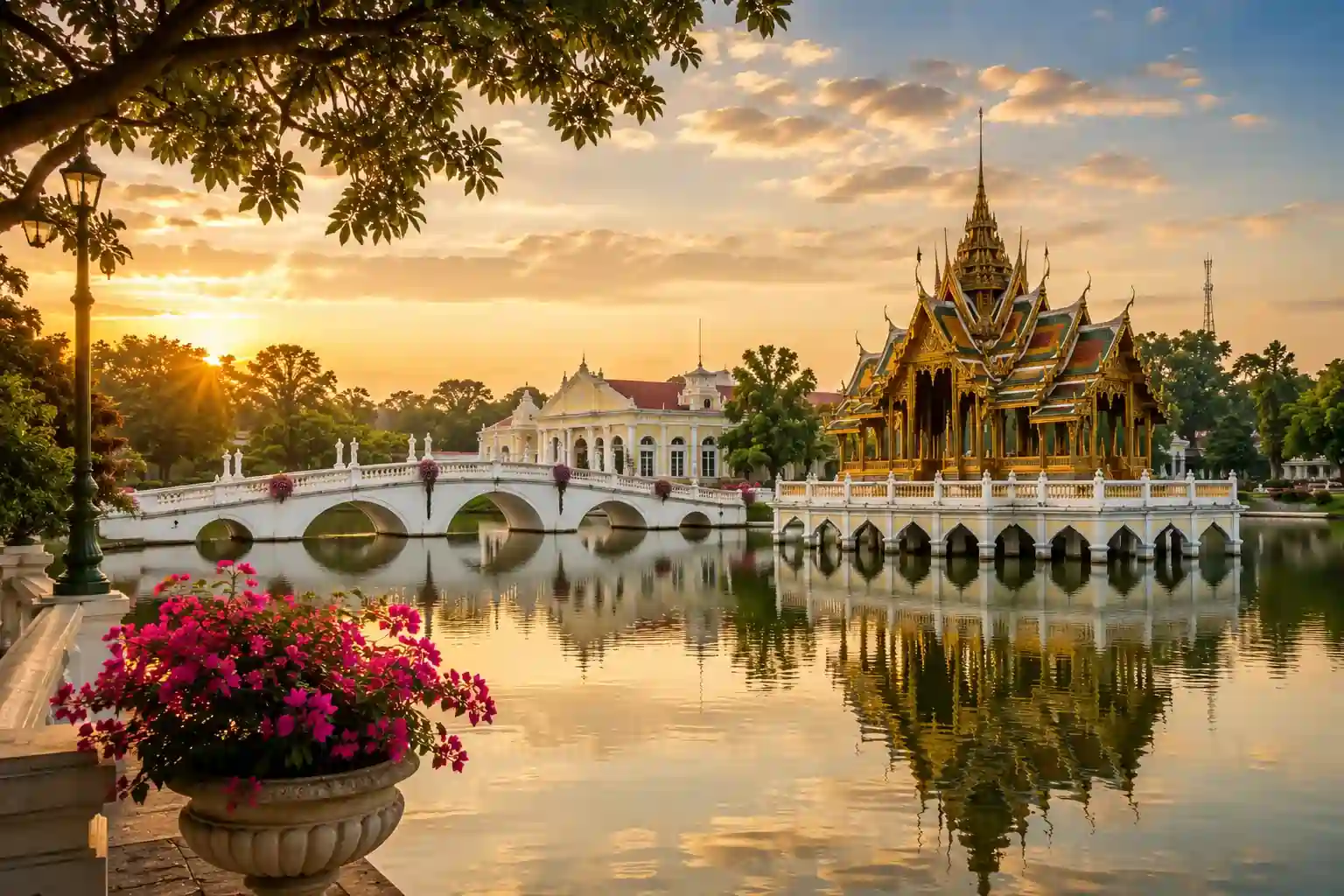
Bang Pa-In is home to a royal palace complex that is one of the most architecturally eccentric and historically interesting sites in the country, and yet it draws only a fraction of the visitors who queue for the Grand Palace in Bangkok. The Royal Palace at Bang Pa-In, also known as the Summer Palace, was developed primarily during the reigns of Rama IV and Rama V in the nineteenth century and contains buildings in Thai, Chinese, European, and Gothic Revival styles arranged across a series of islands and landscaped grounds.
The eclecticism is deliberate: Rama V, who traveled extensively in Europe, used architecture as a way of expressing Thailand's modernity and its engagement with the wider world during a period when colonial pressure from Western powers was a real and constant concern. The result is something that reads simultaneously as political statement, royal vanity project, and genuinely lovely space.
Highlights and Things to Do
Royal Palace Complex
The grounds contain multiple distinct buildings, each in a different architectural tradition, connected by bridges, lawns, and waterways. The Aisawan Thiphya-Art pavilion, a Thai-style structure built on the lake, is perhaps the most photographed element. The Chinese-style Wehat Chamrun Palace was a gift from the Thai-Chinese community and remains remarkably intact. The Gothic-influenced tower and the Renaissance-style Warophat Phiman mansion add to the sense that you are walking through an architectural anthology.
Architecture
For anyone interested in the history of how non-Western rulers navigated colonial-era expectations and aesthetics, Bang Pa-In is a fascinating case study. The buildings are not imitations; they are deliberate choices made in a specific political and cultural context.
Day Trip Potential
Bang Pa-In is around 60 kilometers north of Bangkok, making it a very manageable day trip from the capital. It pairs well with nearby Ayutthaya, the ancient capital whose ruins are one of the most significant historical sites in Southeast Asia.
Best Time to Visit
November through March offers comfortable temperatures and avoids the heaviest rains. The grounds are extensive and largely open to the sky, so extreme heat in April and May can make a visit tiring. Weekday mornings are significantly quieter than weekends, when Thai visitors make up much of the crowd.
How to Get There
From Bangkok, a train from Hua Lamphong or Bang Sue stations to Bang Pa-In station is easy and inexpensive; the journey takes around 90 minutes. From the station, the palace is a short tuk-tuk or motorbike taxi ride. Alternatively, driving takes around an hour from central Bangkok outside of rush hour. Many visitors combine Bang Pa-In with Ayutthaya in a single day; the two sites are about 20 kilometers apart.
Who Will Enjoy Bang Pa-In
History enthusiasts and architecture lovers will get the most from Bang Pa-In. It is also an excellent choice for travelers who want a significant royal and cultural site without the intensity of the Grand Palace experience. Photographers will find the variety of architectural styles and the reflective lake surfaces endlessly interesting. Families with children may appreciate the spacious grounds and the novelty of the mixed architectural styles.
Mae Kampong

Why Visit Mae Kampong
Mae Kampong is a village in the Mae On District of Chiang Mai Province, sitting at roughly 1,000 meters elevation in a forested valley about 50 kilometers east of Chiang Mai city. The village is around a century old, originally settled by farmers from the Doi Saket area who came to cultivate tea and fermented tea leaves, a tradition that continues today.
What distinguishes Mae Kampong from the average northern Thai village is the combination of specific, named attractions and a community that has managed to engage with ecotourism without losing the agricultural identity that makes it worth visiting in the first place. The village is compact enough to walk entirely on foot, small enough that you feel oriented within an hour, and layered enough that a night or two spent here rewards slower attention.
Highlights and Things to Do
Mae Kampong Village and Tea Culture
The village's main economic traditions are tea cultivation and the production of miang, fermented tea leaves that are chewed rather than brewed. Local family operations welcome visitors to see how leaves are processed and aged, and this is one of the few places in Thailand where this particular tradition is still a living practice rather than a demonstration.
Mae Kampong Waterfall and Forest Trails
A waterfall sits within easy walking distance of the village center, accessible via a trail through dense forest. The surrounding terrain offers additional hiking, and the elevation keeps temperatures noticeably cooler than Chiang Mai below.
Wat Mae Kampong
The village's only temple, built in 1930 and still in active use, sits within the village and gives a sense of community life that is unaffected by visitor presence.
Homestays and Local Accommodation
Mae Kampong pioneered community-based homestay tourism in northern Thailand, and the family-run accommodations here are some of the most genuine in the region. Staying overnight rather than visiting as a day trip from Chiang Mai changes the experience significantly.
Best Time to Visit
November through February is the most comfortable period, with cool temperatures that make the elevation genuinely pleasant rather than merely bearable. The tea harvest season adds particular interest from late October onward. The wet season brings lush forest conditions and full waterfalls but muddy trails and persistent rain.
How to Get There
Mae Kampong is approximately 50 kilometers from central Chiang Mai via Route 1317 through the San Kamphaeng area. The drive takes around 60 to 75 minutes by motorbike or car. Renting a scooter or car in Chiang Mai is the most practical option; the road is well-paved for most of the route, with the final stretch winding up into the hills. Some tour operators in Chiang Mai run day trips and overnight visits to Mae Kampong if you prefer not to self-drive.
Who Will Enjoy Mae Kampong
Travelers who want a highland village experience with specific cultural content, rather than vague rural atmosphere, will find Mae Kampong considerably more satisfying than most "off the beaten path" village recommendations. Food-focused travelers interested in fermented tea and traditional northern Thai cultivation will find it genuinely distinctive. Hikers and photographers will be well served by the waterfall, forest trails, and the visual texture of the village itself.
Chak Ngaew
Why Visit Chak Ngaew
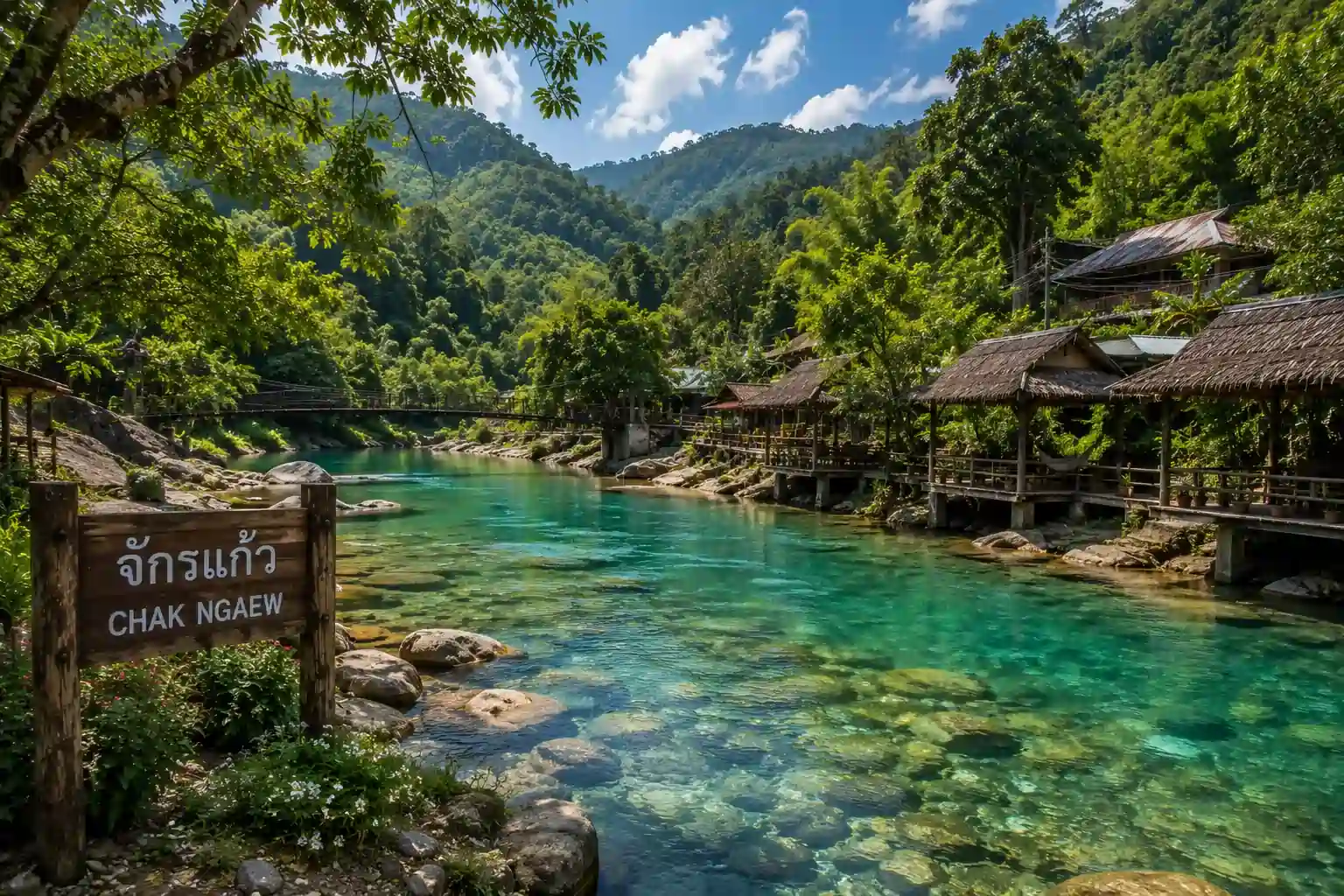
Chak Ngaew (also written Ban Chak Ngaeo) is a community in the Huai Yai subdistrict of Bang Lamung District, Chonburi Province, located less than 10 kilometers from Pattaya on Thailand's eastern seaboard. Despite that proximity to one of the country's most visited resort cities, Chak Ngaew occupies an entirely different world: a Chinese village established around 200 years ago by Chaozhou immigrants from Guangdong Province that has preserved a way of life with almost no connection to the tourism economy surrounding it.
The community has been described informally as the Chinatown of the East, a reference to the wooden shophouses, Chinese shrines, and daily rhythms that give it a character closer to Bangkok's Talad Noi district than to anything in Pattaya. A Saturday walking street market, developed in recent years with support from Thailand's Designated Areas for Sustainable Tourism Administration, has made the village accessible to visitors without fundamentally changing what makes it worth visiting.
Highlights and Things to Do
Saturday Walking Street Market
Every Saturday from around 3 p.m. to 9 p.m., Ban Chak Ngaew's main street transforms into a market where vendors sell traditional snacks, street food, handmade goods, and antiques within the setting of the historic wooden shophouses. The food on offer reflects the Chaozhou Chinese tradition of the founding community, with dishes and preparations rarely found at tourist-facing markets in Pattaya or Bangkok.
Chinese-Thai Heritage and Architecture
The village's most compelling quality is its built environment. A 50-year-old cinema, former opium factory, century-old shophouses, and the Chao Mae Tubtim Shrine (known locally as Ama Chak Ngaew Shrine) together create a streetscape that reads as genuinely historical rather than reconstructed. Most of the residents are elderly community members and their grandchildren; the middle generations have largely moved to Pattaya and Bangkok for work, which gives the village a particular quality of preserved stillness.
Food Experiences
Arriving hungry is advisable. The market food leans toward traditional Chaozhou preparations: grilled items, stuffed dishes, preserved foods, and snacks not commonly found in mainstream Thai restaurants. The vendors are community members rather than professional market operators.
Best Time to Visit
Saturday evening is the only time the walking street market operates, so plan your visit accordingly. The cool months from November to February make an evening outdoor market considerably more pleasant than a visit in peak heat. Arriving around 4 p.m. gives time to explore the village in daylight before the market atmosphere fully develops.
How to Get There
From Pattaya, Chak Ngaew is roughly a 15 to 20 minute drive south toward Huai Yai. From Bangkok, the village is around 90 minutes by car via the Eastern Seaboard expressway. It is not served by public transit in any practical sense; a rented car, motorbike, or taxi from Pattaya is the standard approach. The proximity to Pattaya makes it an easy half-day excursion that can be combined with a stay on the eastern coast.
Who Will Enjoy Chak Ngaew
Travelers who find Pattaya's resort character unappealing but are already in the area will find Chak Ngaew a genuinely worthwhile counterpoint. Food-focused travelers interested in Chaozhou Chinese cuisine and market culture will get the most from the Saturday walking street. Photographers and architecture enthusiasts will be drawn to the wooden shophouses and Chinese shrine details. It is a destination for people who find meaning in communities that have held their shape despite external pressure to change.
Klaeng
Why Visit Klaeng
Klaeng is a district and town in Rayong Province on Thailand's eastern coast, southeast of Bangkok. It sits in a part of the country that most international travelers skip entirely in favor of the islands of the Gulf or the Andaman Sea. That absence of tourist infrastructure is exactly what makes it interesting.
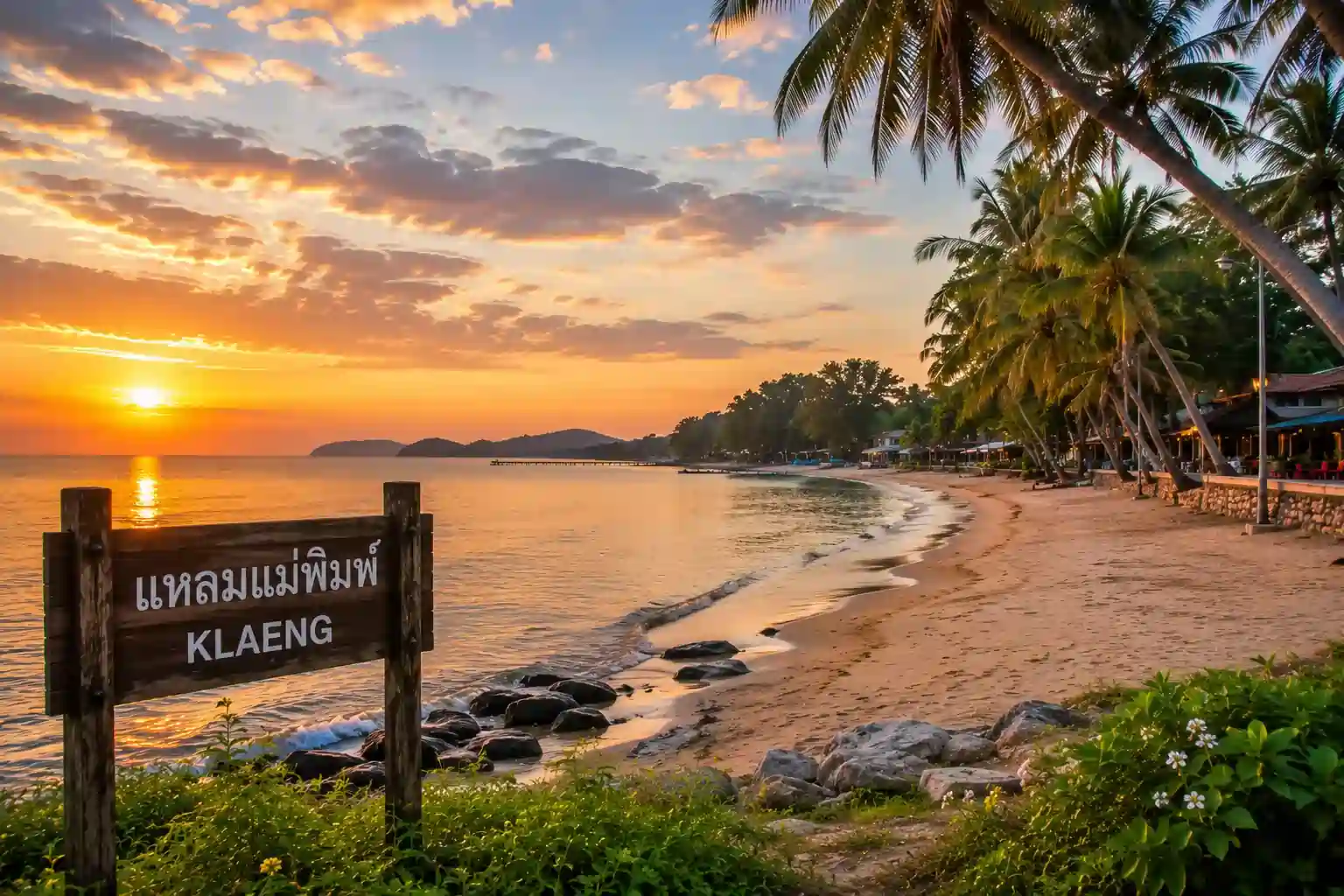
Klaeng has the character of a working Thai coastal town rather than a resort. Its beaches are used by local families and fishermen rather than international visitors. Its restaurants serve seafood that came off local boats rather than from supply chains calibrated to tourist volume.
Highlights and Things to Do
Coastal Atmosphere
Klaeng has the unhurried, workaday quality of a Thai seaside community that has not been repositioned for tourism. The harbor areas, the fishing boats, and the rhythms of a town organized around the sea rather than around hospitality give it a character that is genuinely different from the beach resort towns that line the Gulf coast further south.
Beaches
The beaches around Klaeng are quiet, unpretentious, and uncrowded. They are not the white-sand, turquoise-water spectacle of the southern islands, but they have a calm and a lack of infrastructure that some travelers find deeply appealing. Mae Ramphueng Beach, one of the area's best known, stretches for several kilometers with relatively few facilities.
Local Seafood Culture
Eating seafood in and around Klaeng means eating at restaurants and market stalls where the clientele is almost entirely Thai. The quality is high, the prices are honest, and the variety of what is available reflects a coastal food culture that has not been simplified for an international audience.
Best Time to Visit
November to April is the optimal time, when the Gulf coast benefits from the dry season and water conditions are calm. The wet season from May to October brings rain and rougher seas, though travel is still possible and the area sees even fewer visitors during this period.
How to Get There
From Bangkok, Klaeng is roughly two to three hours by road via Route 3 (the Sukhumvit Highway heading east) or the motorway. Buses from Bangkok's Eastern Bus Terminal (Ekkamai) run to Rayong, from which Klaeng is a short drive or songthaew ride. Having a vehicle in the area, whether rented or driven from Bangkok, makes exploring the coastline considerably more convenient.
Who Will Enjoy Klaeng
Travelers who want a coastal experience without the resort town environment will find Klaeng rewarding. It is a strong choice for people who prioritize local seafood, quiet beaches, and the experience of a Thai town that operates on its own terms. Those looking for nightlife, beach clubs, or snorkeling infrastructure will need to look elsewhere. Klaeng is for travelers who are content to slow down and eat well.