Thailand Safety Guide
Planning your first trip to Thailand? You are probably already picturing golden temples, turquoise beaches, and plates of steaming pad thai. But like any smart traveler, you also want to know what to watch out for before you arrive.
Is Thailand safe for tourists? Yes, Thailand is generally a safe destination for international travelers, but knowing the common risks can make your trip much easier. Most visitors are more likely to encounter scams, traffic hazards, overcharging, strong beach currents, or problems caused by unfamiliarity with local customs than serious crime.
Whether you are visiting Bangkok, Chiang Mai, Phuket, Pattaya, Krabi, or Thailand's islands, this guide covers the practical safety information you need before and during your trip. You will find advice on tourist scams, transport, beaches, nightlife, food, valuables, emergencies, and everyday precautions.
If you're traveling alone for the first time, read our Thailand Solo Travel Guide for destination recommendations, planning advice, accommodation tips, and practical guidance specifically for solo travelers.
Tourist Friendly
Thailand has a mature tourism infrastructure that makes traveling easy for international visitors.
Know the Scams
Most issues travelers face are minor scams, overpricing, or transport-related confusion.
Travel Smart
Simple precautions around transport, nightlife, and valuables go a long way toward a safe trip.
Table of Contents
Is Thailand Safe for Tourists?
Yes, Thailand is generally safe for tourists. The country has a strong and well-developed tourism infrastructure, and serious crime involving tourists is relatively uncommon. What you are more likely to encounter are petty scams, minor overcharging, and the occasional traffic hazard. These are manageable with a little awareness.
Thailand welcomes over 30 million international visitors in a typical year. The tourist police are active, major hospitals in Bangkok and Phuket are world-class, and English signage is widely available in tourist areas. Most travelers leave with nothing but positive memories.
Is Thailand Safe for Couples?
Absolutely. Thailand is one of the most popular honeymoon and couple travel destinations in Asia. Romantic resorts, island getaways, and candlelit beachside dinners are part of everyday travel here. Couples should apply the same general awareness they would anywhere, but there is nothing uniquely risky about traveling as a pair.
Is Thailand Safe for Families?
Thailand is very family-friendly. Attractions like Chiang Mai's elephant sanctuaries, Bangkok's floating markets, and Phuket's calm northern beaches are excellent for kids. For more practical advice on planning accommodation, transport, and activities, see our guide to family travel safety. Be cautious around beach areas with strong currents, and always supervise children near pools and water.
Is Thailand Safe for Solo Travelers?
Yes, especially in popular tourist circuits. If you're planning solo travel in Thailand, you'll benefit from the country's excellent hostel scene, well-marked public transport, and a culture that is broadly welcoming to visitors. Solo female travelers should take a few extra precautions, which we cover in detail below.
Common Tourist Scams in Thailand
Scams in Thailand are rarely dangerous. They are usually designed to separate you from your money through misdirection or pressure. Knowing what to look for is your best defense.
Tuk-Tuk Scam
A friendly tuk-tuk driver offers to take you on a sightseeing tour for an unbelievably low price, sometimes as little as 20 to 40 baht. Along the way, he insists on stopping at a gem shop, tailor, or travel agency where he earns a commission for bringing you in. You end up spending far more than planned on overpriced goods or unnecessary services.
Gem Scam
A stranger, sometimes posing as a student or government official, tells you about a rare one-day government sale on gems or jewelry. He may escort you to a shop where you are pressured into buying stones that turn out to be nearly worthless.
Jet Ski Scam
You rent a jet ski in Phuket or Pattaya and return it in the same condition you found it. The operator then claims you caused damage and demands hundreds to thousands of baht in compensation. Sometimes police or unofficial "officers" appear to add pressure.
Taxi Meter Scam
At airports and tourist areas, some taxi drivers refuse to use the meter and quote a fixed fare that is two to three times the actual cost. This is commonly reported around major tourist areas and airports.
Fake Tour Operators
Some vendors near popular attractions sell tours, tickets, or packages that turn out to be overpriced, low-quality, or outright fake. This includes "temple tours" and boat excursions sold by unlicensed street vendors.
Temple Closed Scam
A helpful stranger tells you that the Grand Palace or a major temple is closed today due to a special ceremony or holiday. He then offers to take you to a "special temple" instead, which leads back to a tuk-tuk tour and commission shops.
Safety Tips for Bangkok, Phuket and Pattaya
Safety Tips for Bangkok
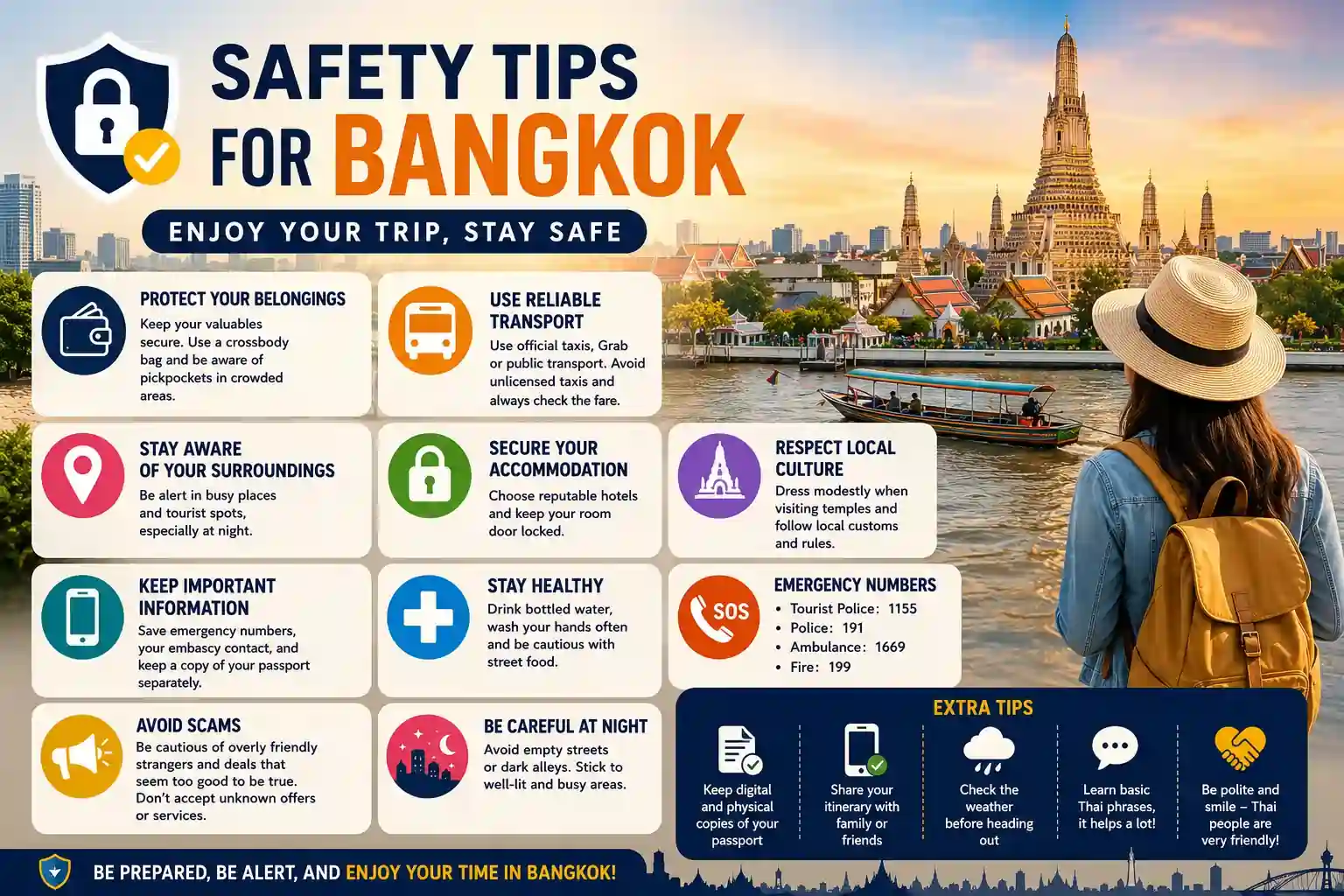
Bangkok is a massive, vibrant city and entirely manageable for tourists. For a broader look at attractions, neighborhoods, transport, and things to do, see our Bangkok Travel Guide. For a full breakdown of specific attractions, also see our Things to Do in Bangkok guide. Here is what to keep in mind on the safety side.
Traffic is real and relentless. Bangkok's roads are notoriously congested. Motorcycles weave between lanes and pedestrian crossings are not always respected. Cross at designated crossings, look both ways including for motorbikes coming the wrong way, and use overpasses where available.
The BTS Skytrain and MRT are your safest transport options. These air-conditioned, punctual rail networks cover most tourist areas including Sukhumvit, Silom, and Chatuchak. They are significantly safer than sitting in Bangkok traffic and very affordable.
Pickpocket awareness matters in crowded areas. Markets like Chatuchak Weekend Market and night bazaars around Khao San Road attract large crowds. Keep bags in front of you, use a money belt for important documents, and avoid flashing expensive items.
Late-night transport needs a plan. After midnight, metered taxis can be harder to flag down and some drivers become less cooperative about using the meter. Pre-book a Grab or arrange transport through your accommodation before heading out late.
- Sukhumvit is a major expat and tourist hub with good infrastructure but also a concentration of bar scams and overcharging.
- Khao San Road is lively and relatively safe but attracts hawkers, touts, and occasional pickpockets in peak hours.
- Chinatown (Yaowarat) is fantastic for street food and photography. It gets busy but is generally safe. Keep your belongings close in the densest food market stretches.
Safety Tips for Phuket and Pattaya
Phuket
Phuket is one of Thailand's most popular beach destinations. For a broader guide to beaches, attractions, island trips, and where to stay, see our Phuket Travel Guide.
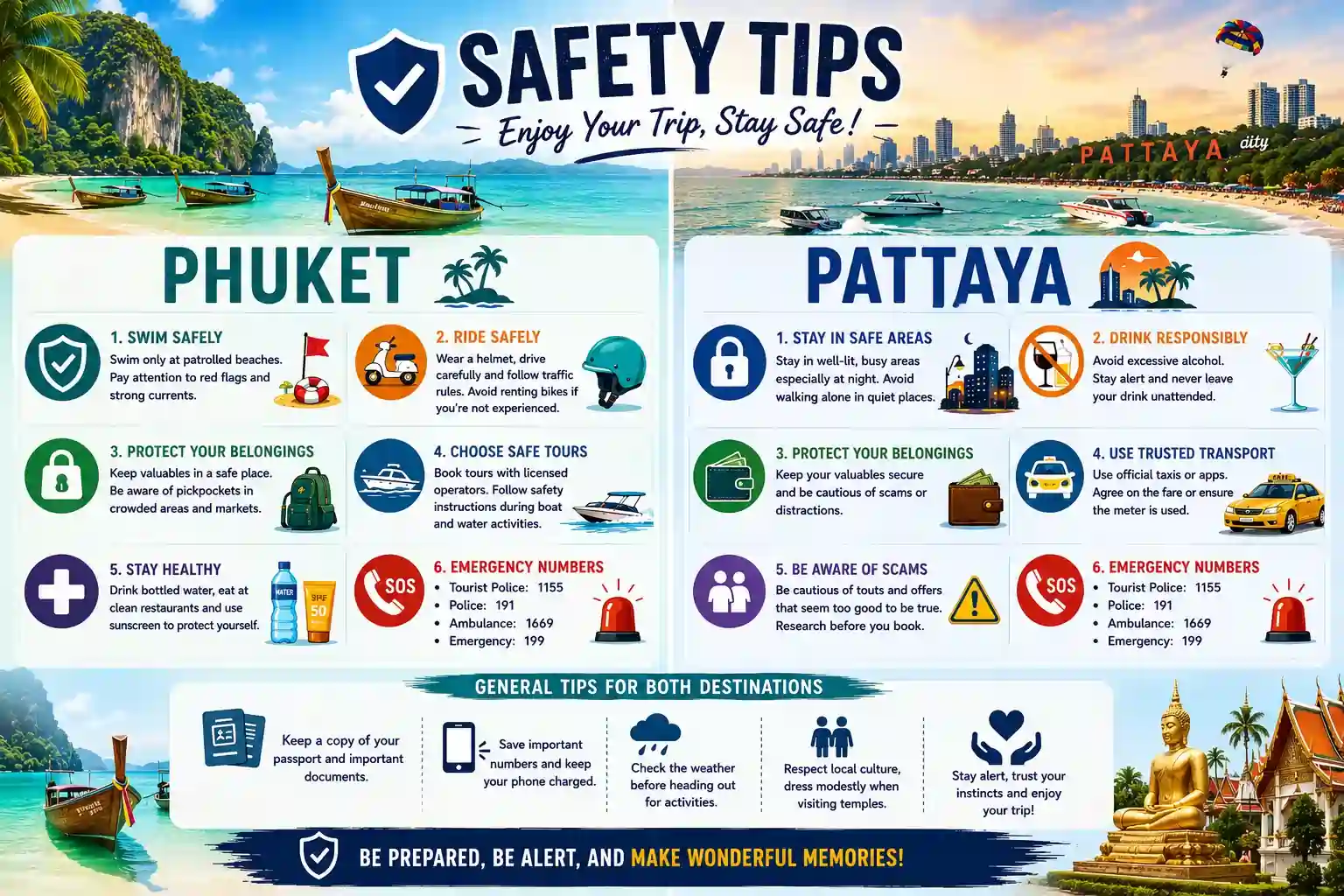
Phuket's west-coast beaches including Patong, Kata, and Karon can have powerful waves and dangerous rip currents, especially between May and October during the monsoon season. If your dates are flexible, our Best Time to Visit Thailand guide explains how seasonal weather varies across the country. Red flags mean no swimming, so always follow beach safety warnings and avoid entering the water when conditions are dangerous.
Scooter rentals carry real risk. Renting a scooter is tempting and convenient, but Phuket roads are fast and often poorly maintained. Many tourists sustain injuries each year. If you do ride, wear a helmet, carry your international license, and stick to quieter roads. Verify that your travel insurance covers motorbike accidents because many standard policies do not.
Nightlife awareness in Patong. Bangla Road in Patong is the heart of Phuket's nightlife and is generally safe to walk through. However, overcharging at bars and clubs is common. Check your bill carefully and agree on prices before ordering. Avoid accepting drinks from strangers.
-
For attractions, beaches, nightlife, and practical planning information, see our Pattaya Travel Guide.
- Nightlife scams are the primary concern. Pattaya has a reputation for its adult entertainment scene, and where there is heavy tourism of that nature, there are also people looking to exploit it.
- Common issues include bar fines that are not clearly explained, inflated tabs, and aggressive vendors.
- Overcharging is frequent. From restaurants near the beach road to souvenir stalls, prices in tourist-heavy Pattaya can be significantly inflated.
- Always check menus for prices before ordering and confirm costs before committing to any service.
- Keep valuables secure. Petty theft including bag snatching by motorbike riders does occur. Do not carry more cash than you need and keep your phone out of sight on busy streets.
Solo Travel Safety in Thailand
Thailand is one of the better countries in Southeast Asia for solo travel. The hostel and guesthouse culture is strong, transport networks are reliable, and most locals are friendly toward travelers.
For solo female travelers, the main precautions are largely the same as traveling solo anywhere. Dress modestly when visiting temples, avoid walking alone in poorly lit areas late at night, and trust your instincts in social situations. At busy nightlife spots, keep an eye on your drink and do not accept beverages from strangers. Female solo travelers consistently rate Thailand as one of the more comfortable destinations in Asia.
Hostel safety is generally good. Stick to well-reviewed hostels in central locations. Use lockers for your valuables, even if a hostel seems reputable.
Night transport for solo travelers requires planning. Avoid unmarked taxis and unlicensed motorbike taxis after dark. Grab is your safest option. If using a regular taxi, share your ride details with someone you trust.
Emergency contacts: Save the Tourist Police number (1155) in your phone before you land. Share your daily itinerary or live location with family or a trusted friend, especially when heading to islands or remote areas. Apps like Google Maps allow easy live location sharing.
Transport Safety Tips
Grab App
Grab is Southeast Asia's answer to Uber and is the single best transport tool for tourists in Thailand. It works across Bangkok, Phuket, Chiang Mai, and other major cities. Fares are fixed, routes are tracked, and you can pay with a card. It eliminates meter disputes and reduces exposure to scams.
BTS and MRT
Bangkok's elevated BTS Skytrain and underground MRT are clean, affordable, and efficient. They cover most of the key tourist zones and are by far the safest way to get around the city. Both systems use a simple card or token system and have English signage throughout.
Domestic Flights
Thailand's domestic flight network is excellent. Airlines including Bangkok Airways, Thai AirAsia, and Nok Air connect Bangkok to Chiang Mai, Phuket, Koh Samui, and Krabi in under two hours. For distances over 600 km, flying is strongly recommended over overnight buses.
Ferries and Speedboats
Island access in Thailand relies on ferries and speedboats, and safety standards vary. Larger government-operated ferries between the mainland and Koh Samui or Koh Tao are generally reliable. Smaller speedboats between smaller islands can be less regulated. Book through established companies, avoid traveling during poor weather, and always check for life jackets on board.
Scooter Rentals
Scooters are widely available across Thailand's tourist areas and are convenient for exploring. However, they carry real risk. If you choose to ride one, wear a helmet at all times, carry a valid license, do a pre-rental inspection, and make sure your travel insurance specifically covers motorbike use.
For a more detailed breakdown of flights, trains, ferries, public transport, and getting between destinations, see our complete Thailand Transportation Guide.
Food and Health Safety
Street Food and Water
Street food is generally safe. Thailand's street food culture is a highlight of any trip and the vast majority of it is perfectly fine to eat. Look for stalls with a high turnover of customers, where food is cooked fresh in front of you. Avoid dishes that have been sitting out in the heat for extended periods.
Drink bottled or filtered water. Tap water in Thailand is not safe for drinking. Bottled water is cheap and available everywhere. Most restaurants and hotels provide filtered water. Use bottled water for brushing your teeth at budget guesthouses.
Heat and Humidity
Thailand is hot year-round, and humidity in certain regions can feel intense. Drink water consistently, wear light breathable clothing, and avoid extended outdoor activity during the peak afternoon heat between 11 AM and 3 PM. Heat exhaustion can creep up on travelers who are not used to tropical climates.
Travel Insurance
Travel insurance is not optional. Thailand's private hospitals, particularly in Bangkok and Phuket, offer excellent care but at high cost. Without insurance, a single emergency room visit can cost tens of thousands of baht. Get comprehensive travel insurance before you depart and keep the emergency line number accessible.
Pharmacies and Medication
Thailand has a large number of pharmacies, including Boots and various local chains, stocked with common medications. Pharmacists speak reasonable English and can advise on minor ailments, stomach issues, and basic prescriptions. For anything serious, head to a reputable hospital.
Nightlife Safety Tips
Watch Your Drink
Drink spiking does occur, especially in tourist nightlife areas. Do not leave your drink unattended and avoid accepting drinks from people you do not know.
Bar Scams and Bill Inflation
In areas like Sukhumvit Soi 11, Patong's Bangla Road, and Pattaya's Walking Street, bars sometimes inflate bills after a night of drinking. Keep track of what you are ordering, ask for itemized bills, and pay for rounds as you go rather than running a tab.
Avoid Isolated Areas
Stick to busy, well-lit streets when walking at night. If you are heading somewhere unfamiliar after midnight, take a Grab rather than walking.
Late-Night Taxis
Metered taxis can be harder to hail after 1 AM in Bangkok, and some drivers take advantage of the situation to charge flat high fares. Use Grab or arrange hotel pickup in advance.
Cash Handling
Use ATMs inside banks or shopping malls rather than standalone ATMs on street corners. Be discreet when withdrawing money and avoid counting large amounts of cash in public.
Thailand Emergency Numbers
Save these numbers in your phone before you arrive.
| Service | Number |
|---|---|
| Tourist Police | 1155 |
| Ambulance / Emergency Medical | 1669 |
| General Emergency | 191 |
| Fire | 199 |
| Police | 191 |
Safety Tips for Travelers
Currency Exchange
Exchange money at authorized money changers or bank booths rather than at hotels, which typically offer poor rates. SuperRich, Vasu Exchange, and bank-affiliated kiosks at airports and malls offer competitive rates. Avoid exchanging money with street vendors or unauthorized individuals, as counterfeit currency and short-changing can occur.
SIM Cards
A Thai SIM card is easy to buy at the airport on arrival. AIS, DTAC, and TrueMove are the main providers. A tourist SIM with data for 15 to 30 days is affordable and eliminates the cost of international roaming. Having local data is important for Grab, Google Maps, and emergencies.
Airport Transport
At Suvarnabhumi Airport, use the official metered taxi counters on Level 1 rather than touts who approach you inside the terminal. The Airport Rail Link also connects the airport to central Bangkok quickly and cheaply. Avoid strangers offering cheap transfers or package deals at the arrival area.
Avoiding Fake Agents
Tourists are sometimes targeted by fake travel agents offering heavily discounted tours, hotel bookings, or onward transportation. Book through your hotel, reputable online platforms, or licensed tour operators. If an offer seems significantly cheaper than similar options, verify the company before making any payment.
Respecting Local Culture
Thailand is a Buddhist country and cultural respect goes a long way. Remove footwear before entering temples, dress modestly at religious sites (shoulders and knees covered), do not touch monks or hand objects directly to them if you are a woman, and never disrespect images or statues of the royal family or Buddha. These are serious matters under Thai law.
Food and Dietary Preferences
Thailand offers a wide variety of dining options to suit different dietary preferences, including vegetarian, vegan, halal, and gluten-free meals. However, many traditional Thai dishes contain fish sauce, shrimp paste, or oyster sauce. If you have dietary restrictions or food allergies, explain them clearly when ordering or use a translation card to avoid misunderstandings.
For more practical advice on planning your trip, including money, local etiquette, packing, connectivity, and everyday travel advice, see our Thailand Travel Tips.
Thailand Safety FAQ
Is Thailand safe for international tourists?
Yes. Thailand is one of the world's most popular tourist destinations and is generally considered very safe for international visitors. Millions of travelers visit each year without major problems thanks to the country's well-developed tourism infrastructure, reliable transportation, and tourist-friendly services. The most common issues visitors encounter are minor scams, traffic hazards, and occasional petty theft in crowded areas rather than violent crime. Staying aware of your surroundings, using reputable transportation, and following basic travel safety precautions will help you enjoy a safe and memorable trip throughout Thailand.
Is Thailand safe for solo female travelers?
Yes. Thailand is widely regarded as one of the safer countries in Southeast Asia for solo female travelers. Popular destinations such as Bangkok, Chiang Mai, and Phuket have well-established tourist infrastructure, reliable accommodation, and convenient transportation. Choose well-reviewed hotels or hostels, use Grab for late-night travel, avoid isolated areas after dark, and keep an eye on your drink in busy nightlife districts. Like anywhere else, trusting your instincts and taking sensible precautions will help you travel confidently.
Is Bangkok safe at night?
Yes. Bangkok is generally safe at night, especially in popular tourist areas such as Sukhumvit, Silom, Chinatown, and Khao San Road. The biggest concerns are taxi overcharging, pickpockets in crowded markets, and occasional bar scams rather than serious crime. Using the BTS Skytrain, MRT, or Grab after dark is the safest way to travel. Stay on busy, well-lit streets, avoid carrying large amounts of cash, and keep your belongings secure in crowded areas.
Are Phuket and Pattaya safe?
Yes. Both Phuket and Pattaya are safe for most tourists when normal travel precautions are followed. In Phuket, the biggest risks are strong waves, rip currents during the monsoon season, and scooter accidents. In Pattaya, nightlife-related scams, overcharging, and aggressive vendors are more common than violent crime. Swimming only where conditions are safe, using reputable transport, and confirming prices before purchasing goods or services will help you avoid most problems.
Is street food safe in Thailand?
Yes. Thailand's street food is one of the highlights of visiting the country and is generally safe to eat. Choose stalls that are busy with local customers, where food is freshly cooked in front of you, and avoid dishes that have been left sitting out for long periods. Drink bottled or filtered water instead of tap water, wash or sanitize your hands before eating, and introduce spicy foods gradually if you are not used to Thai cuisine.
Are scams common in Thailand?
Scams do exist in Thailand, but they are usually minor and designed to overcharge tourists rather than cause physical harm. Common examples include tuk-tuk sightseeing scams, taxi drivers refusing to use the meter, gem scams, jet ski damage claims, and fake tour operators. Learning about these common scams before your trip, using reputable businesses, and avoiding deals that seem unusually cheap will greatly reduce your chances of encountering problems.
Plan Your Thailand Trip
Thailand is an incredible destination, and a little preparation makes the whole experience smoother. Now that you know what to look out for, you are ready to focus on what Thailand does best: beautiful temples, incredible food, warm people, and some of the world's best beaches.
Here are some helpful resources to plan your trip: