

Thailand Travel Tips
Thailand consistently ranks among the most-visited travel destinations in Asia and for good reason. From its warm, welcoming locals and powdery white beaches to its electric cities and centuries-old temples, this Southeast Asian gem has something for every type of traveler. Whether you are planning a solo backpacking adventure or a family holiday, knowing a few practical things in advance can make your entire experience significantly smoother.
This guide covers everything from the best time to visit and how to get around, to money management, food safety, cultural etiquette, and common mistakes first-timers make. Consider it your all-in-one Thailand travel guide tips resource before you board that flight.
Best Time to Visit Thailand
Timing your trip correctly can make a noticeable difference in the quality of your experience. Thailand has three distinct seasons, each with its own character.
November to February is widely considered the best period to visit. Temperatures are cooler, humidity is lower, and rainfall is minimal ideal conditions for beach-hopping, temple touring, and outdoor exploration. This is also peak tourist season, so expect higher prices and more crowds at popular spots.
March to May brings the hot season. Temperatures regularly exceed 38°C (100°F), particularly in inland cities like Chiang Mai. If you plan to visit during this period, schedule outdoor activities for early mornings and evenings, and keep air-conditioned spaces on standby.
June to October is the rainy season, also called the monsoon period. Heavy showers are common, especially in the south and on islands like Koh Samui. That said, rainfall tends to arrive in short, intense bursts rather than all-day downpours. Travel costs drop considerably during this time, making it appealing for budget-conscious visitors.
Respect Local Culture and Temples
Thailand is a predominantly Buddhist country, and respect for local customs is not just appreciated — it is expected. Visitors who observe basic cultural etiquette are almost always received with warmth and hospitality.
Here are the core thailand travel advice points on cultural behavior:
- 👕 Dress modestly at temples. Cover your shoulders and knees before entering any religious site. Many temples provide sarongs at the entrance for a small fee or free of charge.
- 👞 Remove your shoes before stepping inside temple buildings, private homes, and some traditional restaurants.
- 🛕 Do not touch Buddha statues. These are sacred objects, not photo props. Posing in front of them is generally acceptable; climbing on them or touching them is not.
- 🙏 Respect monks at all times. Women should never hand anything directly to a monk or make physical contact. Men should speak to monks calmly and respectfully.
- 🔇 Keep your voice down inside religious spaces and avoid public displays of frustration or anger — losing your temper publicly is considered deeply disrespectful in Thai culture.

Money and Payment Tips
Thailand's official currency is the Thai Baht (THB) and symbol used is ฿. Here is what you need to know about handling money as a tourist:
- 🏧 ATMs are widely available across cities and tourist areas. Most international cards work without issues, though ATMs typically charge a withdrawal fee of around ฿220 per transaction. Minimize fees by withdrawing larger amounts less frequently.
- 💵 Cash is essential for markets, street food stalls, tuk-tuks, local transport, and smaller guesthouses. Always carry a reasonable amount of small bills.
- 💳 Credit cards are accepted at hotels, shopping malls, upscale restaurants, and tourist attractions. Visa and Mastercard are the most widely accepted.
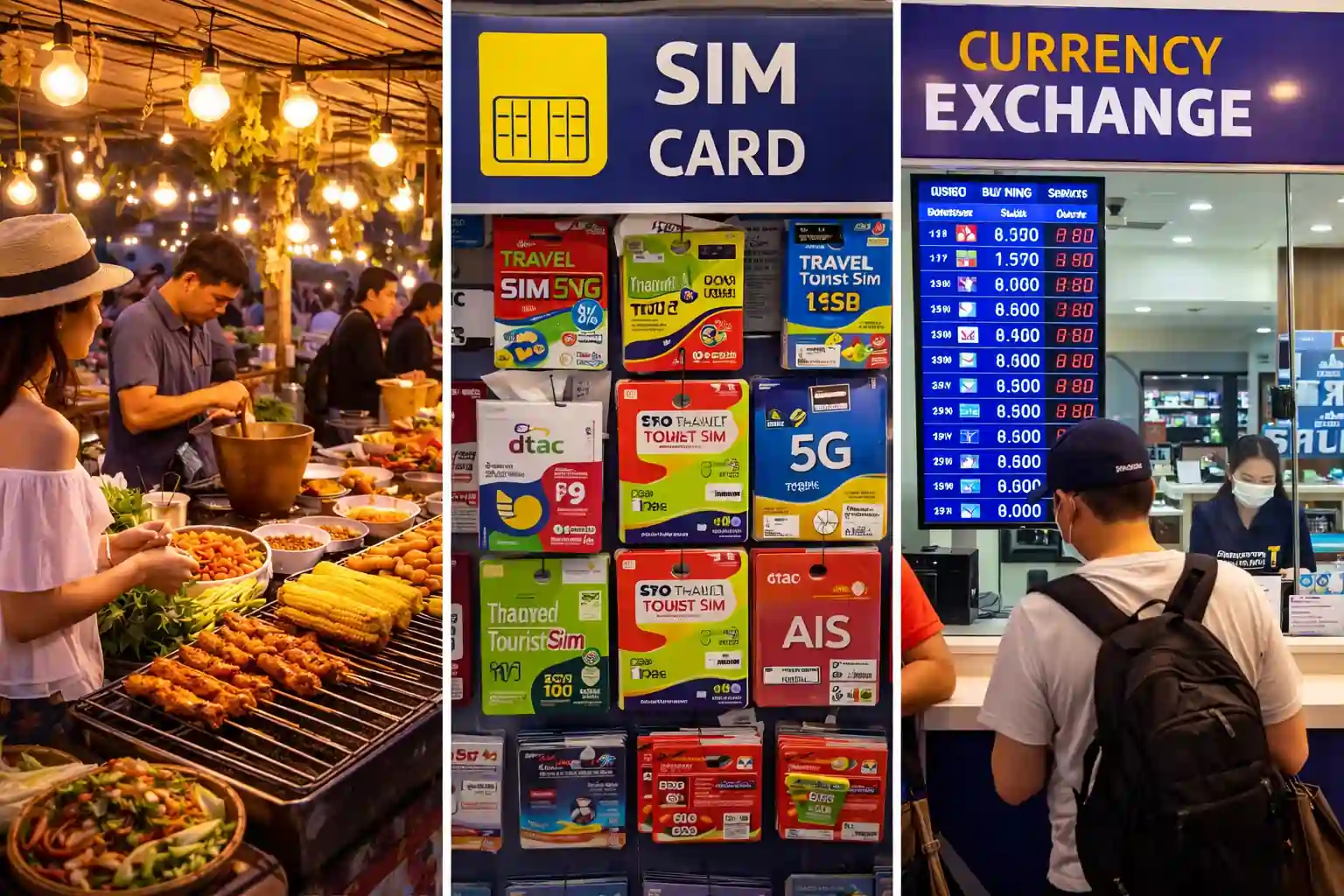
- 💱 For currency exchange, use licensed money changers or bank counters rather than hotel exchange desks, which typically offer less favorable rates. Superrich and other independent changers in Bangkok often provide better rates than airport counters.
Avoid exchanging money at the airport unless absolutely necessary, as the rates are generally the least competitive.
Transportation Tips in Thailand
Getting around Thailand is straightforward once you understand your options. Here is a practical breakdown based on where you are:
- 🚆 In Bangkok, the BTS Skytrain and MRT subway are the most efficient ways to navigate the city, especially during rush hours when road traffic can be severe. Both systems are affordable, air-conditioned, and well-connected to major tourist areas.
- 🚗 Grab (Southeast Asia's equivalent of Uber) is the safest and most transparent way to book taxis. Always use the app rather than flagging down a random cab, as metered taxis occasionally attempt overcharging with tourists.
- 🛺 Tuk-tuks are iconic and fun for short distances, but always agree on the fare before you get in. They are more of a novelty experience than a practical daily transport solution.
- ✈️ For traveling between cities, domestic flights are affordable and save considerable time. Airlines like AirAsia and Bangkok Airways operate frequent routes between Bangkok, Chiang Mai, Phuket, and Krabi
- ⛴️ Ferries and speedboats are the primary way to reach Thailand's islands. Book tickets through reputable counters or apps, and check the ferry schedule if you are visiting smaller islands with limited daily crossings.
- If you're planning to travel between Bangkok, Chiang Mai, Phuket, Krabi, or Thailand's islands, see our complete Thailand Transportation Guide.
Food and Street Food Tips
Thai cuisine is celebrated worldwide, and eating your way through the country is one of the greatest pleasures of visiting. Thailand's street food culture is vibrant, diverse, and delicious but a few smart habits will keep your stomach happy throughout the trip.
- 🍜 Try local dishes like Pad Thai, Som Tum (papaya salad), Tom Yum soup, Khao Pad (fried rice), and Mango Sticky Rice. Step beyond tourist menus whenever possible.
- 👥 Eat at busy stalls. High foot traffic is a reliable sign of freshness and quality. A long queue of locals is always a good sign.
- 💧 Drink bottled or filtered water. Tap water in Thailand is not safe for drinking. Bottled water is inexpensive and available everywhere.
- 🌶️ Check spice levels before ordering. Thai food can be intensely spicy. Use the phrase "mai phet" (not spicy) or "phet nit noi" (a little spicy) to manage heat levels.
- 🦪 Avoid raw shellfish from street stalls unless you are confident about freshness and hygiene standards.
Safety Tips for Travelers
Thailand is generally a safe country for tourists. Violent crime against visitors is rare, but like any popular destination, petty crime and tourist-targeted scams do exist. Staying informed is your best protection. For more detailed advice on scams, solo travel, nightlife, transportation safety, and emergency contacts, read our Thailand Safety Guide.
Common scams to watch for:
- ⚠️ The "temple is closed today" scam, where a friendly stranger redirects you to gem shops or overpriced tuk-tuk tours.
- 🚕 Taxi drivers who claim the meter is broken and offer flat rates that are much higher than standard fares.
- 🏝️ Jet ski damage scams in beach areas, where vendors claim pre-existing damage was caused by you.
General safety tips:
- 🔐 Keep valuables in hotel safes when possible.
- 🏍️ Be cautious with motorbike rentals — road accidents are a leading cause of injury among tourists. If you do rent one, wear a helmet and check insurance coverage.
- 🤝 Avoid confrontational situations. Maintaining a calm, respectful demeanor goes a long way.
- 👀 Stay aware of your surroundings in crowded tourist zones like Khao San Road or Chatuchak Market.
Internet and SIM Card Tips
Staying connected in Thailand is easy and affordable.
- 📱 Local SIM cards are available at all major international airports immediately after clearing immigration. Providers like AIS, DTAC, and TrueMove offer tourist SIM packages starting from around ฿299 for 30 days of data.
- 🌐 eSIM services are an increasingly popular option for travelers who want connectivity before landing. Several international eSIM providers offer Thailand data plans that activate automatically upon arrival.
- 📶 Free WiFi is widely available at hotels, hostels, cafes, shopping malls, and many restaurants. For basic browsing and messaging, this can be sufficient without a SIM card.
Packing and Weather Tips
What you pack will depend on which season you visit, but these thailand travel essentials apply year-round:
- 👕 Pack light, breathable clothing. Cotton and linen fabrics work well in the heat and humidity. Avoid heavy materials.
- 🧣 Bring modest cover-ups for temple visits — lightweight scarves or long pants that fold small are ideal.
- ☀️ Use high-SPF sunscreen generously and reapply frequently, especially at beach destinations.
- 🦟 Carry mosquito repellent containing DEET, particularly if you are traveling to jungle or rural areas or visiting during the rainy season.
- 💧 Stay hydrated throughout the day. The combination of heat, humidity, and sightseeing can lead to dehydration faster than you expect.
- 🎒 A small waterproof daypack or dry bag is useful during the rainy season or on ferry journeys.
Common Travel Mistakes to Avoid
Even experienced travelers make avoidable missteps in Thailand. Here are the most common ones:
- 🎒 Overpacking. Laundry services are extremely affordable across Thailand. Pack less and wash as you go.
- 🛕 Ignoring temple dress codes. Being turned away from a major temple because of inappropriate clothing is a frustrating and avoidable experience.
- 💵 Not carrying small cash. A ฿1,000 note is difficult to break at market stalls. Always carry smaller denominations.
- 🚌 Booking last-minute transport during peak season. Ferries, trains, and popular bus routes fill up quickly from November to February. Book at least a day or two in advance.
- ⚠️ Accepting unofficial tour offers from strangers near attractions. Always book tours and activities through reputable guesthouses, hotels, or certified agencies.
- 🗺️ Underestimating travel distances. Thailand is larger than many visitors realize. Factor in realistic travel times, especially between islands.
Thailand Travel Tips FAQ
Is Thailand safe for tourists?
Yes, Thailand is generally considered a safe destination for tourists. The country has a well-established tourism infrastructure and violent crime against visitors is uncommon. However, petty theft and common tourist scams do occur, particularly in busy tourist areas. Staying alert and using common sense significantly reduces any risk.
What should I know before visiting Thailand?
A few key things to know before visiting Thailand include: respect for the monarchy is constitutionally protected and public criticism is a serious legal offence; the head is considered sacred while feet are considered the lowest part of the body, so never point your feet at people or sacred objects; tipping is not mandatory but appreciated in restaurants and for good service.
Do tourists need cash in Thailand?
Cash remains essential for daily life in Thailand, especially at markets, street food vendors, and local transport. While credit cards are accepted in larger establishments, you will frequently encounter situations where only cash is accepted. Always keep a reasonable amount of Thai Baht on hand.
How many days are enough for Thailand?
A minimum of 10 to 14 days allows you to experience Bangkok, one northern destination like Chiang Mai, and one or two islands comfortably. If you only have one week, focusing on two regions rather than rushing through several will give you a more satisfying experience. For a thorough exploration of the country, three to four weeks is ideal.
Planning ahead using these thailand tips for tourists will help you get the most out of every day you spend in this remarkable country. From street food adventures and island sunsets to ancient temple complexes and buzzing night markets — Thailand rewards travelers who arrive informed and open-minded.
Plan Your Thailand Adventure
Now that you understand the essential Thailand travel tips, the next step is planning your itinerary and preparing for the journey ahead. From vibrant cities like Bangkok to peaceful temples in Chiang Mai and stunning beaches across Thailand's islands, every region offers something unique.
Use the guides above to plan your Thailand trip in detail, from building the perfect itinerary to packing smart and exploring the country's most unforgettable destinations.