
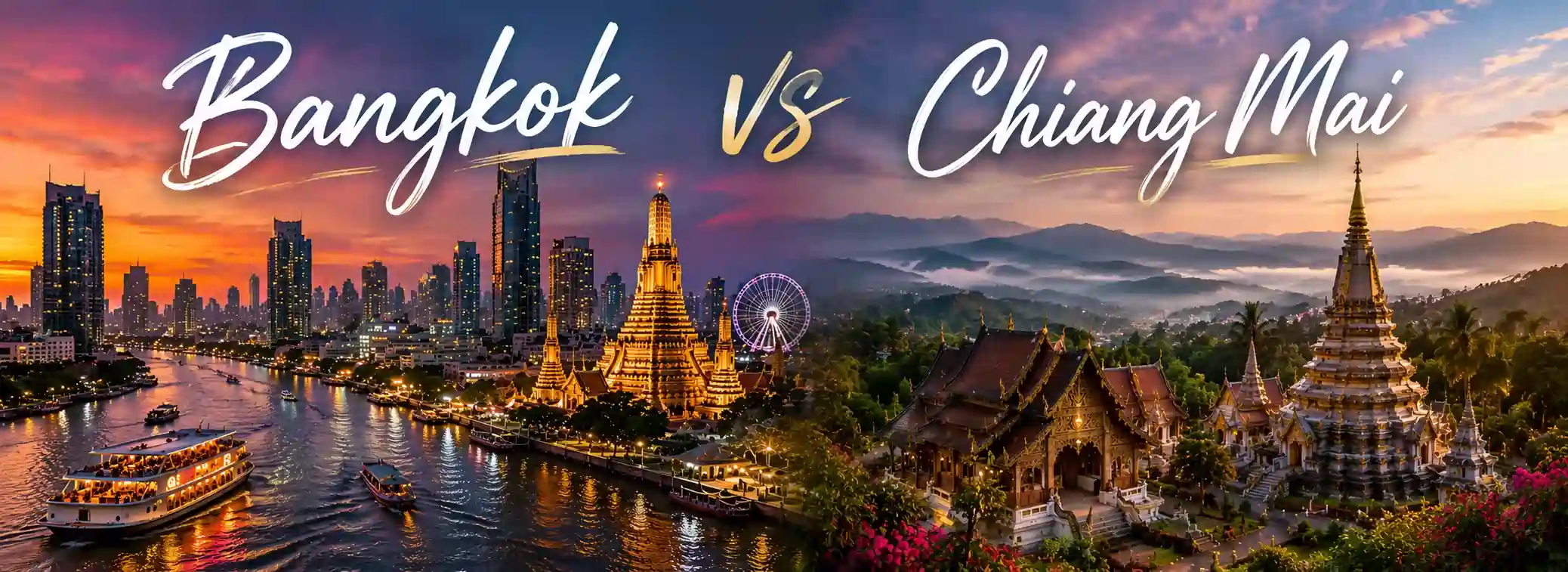
Bangkok vs Chiang Mai Overview
Bangkok at a Glance
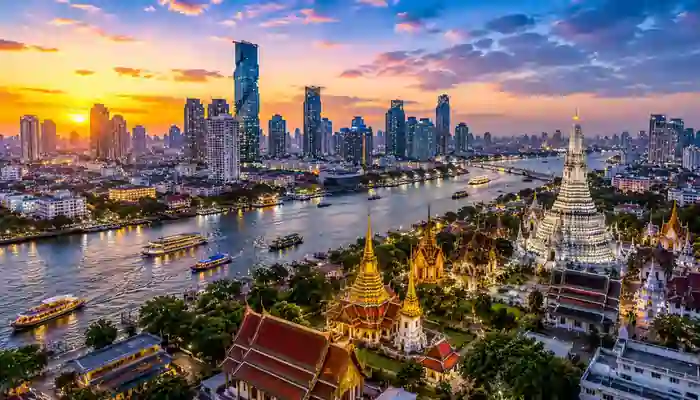
Bangkok is the capital of Thailand and one of the most visited cities in the world. With a population of around 11 million people in the metropolitan area, it is a city that operates at full volume around the clock.
The Grand Palace, Wat Pho, and the Chao Phraya River sit alongside luxury malls, rooftop bars, and some of Thailand's best street food.
Bangkok suits travelers who want convenience, variety, and a sense of being in the middle of everything. Read our full Bangkok Travel Guide for a complete breakdown of what to see, do, and eat.
Travel style: Fast-paced, urban, diverse, international.
Chiang Mai at a Glance
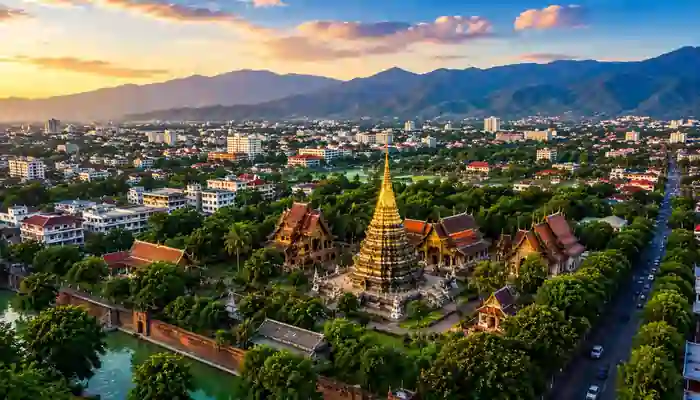
Chiang Mai sits in a valley in northern Thailand, about 700 kilometers north of Bangkok. It is the cultural capital of the north, home to over 300 temples, a beautifully preserved old city, and easy access to mountain villages and jungle trails.
Chiang Mai is much smaller than Bangkok and feels noticeably less crowded. It is the kind of place where you slow down without meaning to.
See our Chiang Mai Travel Guide for everything you need to plan your visit.
Travel style: Relaxed, cultural, nature-oriented, community-focused.
Atmosphere and Travel Style
What Bangkok Feels Like
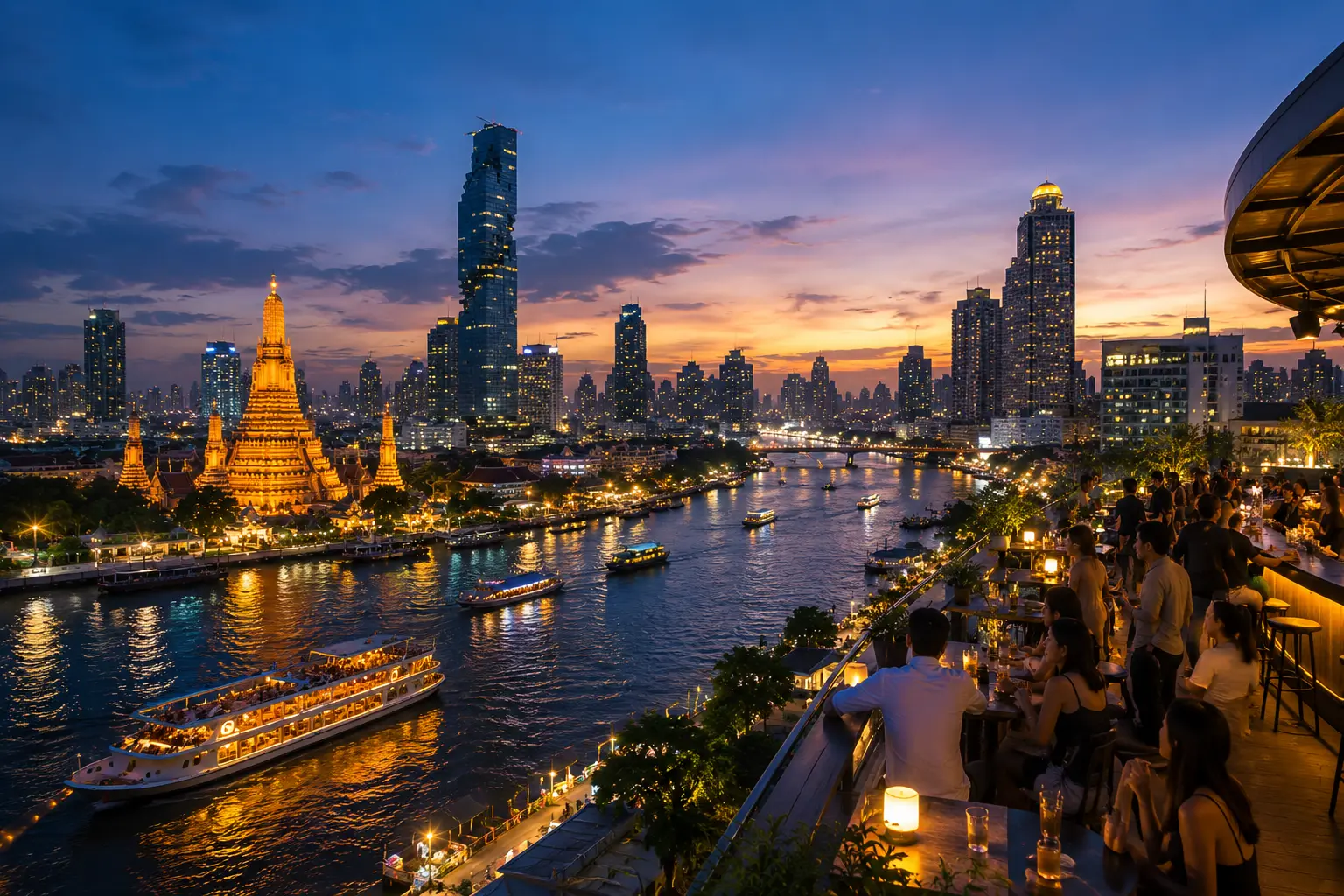
From the moment you step out of Suvarnabhumi Airport, Bangkok makes an impression. The city is vast, loud, and relentlessly busy. Expressways run above street-level markets. Tuk-tuks weave between sleek black sedans. Air-conditioned mega-malls like Siam Paragon and ICONSIAM sit within walking distance of cramped alleyway noodle shops that have been operating for decades.
Bangkok has an international atmosphere unlike anywhere else in Thailand. You will find visitors and expats from every corner of the world, a diverse restaurant scene that covers dozens of cuisines, and a hospitality industry that caters to every kind of traveler. It is a city that never really sleeps, and that energy is part of what makes it special.
What Chiang Mai Feels Like
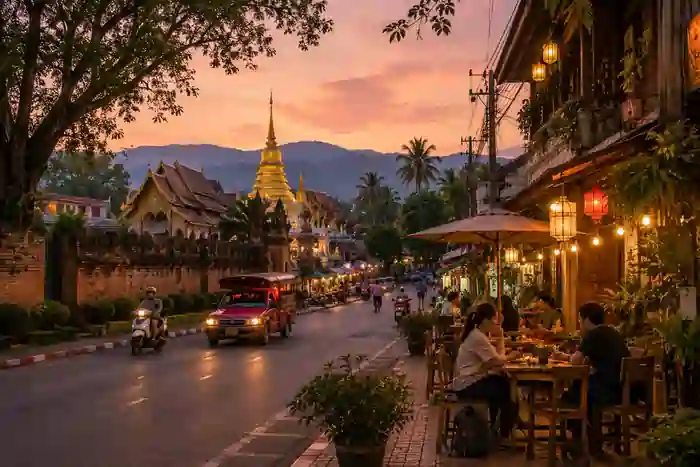
Chiang Mai operates at a completely different rhythm. The old city, enclosed by a square moat and ancient brick walls, is compact enough to explore on foot or by bicycle. Streets are lined with small guesthouses, coffee shops, and family-run restaurants. Vendors at the Sunday Walking Street set up handmade goods under string lights. The surrounding mountains are visible from most of the city on a clear day.
The pace of life in Chiang Mai is noticeably slower. People linger over meals, conversations stretch long, and there is a sense that nobody is in a particular rush. It attracts a mix of backpackers, long-term digital nomads, retired expats, and travelers who want to experience Thailand without the sensory overload of the capital.
Which City Matches Your Travel Style?
Choose Bangkok if you want:
- An urban experience with modern infrastructure
- Buzzing nightlife, rooftop bars, and late-night entertainment
- Luxury hotel options and high-end dining
- One of the best shopping cities in Asia
- Maximum convenience and international connectivity
Choose Chiang Mai if you want:
- A relaxed pace with time to breathe
- Deep cultural immersion in northern Thai traditions
- Nature, mountains, and outdoor activities nearby
- A strong local and expat community atmosphere
- Lower costs and a more sustainable travel pace
Temples and Culture
Bangkok Temple Experience
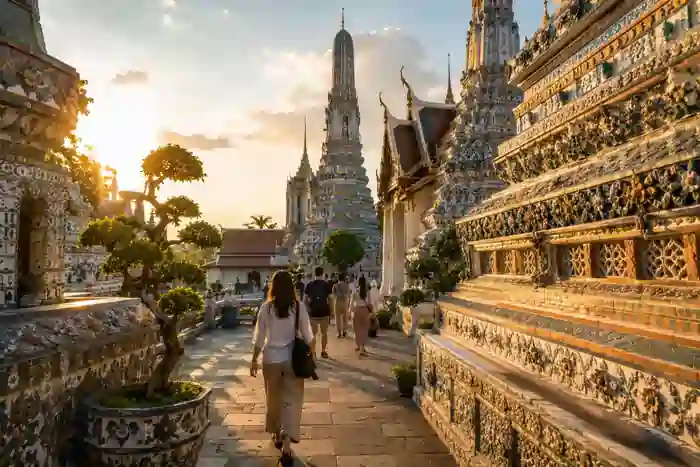
Bangkok is home to some of the most iconic religious and cultural sites in all of Southeast Asia. The Grand Palace complex is an unmissable landmark, covering over 200,000 square meters and housing Wat Phra Kaew, the Temple of the Emerald Buddha.
Nearby, Wat Pho is famous for its giant reclining Buddha statue and is considered one of the oldest and largest temple complexes in the city. Across the Chao Phraya River, Wat Arun rises dramatically from the riverbank, its towers covered in fragments of Chinese porcelain that glitter in the sun.
These sites draw enormous crowds, particularly in the morning hours. They are spectacular and absolutely worth visiting, but the experience can feel rushed or touristy during peak periods.
Cultural Experiences in Bangkok
Beyond temples, Bangkok offers excellent museums including the National Museum of Thailand, the Jim Thompson House, and the Museum of Siam.
The city has a deep connection to river culture, with boat-based markets, floating vendors, and ferry routes that have shaped Bangkok's character for centuries. Historic neighborhoods like Rattanakosin Island and Bang Lamphu connect visitors to the older, pre-modern version of the city.

Chiang Mai Temple Experience
Chiang Mai has over 300 temples, and the concentration within the old city alone is remarkable. Wat Phra Singh is the most revered temple in the north, home to the Phra Singh Buddha image and beautifully detailed Lanna-style architecture.
Wat Chedi Luang, once home to the Emerald Buddha, features a partially ruined chedi that gives it a haunting, ancient quality. Perhaps most famous of all is Doi Suthep, a temple perched on a mountain above the city that offers sweeping views and a genuine sense of spiritual atmosphere.
What sets Chiang Mai apart is that many of its temples remain active places of worship with relatively few visitors. You can sit quietly in a courtyard, watch monks go about their morning routines, and absorb the experience without feeling like you are moving through a theme park.
Cultural Experiences in Chiang Mai
Chiang Mai's cultural calendar is remarkable. The Yi Peng Lantern Festival in November, when thousands of paper lanterns rise into the night sky, is one of the most visually stunning events in Southeast Asia.
Traditional handicrafts including silverwork, wood carving, umbrella painting, and silk weaving are still practiced in village workshops around the city. The Saturday and Sunday walking street markets are filled with locally made goods, traditional snacks, and live folk music.
Northern Thai culture, known as Lanna culture, has its own distinct identity, cuisine, language dialect, and artistic traditions that set it clearly apart from central Thailand.
Which City Is Better for Culture?
Chiang Mai wins this category. While Bangkok's cultural landmarks are more globally famous, Chiang Mai offers a more immersive, authentic, and unhurried cultural experience. The density of temples, the living traditions, and the strong Lanna identity make it a more rewarding destination for travelers who prioritize cultural depth.
Food and Night Markets
Bangkok Food Scene
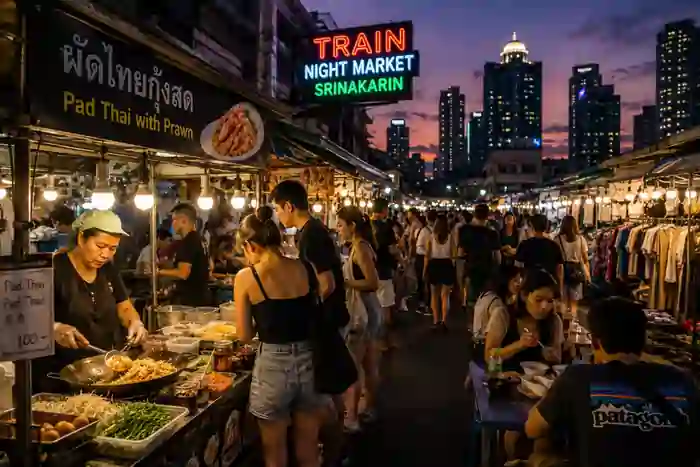
Bangkok has one of the most diverse food scenes in Asia. Street food here ranges from basic pad thai cooked in a wok on a sidewalk cart to Michelin-starred vendors selling bowls of boat noodles for under a dollar.
Jay Fai, a famous street cook in the Phra Nakhon district, holds a Michelin star and serves crab omelets that have attracted visitors from around the world.
Yaowarat, Bangkok's Chinatown, is a destination in itself after dark. The streets fill with vendors cooking dim sum, roast duck, seafood, and an enormous variety of Chinese-Thai dishes.
The international dining scene is equally strong, with Japanese, Italian, Indian, and Middle Eastern restaurants spread across the city.
Bangkok Night Markets
- Jodd Fairs: A modern, photogenic night market popular with younger crowds, featuring street food stalls, live music, and neon lighting
- Asiatique the Riverfront: An outdoor mall and night market along the Chao Phraya River, with a mix of restaurants, shops, and a Ferris wheel
- Train Market (Talad Rod Fai): Two locations offering vintage goods, clothing, antiques, and a wide variety of Thai food
Chiang Mai Food Scene
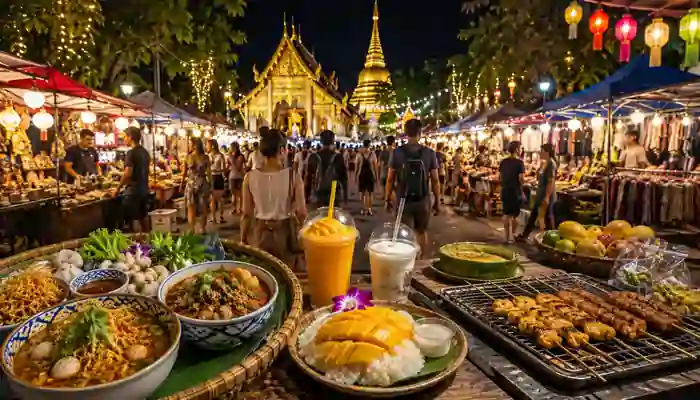
Northern Thai cuisine is distinct and deeply flavorful. Khao soi, a rich coconut curry noodle soup, is the dish Chiang Mai is most famous for, and the city has dozens of restaurants competing for the title of best version in town.
Sai oua, the local herbed pork sausage, is another staple. The food here is generally spicier and more herb-forward than central Thai cooking.
Chiang Mai's cafe culture has exploded in recent years. The city has an impressive number of independent coffee shops, many in converted teak houses or garden settings, that have made it a favorite among slow travelers and remote workers.
Chiang Mai Night Markets
- Sunday Walking Street (Ratchadamnoen Road): The most beloved market in Chiang Mai, featuring handmade crafts, local art, traditional snacks, and street performances along a 1-kilometer stretch
- Chiang Mai Night Bazaar: A long-established commercial market near the city center with clothing, souvenirs, and food stalls
- Saturday Walking Street (Wualai Road): A smaller but charming version of the Sunday market, with a strong focus on artisan products
Which City Is Better for Food Lovers?
Bangkok takes the top spot for sheer variety and the scale of its food scene. However, travelers who want to go deep into a specific regional cuisine will find Chiang Mai incredibly rewarding. Food lovers will probably enjoy both cities for different reasons.
If sampling local cuisine is one of your priorities, our Thailand Food Guide covers must-try dishes, regional specialties, and where to find them across the country.
Nightlife
Bangkok Nightlife
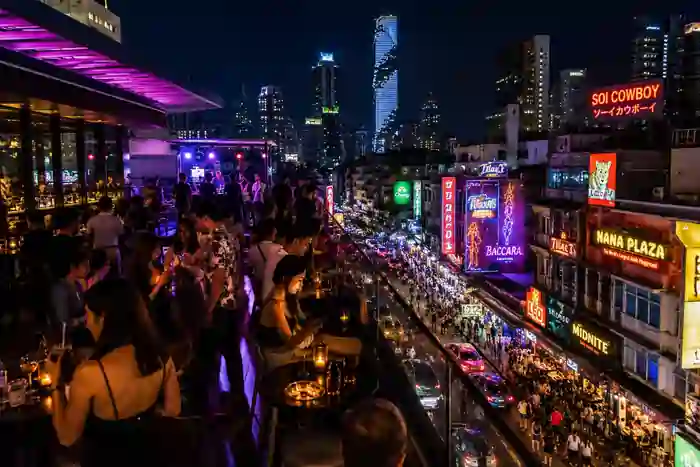
Bangkok's nightlife scene is legendary. The city has something for every taste, from ultra-glamorous rooftop bars to gritty underground clubs to backpacker-packed party streets.
Some of the world's most famous rooftop bars are here, including Vertigo at Banyan Tree Bangkok and Sky Bar at Lebua, both offering panoramic views of the city at night.
The Sukhumvit area, particularly around Ekkamai and Thonglor, has a well-established bar and club scene popular with locals and expats.
Silom Road hosts a lively nightlife district with everything from jazz bars to high-energy dance clubs.
Khao San Road remains the beating heart of budget backpacker nightlife, chaotic and colorful and always busy until the early hours.
Chiang Mai Nightlife
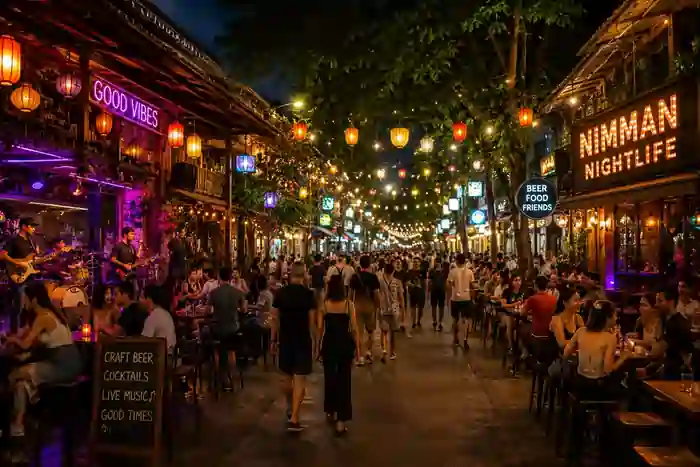
Chiang Mai's nightlife is much more low-key, which suits many travelers perfectly.
The Nimman area near Nimman Road has a concentration of rooftop bars, craft beer spots, and live music venues popular with the city's nomad and expat community.
The old city has several bars with live traditional Thai music.
The overall vibe is relaxed rather than electric, and most venues wind down significantly by midnight.
Party Scene Comparison
If you are traveling primarily for nightlife, Bangkok is the clear choice. It operates on a completely different scale. Chiang Mai offers a pleasant, social nightlife experience but should not be the main reason you visit.
Which City Is Better for Nightlife?
Bangkok is the clear winner here.
Families and Couples

Bangkok for Families
Bangkok works surprisingly well for families. Major attractions like the Grand Palace, SEA LIFE Bangkok Ocean World, Safari World, and the Dusit Zoo keep children engaged. Shopping malls are massive, air-conditioned, and often contain play areas, food courts, and cinemas. The BTS and MRT make getting around with children relatively straightforward, and family-friendly hotel options span every budget.
Chiang Mai for Families
Chiang Mai can be an excellent family destination, particularly for families with curious, nature-loving children. The Elephant Nature Park offers an ethical wildlife encounter that many families find deeply memorable. The Chiang Mai Night Safari, botanical gardens, and surrounding hill tribe villages all make for engaging day trips. The city is less hectic than Bangkok, which can make managing young children considerably easier.

Bangkok for Couples
Bangkok offers some strong options for couples. Rooftop dining with panoramic city views, river cruises at sunset, spa experiences at world-class hotels, and boutique stays in the historic neighborhoods all make for excellent couple travel. Many couples enjoy Bangkok because there is always something happening, from rooftop dinners to evening river cruises.
Chiang Mai for Couples
Chiang Mai lends itself well to romantic travel. Boutique hotels in restored teak houses, candlelit dinners in garden restaurants, cooking classes taken together, and sunrise visits to Doi Suthep before the crowds arrive all make for a relaxed and unhurried trip. The mountain scenery, particularly around the Ping River valley, is beautiful in the early morning and evening.
Which Is Better for Families?
Both cities work well for families with different priorities. Bangkok offers more structured family attractions; Chiang Mai offers more natural and cultural experiences with a calmer environment.
Which Is Better for Couples?
Chiang Mai edges ahead for couples looking for romance and quiet intimacy. Bangkok is the better choice for couples who want excitement, fine dining, and a big-city backdrop.
Digital Nomads and Long Stays
Why Digital Nomads Choose Bangkok
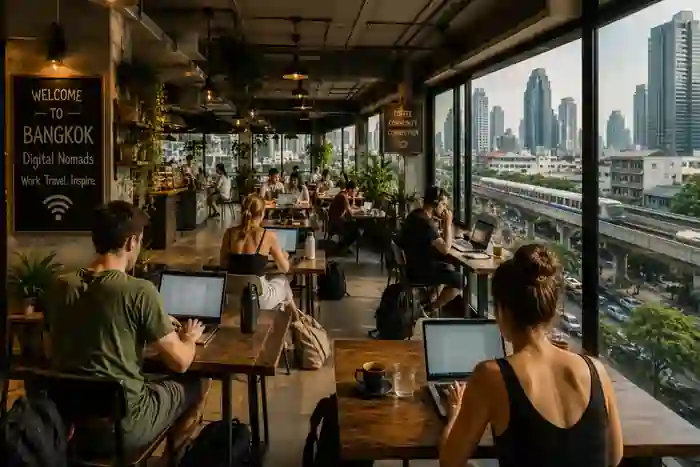
Bangkok has a rapidly growing coworking scene, excellent high-speed internet infrastructure, and every imaginable convenience within reach.
The city has strong business connections and is home to a significant international professional community.
For nomads who need reliable logistics, quick access to embassies or consular services, or who want a wide variety of social and professional networking opportunities, Bangkok delivers consistently.
Why Digital Nomads Choose Chiang Mai
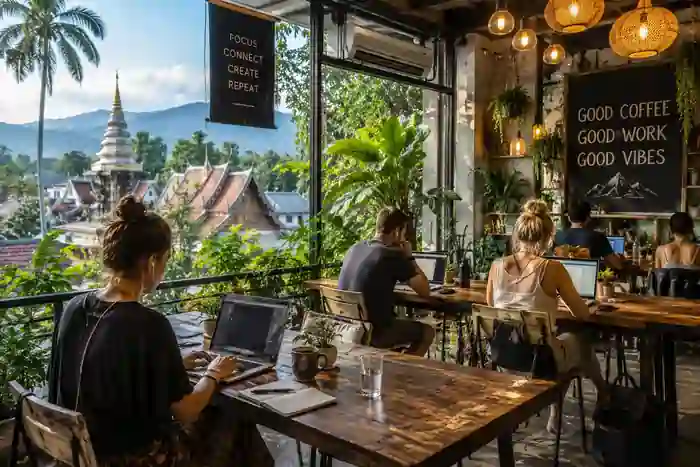
Chiang Mai has been a top destination for digital nomads for over a decade and consistently ranks among the best cities in the world for remote work.
The cost of living is significantly lower than Bangkok. The community of freelancers, remote workers, startup founders, and creative professionals is large, welcoming, and well-organized.
Coworking spaces like CAMP (inside Maya Mall), Punspace, and MANA are well-equipped and reliably connected.
The relaxed lifestyle, good coffee, affordable healthy food, and manageable size make it easy to stay productive without burning out.
Internet and Infrastructure
Both cities offer reliable high-speed fiber internet. Coworking spaces in both cities typically provide fast, stable connections. Mobile data speeds in Thailand are generally excellent, and both cities are well-served by all major Thai carriers.
Cost of Living Comparison
A comfortable monthly budget for a digital nomad in Chiang Mai (mid-range apartment, food, coworking, transport, activities) might run between $800 and $1,400 USD.
The equivalent lifestyle in Bangkok typically costs $1,200 to $2,000 USD or more depending on neighborhood and habits.
Which City Is Better for Long-Term Stays?
Chiang Mai is the stronger choice for most digital nomads and long-term travelers, primarily because of its lower cost of living, established community, and quality of life. Bangkok is better for those who need a major metropolitan environment or who are working in industries with a stronger Bangkok presence.
Transportation and Accessibility
Getting Around Bangkok
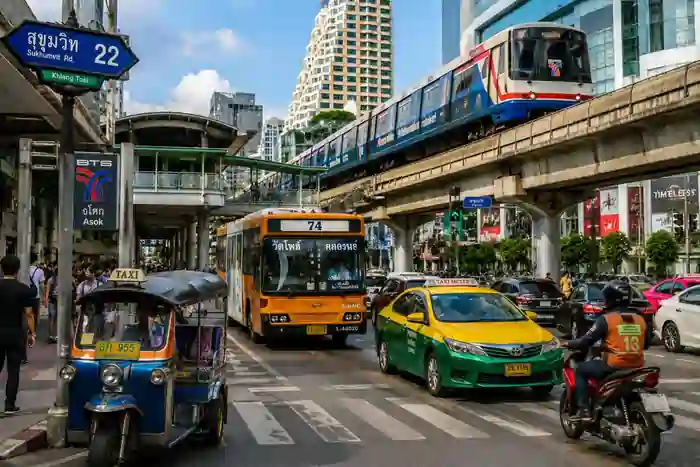
Bangkok has a well-developed public transport system that covers most of the areas visitors care about.
- BTS Skytrain: Elevated rail covering Sukhumvit, Silom, and connecting to the river
- MRT: Underground metro connecting additional key areas including Chinatown and the central train station
- Chao Phraya Express Boat: An affordable and scenic way to travel along the river to major attractions
- Taxis and Grab: Widely available; always insist on using the meter in taxis or book via Grab for transparent pricing
- Tuk-tuks: Fun for short distances but negotiate the price firmly before getting in
One challenge in Bangkok is traffic. During peak hours, road travel can be extremely slow, and distances between attractions are significant. Relying on the BTS and MRT wherever possible is the smartest approach.
Getting Around Chiang Mai
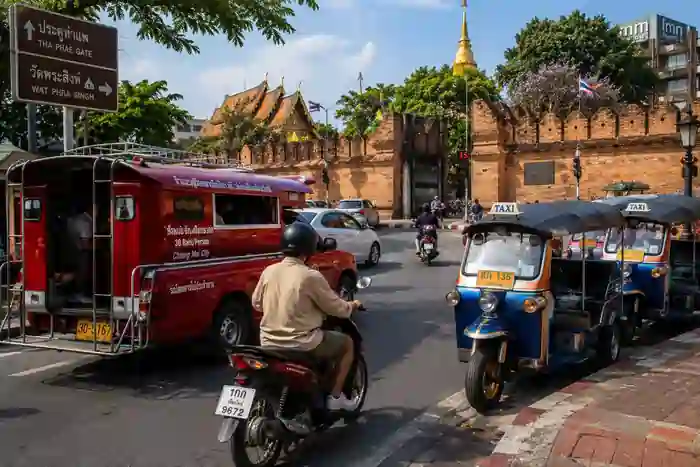
Chiang Mai is much easier to navigate.
- Songthaews (red trucks): Shared pick-up trucks that function as informal buses; flag them down and agree on a price, typically ฿30 to 50 for standard routes
- Grab: Available and reliable for door-to-door convenience
- Bicycle rental: A popular way to explore the old city and surrounding areas; many guesthouses rent them for ฿50 to 100 per day
- Scooter rental: A great option for day trips to Doi Suthep, nearby waterfalls, or surrounding villages; typically ฿200 to 300 per day
Airport Connectivity
Bangkok is served by two international airports: Suvarnabhumi (BKK), which handles most international flights, and Don Mueang (DMK), which is used primarily by low-cost carriers including AirAsia, Nok Air, and Lion Air.
Chiang Mai International Airport (CNX) has grown significantly and now receives direct flights from many regional hubs including Singapore, Kuala Lumpur, Hong Kong, Seoul, and Tokyo.
Flights between Bangkok and Chiang Mai take about 1 hour and 10 minutes and are very affordable when booked in advance, often as low as ฿500 to 800 one-way on budget carriers.
Transportation Summary
Bangkok offers one of the most developed public transportation networks in Southeast Asia, with rail, metro, ferries, taxis, and ride-hailing services covering most visitor needs.
Chiang Mai relies more heavily on songthaews, Grab, bicycles, and scooters. While it lacks a metro system, its compact layout makes moving around considerably easier and less time-consuming.
For a complete guide to domestic flights, trains, buses, ferries, airport transfers, and getting around Thailand, read our Thailand Transportation Guide.
Which City Is Easier to Navigate?
Chiang Mai is significantly easier to navigate due to its compact size and manageable street layout. Bangkok requires more planning and patience, though its public transport system rewards travelers who learn to use it.
Which City Is Better for First-Time Visitors?
Why Bangkok Is Better for Some Travelers
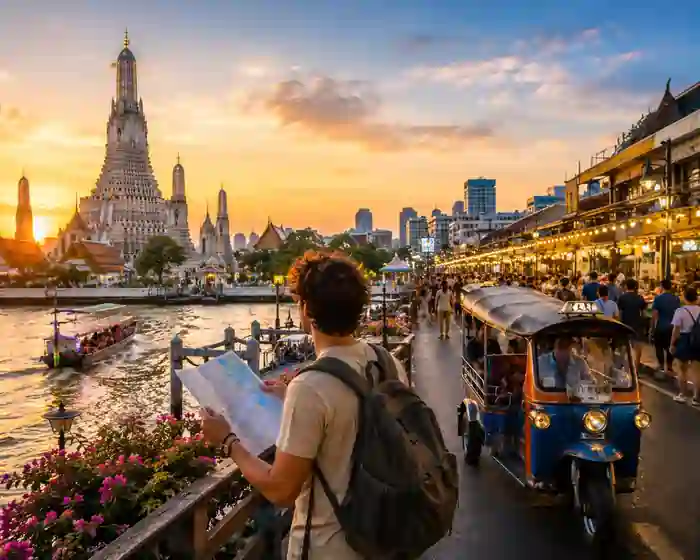
Bangkok makes a strong case as the ideal starting point for first-time visitors to Thailand. It has the most direct international flight connections from virtually every major hub around the world.
The sheer concentration of iconic attractions, from the Grand Palace to street food markets to the Chao Phraya River, makes it easy to feel like you are getting a full Thailand experience quickly.
English is widely spoken in tourist areas, international food options are plentiful for those not yet adventurous, and luxury accommodation is readily available.
Why Chiang Mai Is Better for Some Travelers
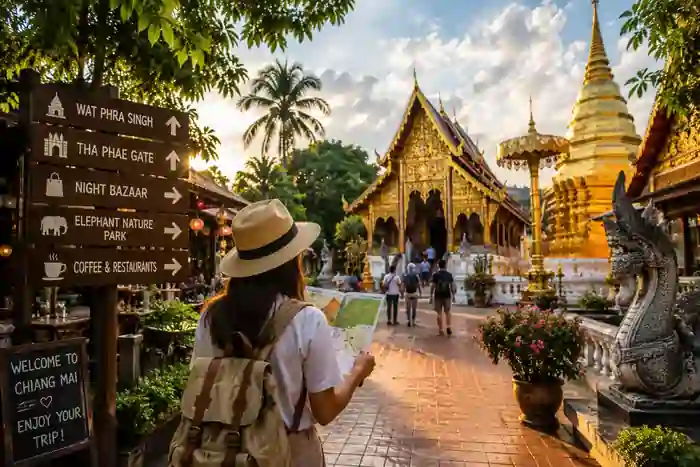
For first-time visitors who are slightly nervous about the chaos of a major Asian megacity, Chiang Mai is a gentler, more manageable introduction to Thailand.
The old city is easy to walk, the pace is forgiving, and the cultural experiences are accessible without requiring extensive planning.
Chiang Mai also gives first-timers a window into a part of Thailand that feels less catered to international tourism.
Recommended Trip Length
- Bangkok: A minimum of 3 to 4 days to cover the major highlights; 5 to 7 days for a more relaxed and comprehensive visit
- Chiang Mai: A minimum of 3 days; 5 to 7 days if you plan to take day trips into the mountains or visit elephant sanctuaries
Can You Visit Both?
Absolutely, and most Thailand itineraries of a week or more should include both cities.
The flight between them is short and cheap. A common approach is to fly into Bangkok, spend 4 to 5 days there, then fly up to Chiang Mai for another 4 to 5 days before returning home.
The contrast between the two cities makes the overall trip richer and more varied.
If you're deciding when to visit both cities, our Best Time to Visit Thailand guide explains the ideal seasons, weather, and festivals across the country.
Recommendation
Choose Bangkok if you want a large city experience with outstanding food, nightlife, shopping, and iconic cultural landmarks.
Choose Chiang Mai if you want to slow down, go deeper into Thai culture, spend time in nature, and pay less while doing it.
If you have the time, choose both.
For more help planning your Thailand trip, visit our Thailand Travel Guide before you go.