
Thailand Travel Insurance Guide (2026)
If you are heading to Thailand, the short answer is this: standard tourist entry does not currently require travel insurance for most visitors, but that does not mean you should skip it. Thailand's public healthcare system is not automatically available to foreign tourists, and private hospitals, the ones most visitors end up in after an accident or sudden illness, can charge significant amounts for treatment. A single hospital stay, a scooter accident, or a cancelled flight can easily cost more than your entire trip budget.
This guide walks through what travel insurance for Thailand actually covers, where the gaps usually sit, and how to compare policies before you buy. It covers medical emergencies, trip cancellations, lost or delayed baggage, transport disruptions, and higher risk activities such as scuba diving, snorkeling, and motorbike riding. Policy exclusions matter just as much as the coverage itself, so we will spend real time on those too.
If you're planning your first trip, start with our Thailand Travel Guide for information on destinations, transportation, accommodation, costs, and practical planning.
Is Travel Insurance Required for Thailand?
For most tourists entering Thailand on a standard visa-exempt stay or a regular tourist visa, travel insurance is not currently a legal condition of entry. That is different from certain long-stay visas, such as retirement or long-term residence categories, where proof of health insurance meeting specific coverage minimums is generally required as part of the application.
It's worth being clear that "not required" and "not recommended" are two different things. Thailand has discussed and piloted various proposals over the past couple of years that would tie insurance more closely to entry systems for tourists, and these kinds of rules can shift with little notice. Because entry requirements are set by Thai immigration authorities and can change, you should always confirm the current rules directly with the Thai embassy or consulate in your country, or with your airline, shortly before you travel.
Regardless of what the entry rules say on the day you fly, the practical case for having insurance stays the same: it protects you financially if something goes wrong.
Is Travel Insurance Worth It for Thailand?
Even where insurance is not mandatory, it is worth serious consideration. Here is where it tends to make the biggest difference:
- Medical treatment and hospitalization, especially at private hospitals in Bangkok, Phuket, or Chiang Mai
- Emergency medical evacuation from islands or remote areas
- Trip cancellation if illness, injury, or a family emergency forces you to cancel before departure
- Missed flight or ferry connections
- Lost, stolen, or damaged baggage
- Travel delays that cause extra accommodation or meal costs
- Accidents during activities like diving, hiking, or riding a motorbike
That said, insurance is not automatically valuable simply because you bought a policy. What matters is the fine print: the medical coverage limit, whether your planned activities are included, the excess or deductible you are responsible for, and the specific exclusions listed in the policy wording. Two policies that look similar on a comparison site can behave very differently when you actually file a claim.
What Should Travel Insurance for Thailand Cover?
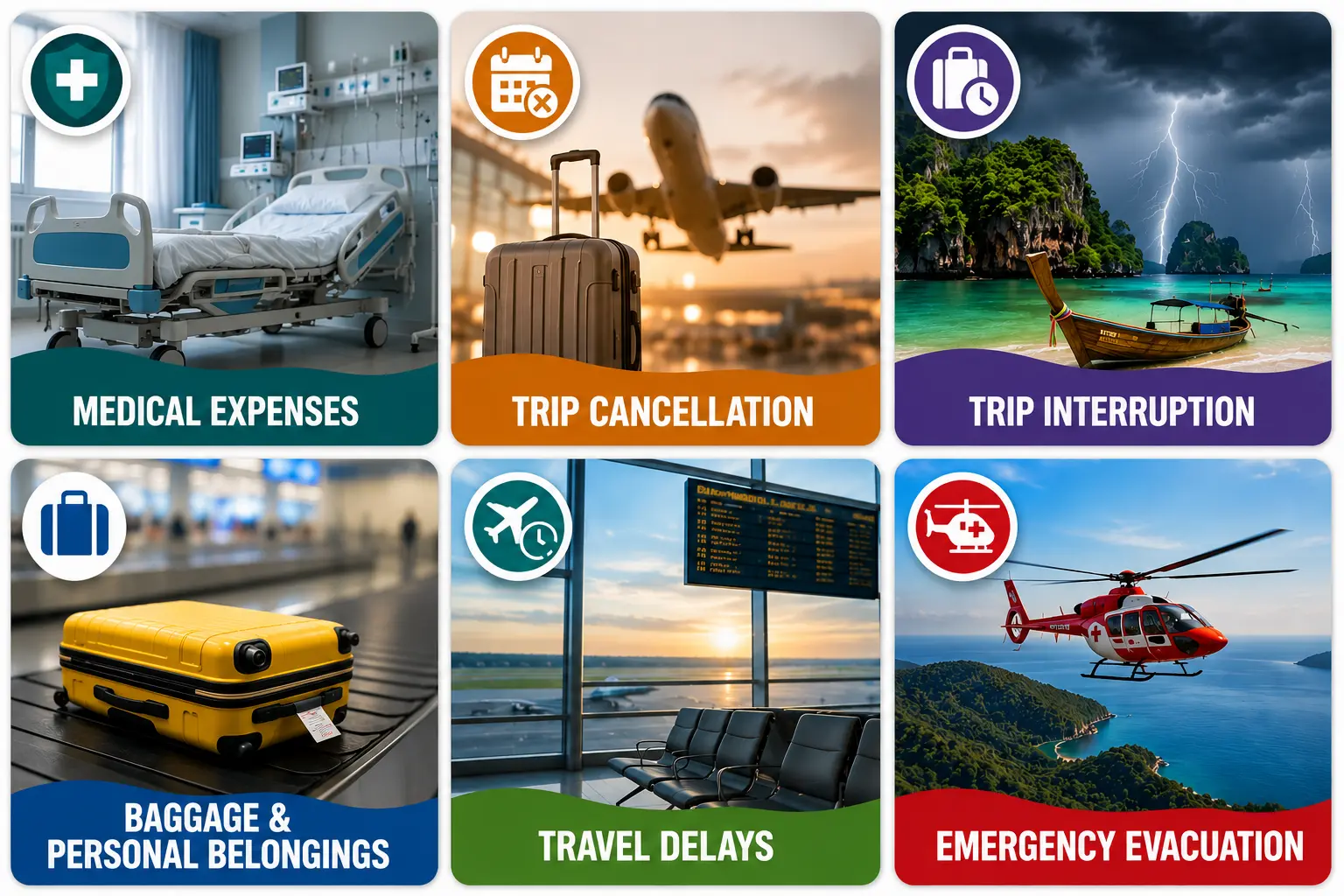
Medical Expenses
This is the core of any Thailand travel insurance policy. Look for coverage of emergency treatment, hospitalization, doctor visits, prescription medication, emergency medical transportation, emergency evacuation, and repatriation where applicable.
Do not just check that "medical coverage" is listed. Check the actual limit in dollars, pounds, or euros. Private hospital treatment in Thailand can be expensive, particularly for surgery or extended hospital stays, so a low medical cap can leave you exposed even with a policy in place.
Trip Cancellation
Trip cancellation coverage typically applies to situations like illness, injury, or a family emergency, along with any other specific reasons listed in your policy. Not every reason for cancelling a trip is covered, so read the list of accepted reasons carefully rather than assuming cancellation coverage is a blanket guarantee.
Trip Interruption
Trip interruption is different from cancellation. Cancellation applies before you leave, while interruption applies if something forces you to cut a trip short or change plans after it has already started, such as a medical emergency partway through your stay.
Baggage and Personal Belongings
Look for coverage of lost baggage, stolen belongings, damaged baggage, and delayed baggage. Most policies apply both an overall limit and a per-item limit, and high-value items like cameras or laptops are often subject to additional restrictions or exclusions, so check this section closely if you're traveling with expensive gear.
Travel Delays
Significant delays can trigger coverage for additional accommodation, meals, and necessary transport. The threshold for what counts as a "significant" delay, and what expenses are reimbursable, varies by policy, so this is another area where the fine print decides how useful the coverage actually is.
Emergency Evacuation
Emergency evacuation coverage matters more than many travelers expect, particularly if you're visiting islands, remote areas, diving destinations, or mountain regions where reaching proper medical care can take hours rather than minutes. This is one of the most important limits to check if your trip includes island hopping or hiking in less accessible parts of the country.
Thailand Specific Travel Insurance Considerations
Motorbike and Scooter Coverage
Renting a scooter is common in Thailand, but it is also one of the most frequent sources of serious injury among tourists. A few things to keep in mind:
- Motorbike accidents can create major medical costs, particularly for head, limb, or spinal injuries
- Some policies exclude motorcycle riding entirely, or only cover it as an optional add-on
- Many insurers require you to hold a valid motorcycle licence, not just a car licence, for coverage to apply
- Helmet use is often a condition of coverage, separate from local legal requirements
- Local legal requirements and your policy's requirements are not the same thing, and both can apply at once
Ordinary travel insurance does not automatically cover scooter or motorbike use. Confirm this specifically before you rent one.
Water Sports and Diving
Scuba diving, snorkeling, kayaking, jet skiing, and similar adventure activities are common reasons travelers head to Thailand's coastline. Some of these activities may need an add-on to your base policy, and diving coverage in particular can come with depth limits or a requirement that you hold a recognized diving qualification. If diving is part of your plans, check this before you buy rather than after you're already in the water.
Island Trips and Boat Travel
Ferries, speedboats, and island tours all carry their own set of potential disruptions, from mechanical delays to weather-related cancellations. If your itinerary includes island hopping, our Thailand Island Hopping Guide covers route planning and practical tips for getting between islands smoothly.
Tropical Weather and Natural Events
Heavy rain, storms, flooding, and monsoon-related disruption are a normal part of travel in Thailand during certain months. Whether a weather-related cancellation or delay is covered depends entirely on the specific wording of your policy, so this is worth checking if you're traveling during the rainier part of the year.
What Travel Insurance Usually Does Not Cover
Policy exclusions are just as important as what's included, and this is where many claims get denied. Common exclusions include:
- Pre-existing medical conditions that were not declared at the time of purchase
- Undeclared medical conditions in general
- Alcohol or drug-related incidents
- Reckless behavior
- Illegal activities
- Certain adventure sports unless specifically added to the policy
- Riding a motorcycle without meeting the policy's licence or helmet requirements
- Belongings left unattended
- Cancellation for a reason not listed in the policy
Always read the policy wording and exclusions before purchasing travel insurance for Thailand.
How Much Travel Insurance Do You Need for Thailand?
Rather than aiming for one arbitrary coverage amount, compare policies against these specific limits:
| Coverage | What to Check |
|---|---|
| Medical expenses | High overall limit |
| Emergency evacuation | Included, with an adequate limit |
| Cancellation | Enough to cover prepaid, non-refundable costs |
| Baggage | Overall limit and per-item limit |
| Travel delay | Minimum delay time before coverage applies |
| Activities | Whether your planned activities are actually included |
| Excess/deductible | The amount you pay yourself before coverage kicks in |
| Pre-existing conditions | Whether declared conditions are covered at all |
For a sense of how insurance fits into your overall budget, see our Thailand Trip Cost breakdown.
How to Choose Travel Insurance for Thailand
- Check the medical coverage limit
- Check whether emergency evacuation is included and sufficient
- Check the cancellation coverage limit
- Check activity coverage, especially diving, snorkeling, motorbikes, and other adventure activities
- Check the exclusions list in full
- Check the excess or deductible amount
- Check the geographical coverage area
- Check the policy start and end dates, and make sure coverage begins when you actually need it to
Travel Insurance for Different Types of Thailand Travelers
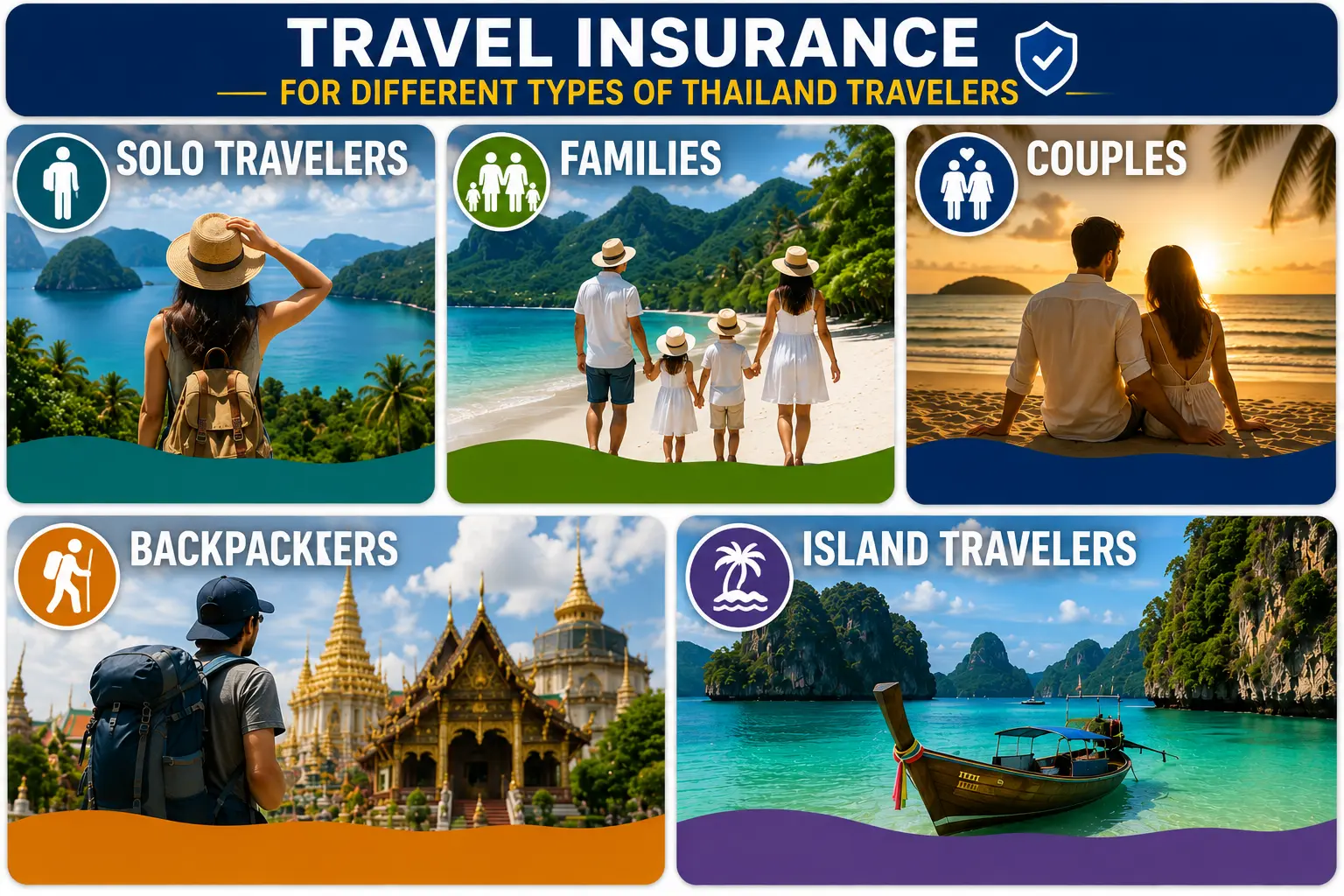
Solo Travelers
As a solo traveler, medical emergencies, lost belongings, and activity coverage matter more since you won't have a companion to lean on immediately. For broader planning advice, see our Thailand Solo Travel Guide.
Families
Families should pay attention to medical coverage for children, cancellation terms, and baggage limits, since a single claim often needs to cover multiple people at once. Our Thailand Family Travel Guide has more on planning a trip with kids.
Couples
For couples, the main areas to focus on are cancellation coverage, medical coverage for both travelers, and activity coverage if you're planning anything adventurous together.
Backpackers
Backpackers traveling for longer periods across multiple destinations should look closely at coverage duration, adventure activity limits, motorbike coverage, and how flexible the policy is if your itinerary changes along the way.
Island Travelers
If islands are the focus of your trip, prioritize coverage for boat trips, diving, snorkeling, and weather-related disruption. Our Thailand Island Hopping Guide can help with route planning around these considerations.
Thailand Travel Insurance and Transportation Problems
Transportation issues are one of the more common reasons travelers actually use their insurance. This can include missed connections, flight delays, ferry cancellations, delayed luggage, and additional accommodation costs caused by a covered disruption.
If you're traveling between Bangkok, Chiang Mai, Phuket, Krabi, and the islands, our Thailand Transportation Guide explains the main ways to travel around the country.
What to Do If You Need Medical Treatment in Thailand
- Contact your insurer's assistance service when appropriate, ideally before or as soon as possible after treatment begins
- Keep all medical documents from the hospital or clinic
- Keep every receipt, even small ones
- Request written documentation of diagnosis and treatment
- Follow your insurer's specific claim procedure exactly as outlined in your policy
- Understand in advance whether you need to pay upfront and claim reimbursement later, or whether your insurer can arrange direct payment with the hospital
Before your trip, also review our Thailand Safety Guide for practical advice on transport, beaches, scams, valuables, nightlife, and emergencies.
What to Check Before Buying a Policy
- Medical limit
- Emergency evacuation
- Cancellation coverage
- Baggage coverage
- Excess
- Activities you actually plan to do
- Motorbike requirements
- Pre-existing condition rules
- Full list of policy exclusions
- Destination and geographical coverage
- Coverage start and end dates
- Claim procedure
Recommended Travel Insurance Checklist for Thailand
Your policy should ideally include:
- Emergency medical coverage
- Emergency evacuation
- Trip cancellation
- Trip interruption
- Baggage protection
- Travel delay protection
- Coverage for the activities you actually plan to do
- Coverage that matches your full trip duration
- A clear claims procedure
Not every one of these items is legally or contractually required in every policy, so treat this as a shopping checklist rather than a guarantee of what any specific plan includes.
FAQ
Is travel insurance required for Thailand?
For most tourists on a standard visa-exempt stay or tourist visa, it is not currently a legal requirement, though certain long-stay visas do require proof of insurance. Entry rules can change, so confirm the current requirement with official sources before you travel.
Is travel insurance worth it for Thailand?
For most travelers, yes. The potential cost of an untreated medical emergency, a cancelled trip, or lost baggage usually outweighs the cost of a policy, though the value depends on the specific coverage limits and exclusions you choose.
What does travel insurance cover in Thailand?
Typical coverage includes medical expenses, trip cancellation and interruption, baggage protection, and travel delays, with emergency evacuation as an important addition for island or remote travel.
Does travel insurance cover motorbike accidents in Thailand?
It depends heavily on the policy. Coverage often requires a valid motorcycle licence, helmet use, and may exclude certain vehicle types entirely, so check this specifically before renting a scooter or motorbike.
Does travel insurance cover scuba diving in Thailand?
Coverage varies by policy and by diving conditions, including depth limits and qualification requirements. Some plans include basic diving coverage, others require an add-on.
Does travel insurance cover Thailand's islands?
The destination itself generally is not the issue. What matters more is whether your activities, boat transport, and any weather-related disruptions are covered under your specific policy.
Can I buy travel insurance after arriving in Thailand?
Policies differ on this. Some insurers restrict purchases after departure or apply a waiting period before coverage becomes active, so it's best to buy before you leave and check the specific rules if you're considering a purchase after arrival.
How much does travel insurance for Thailand cost?
Cost depends on several factors, including your age, trip duration, destination, coverage level, medical history, planned activities, excess amount, and cancellation limit. There is no single universal price, so it's worth comparing a few quotes based on your actual trip details.
Plan Your Thailand Trip With Confidence
Before you travel, use these practical Thailand travel guides to plan your destinations, understand common safety considerations, estimate your trip budget, choose the best ways to get around, and plan island trips. These guides can help you organize your itinerary and prepare for a smoother trip.